Certificate: ISO/CE/SGS
Warranty: 13 Months
Packaging: by Plywood case
Payment: T/T, Western Union, Credit card.
Transaction method: EXW, FOB, DDP, CIF, CFR
Delivery Time: Within 10-15 working days after received deposit.

Certificate: ISO/CE/SGS
Warranty: 13 Months
Packaging: by Plywood case
Payment: T/T, Western Union, Credit card.
Transaction method: EXW, FOB, DDP, CIF, CFR
Delivery Time: Within 10-15 working days after received deposit.
Product Introduction of Safety Valve Test Bench
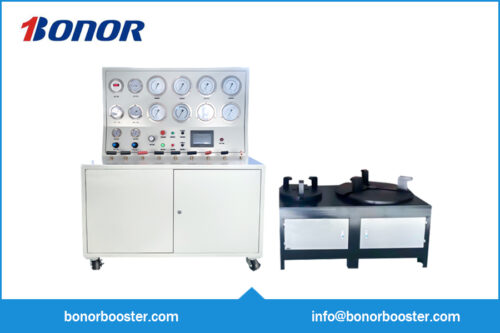
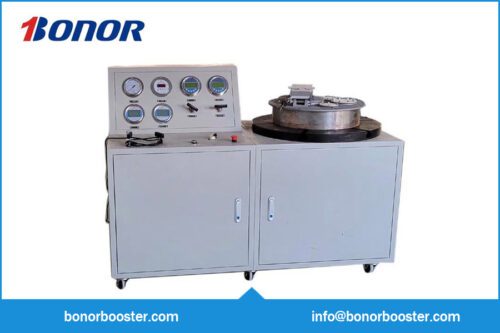
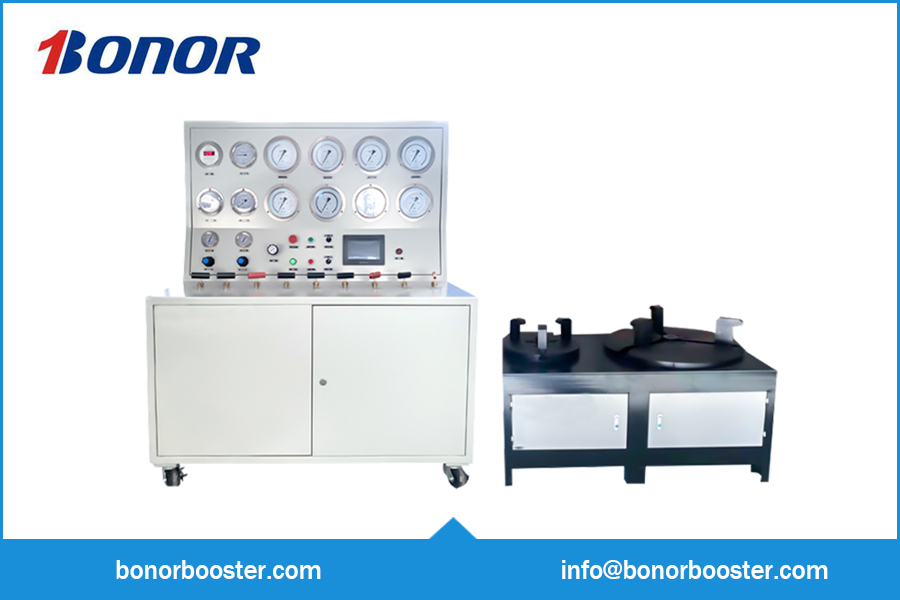
Our company’s safety valve test bench is a test device specially developed in accordance with GB/T 12242-2005 (Specification for Pressure Relief Devices and Performance Tests). The Safety Valve Test Bench is used for various testing and adjustment functions of safety valves, including:
Set Pressure Adjustment: Precisely adjust the set pressure of safety valves.
Set Pressure Detection: Verify if the set pressure of the safety valve meets the required standards.
Discharge Pressure Detection: Check the discharge pressure to ensure proper valve operation.
Back Seat Pressure Testing: Evaluate the back seat pressure to ensure sealing performance.
Safety Performance Assessment: Comprehensive assessment of the valve’s pressure safety performance.
This equipment ensures the reliability and safety of safety valves under different operating conditions.
The functions of a safety valve testing bench.
The safety valve test bench is used for various functions including safety valve pressure setting and adjustment, overall pressure testing, discharge pressure testing, back pressure testing, and pressure safety performance evaluation.
Safety valve test bench System Composition
1). Power system (High-pressure power source):
Air-driven gas booster pump : output pressure 0-480bar
Air-driven liquid pump : output pressure 0-512bar
2). Clamping system:
0-32 MPa output pressure clamping system power provided by Air-driven liquid boost pump DGGD40, fully meet the clamping force of the pressure relief valve safety valve with specification requirements; the corresponding connection fixture is connected with the high-pressure pump gas pipeline; ensure that the measured cylinder packing seal between the member and the pipeline, 2 separate operations.
3). Data acquisition test system:
The pressure acquisition system is composed of real-time pressure – time change, and the pressure – time curve is automatically drawn.
Pressure sensor: setting four stage sensor according to pressure section
Pressure range: 0-2.5MPa, 0-16MPa, 0-40MPa, 0-100MPa
The performance index is up to + 0.5%FS precision, and the range is compared with 100:1.
4). Electrical control and output system:
Software: the use of LabView programming, independent development of software programs. The data of pressure and time are transferred to the computer uniformly through the acquisition card. The computer displays, amplifies, records and forms curves for all data, and all data can be printed by printers. High precision is guaranteed under high sampling rate.
Safety valve test bench Technical Parameters:
Operating Instructions for the Safety Valve Test Bench
I.Startup Preparation
II.Core Testing (Computer-Led)
III. Shutdown & Finalization (3 Steps for Filing)
IV.Key Precautions