
BONOR is a China manufacturer of pneumatic booster pumps for industrial pressure boosting and fluid handling. Our product range includes gas booster pumps, air booster pumps, pneumatic hydraulic booster pumps, and negative pressure sampling pumps.
Different models are available for applications such as gas pressurization, cylinder filling, pressure testing, and liquefied gas transfer. Pump selection depends on the working medium, inlet pressure, required outlet pressure, and flow rate.
Contact BONOR with your operating conditions and technical requirements to find a suitable booster pump for your application.
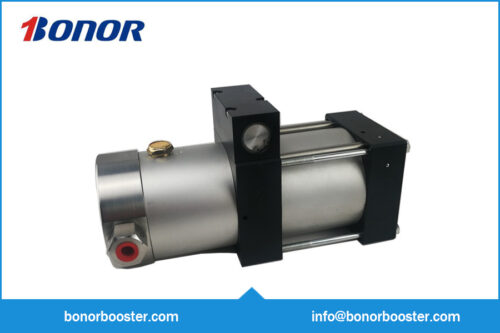
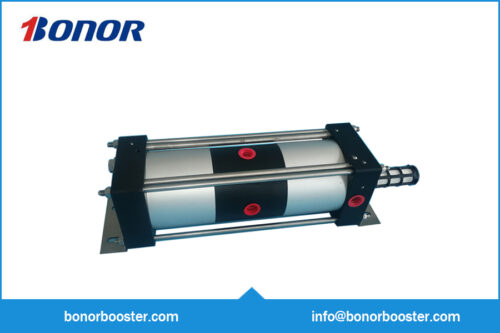
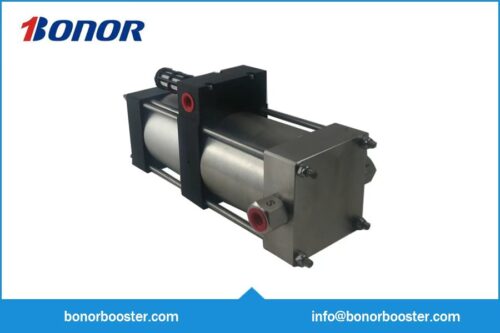
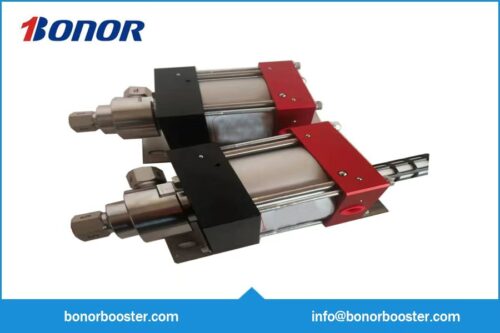
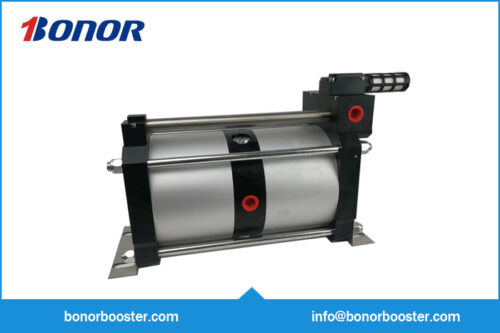
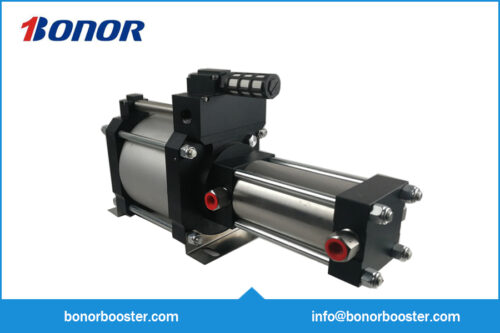
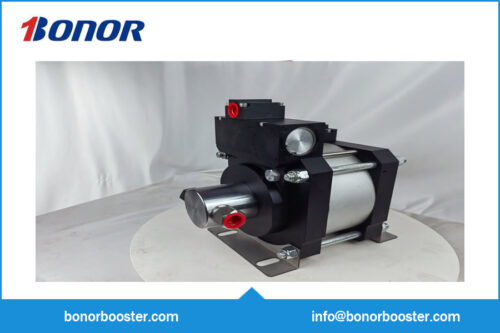
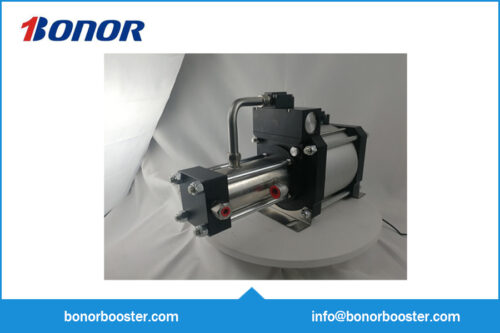
Booster Pumps: Air, Gas and Pneumatic-Hydraulic Compared
A booster pump takes a pressure you already have — usually 4 to 8 bar of workshop air, or a low-pressure gas supply — and raises it to the pressure the process actually needs. Nothing is burned and, in the air-driven designs that make up most of this catalogue, nothing is electrically powered at the pump itself, so a booster can be installed in a hazardous area or on a mobile rig.
Three families sit under this heading and they are not interchangeable. Air booster pumps multiply compressed air for clamping, pneumatic actuation, blow moulding and leak testing. Gas booster pumps compress a specific gas such as nitrogen, oxygen, hydrogen, helium or argon up to cylinder-filling pressure. Pneumatic-hydraulic booster pumps use air to generate high liquid pressure for hydrostatic testing, pressing and holding. Booster systems package one of these pumps with a reservoir, controls and safety devices as a skid.
How to decide which family you need
- What is being pressurised Air or a gas points to an air or gas booster. A liquid — water, oil, hydraulic fluid — points to a pneumatic-hydraulic unit. Getting this wrong is the most common and most expensive selection error.
- Required outlet pressure and boost ratio Outlet pressure is roughly drive pressure multiplied by the boost ratio, minus losses. Decide the outlet pressure first, then check what drive pressure is actually available on site; a high ratio on a weak air line delivers less than expected.
- Flow rate at pressure, not at zero Catalogue flow is usually quoted at free delivery. What matters is the flow at your working pressure, because a reciprocating booster stalls as outlet pressure rises.
- Duty cycle and heat Continuous operation generates heat in the seals and check valves. If the pump will run all shift, specify the continuous-duty version and plan for cooling or a larger unit running slower.
- Gas compatibility and cleanliness Oxygen service requires oxygen-clean assembly and oxygen-compatible seals. Hydrogen calls for attention to embrittlement and to venting. Corrosive gases need wetted parts selected for the medium, not just a standard seal kit.
- Pressure holding and control If the application is clamping or static testing, the pump must hold pressure without cycling. Ask specifically about stall-and-hold behaviour and whether a regulator, relief valve and gauge package is included.
Family comparison
| Type | Medium | Typical outlet | Typical use |
|---|---|---|---|
| Air booster pump | Compressed air | Up to a few tens of bar from 6-8 bar drive air | Clamping, pneumatic pressing, leak testing, blow moulding |
| Gas booster pump | N2, O2, H2, He, Ar, CO2 | Cylinder-filling and test pressures | Cylinder filling, accumulator charging, pressure testing, hydrogen service |
| Pneumatic-hydraulic booster pump | Water, oil, hydraulic fluid | High liquid pressure from ordinary shop air | Hydrostatic testing, clamping, pressing, holding |
| Booster system (skid) | Air, gas or liquid | As above, stabilised by a buffer volume | Plant-wide supply where pressure must stay steady |
What we ask before quoting a booster
Four numbers decide the model: inlet pressure available, outlet pressure required, flow required at that outlet pressure, and duty cycle. Add the medium and its cleanliness requirement, the ambient conditions and how the pump will be controlled. With those, the boost ratio and number of stages follow directly, and we can tell you whether a single pump is enough or whether a buffer vessel is needed to stop the pump short-cycling.
Frequently asked questions
How do I work out the outlet pressure of an air booster pump?
Does a booster pump need electricity?
Can one pump handle both air and nitrogen?
What happens when the pump reaches the set pressure?
Sub-categories and related equipment
Need help specifying? Send us your test pressure, specimen range and the standard you work to — talk to our engineers or use the inquiry form on any product page.