Description
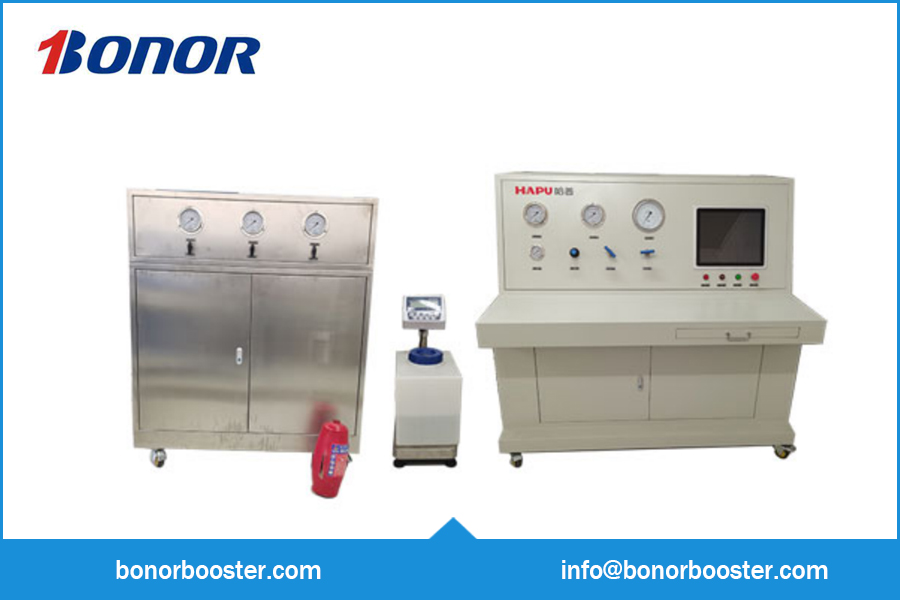
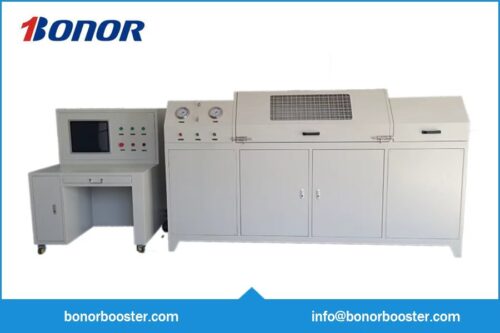
The fire extinguisher cylinder hydrostatic pressure comprehensive testing machine is developed in accordance with GB 4351.1-2021 and GB/T 9251-2011 standards. Designed specifically for fire extinguisher cylinders and gas cylinder containers, it can integrally complete hydrostatic pressure resistance, burst strength, and residual deformation testing. The equipment accurately performs full-process hydrostatic performance testing and is widely used in fire extinguisher manufacturers, quality inspection institutions, and research institutes. It is suitable for factory inspection, type testing, in-service verification, and R&D validation, ensuring the safety and structural integrity of cylinders under high-pressure conditions from the source.
Core Functions
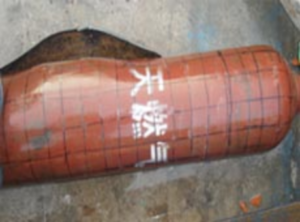
Water Pressure Resistance and Burst Testing: Provides adjustable water pressure from 0-40MPa, supporting 1.5 times working pressure holding (0-999s adjustable) and 3 times pressure burst testing. It simultaneously monitors sealing performance and structural stability, accurately determining pressure resistance and burst limits.
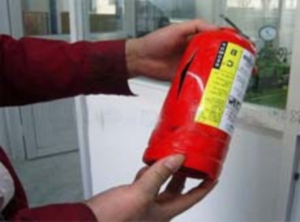
Residual Deformation Measurement: Integrates high-precision displacement sensors to automatically collect deformation data and calculate the residual deformation rate according to national standards, accurately determining compliance and mitigating safety hazards.
Automated Data Management: PLC + touchscreen/computer dual control automatically completes the entire process of clamping, loading, and data acquisition. It records test curves in real time, supports data storage and export, and automatically generates reports according to national standards, requiring no manual intervention.
Multiple safety features: Dual-channel overpressure warning and relief system, double protection for high-pressure pipelines, combined with explosion-proof observation windows, leakage protection, and emergency shutdown, and physical isolation of electrical and hydraulic systems, ensuring the safety of both personnel and equipment.
Technical Parameters
Parameter Item | Specifications
Compatible Cylinder Specifications | Φ50-Φ200mm, Length 300-1200mm (customizable)
Compatible Cylinder Volume | 0.5-10L (covers common fire extinguisher cylinders)
Test Water Pressure Range | 0-40MPa (Accuracy ±0.5%FS)
Pressure Holding Time Range | 0-999s (Error ±1s)
Residual Deformation Measurement Accuracy | ±0.01mm
Loading Speed | 0.1-1MPa/s (stepless adjustment)
Clamping Method | Pneumatic automatic clamping, good sealing, adaptable to multiple diameters
Control Method | Touch screen + PLC, supports computer remote control
Dimensions (approx.) | 1600mm × 800mm × 1500mm
Equipment Weight (approx.) | 220kg
Power Supply Specifications | AC 380V 50Hz 3kW
System Structure
High-Pressure Water System: Composed of a high-pressure plunger pump, pressure stabilizing tank, and filter, providing pulsation-free water pressure with a filtration accuracy of 5μm to ensure testing accuracy.
Specimen Fixing Mechanism: Pneumatic clamping + special sealing gasket for quick clamping of various cylinder sizes, with a sealing pressure ≥ 1.2 times the test pressure to prevent water leakage and pressure loss.
Deformation Detection Mechanism: Axial/radial dual sensors for non-contact measurement, avoiding damage to the cylinder and ensuring data reliability.
Data Acquisition System: High-precision module (sampling rate ≥ 100Hz), supporting parameter presetting and fault alarms, and compatible with LIMS systems.
Application Value
Manufacturing enterprises: Achieve comprehensive factory inspection, optimize processes, reduce after-sales and recall risks, and support compliant production.
Quality inspection institutions: Provide standardized solutions based on national standards, ensure data traceability, and guarantee compliant product circulation.
Research institutions: Simulate extreme working conditions, provide accurate data, shorten research and development cycles, and accelerate the commercialization of research findings.