Description
What is a gas booster system?
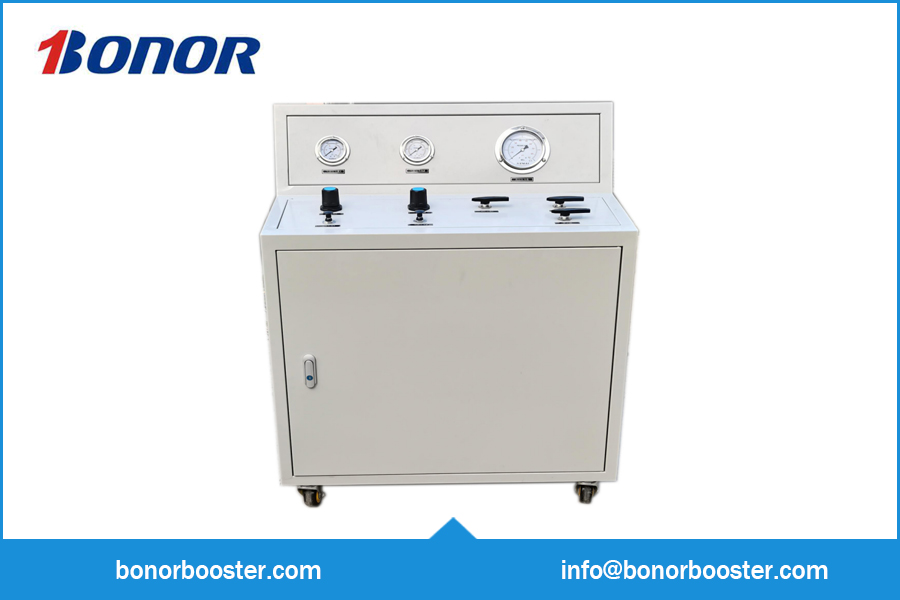
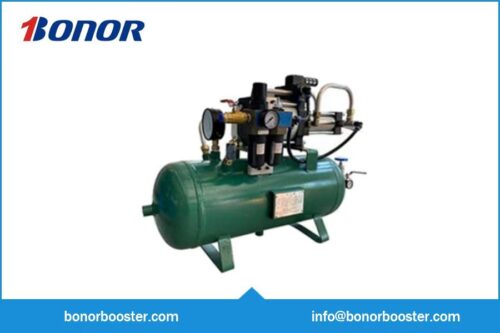
A gas booster system integrates a gas booster pump and various components into a tubular frame or enclosed cabinet according to customer requirements, resulting in a compact and easy-to-use design. Pressure gauges, valves, and pressure regulators are all panel-mounted. The output pressure can be set by adjusting the pressure regulator; the pump automatically stops when the set pressure is reached and automatically resumes operation when the pressure drops.
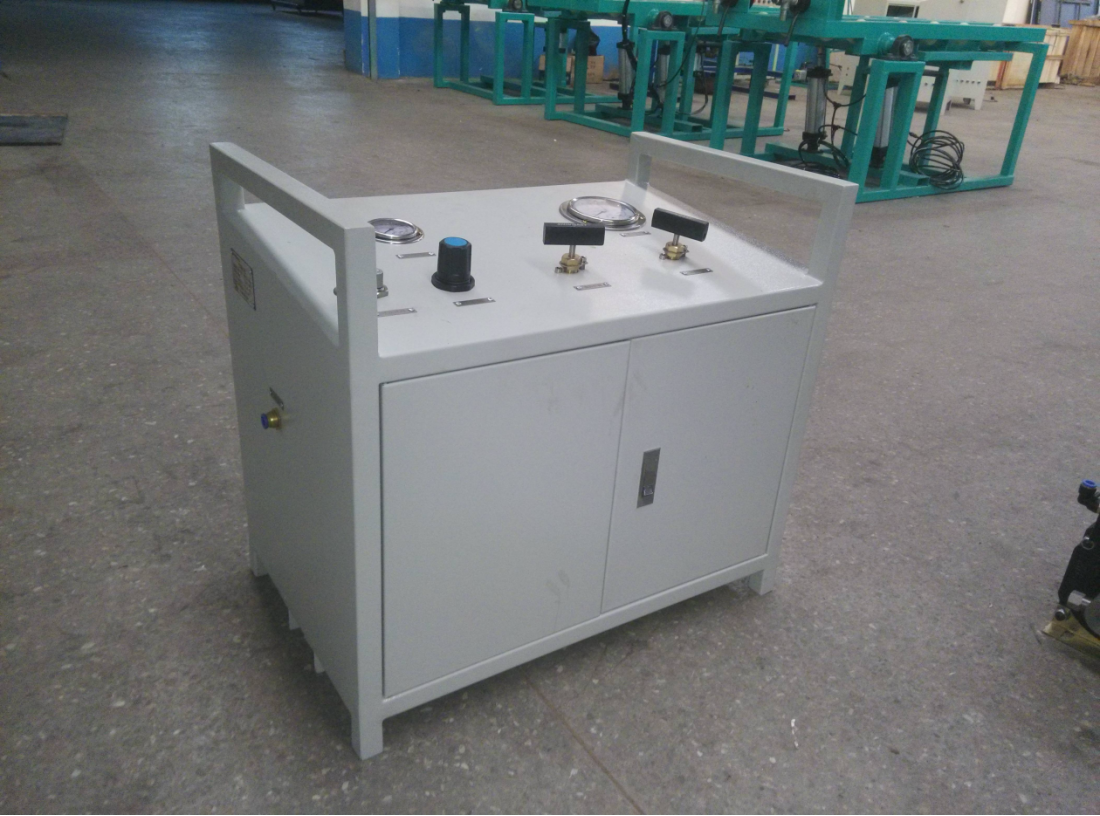
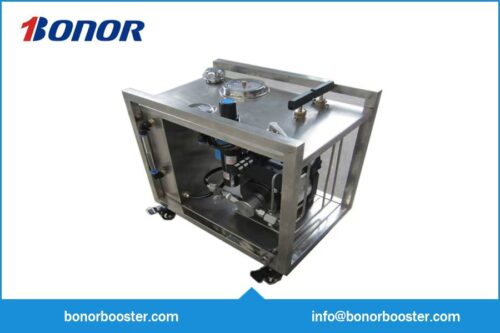
This system can pressurize gases from standard cylinders to a maximum of 35,000 psi and is compatible with inert gases and various hazardous gases. It supports single-stage/multi-stage configurations and can be equipped with one or more booster units. The system includes a complete set of air control devices, pilot control switches, pressure relief devices, pressure isolation, and exhaust valves. All components are mounted and connected within an open stainless steel frame with a tiltable front control panel.
The system offers various configurations, including single-stage and dual-stage options, which can be selected based on gas pressure and flow rate requirements. One to three gas boosters can also be connected in parallel or series to meet customized needs. It supports remote and automated control, and can be integrated with pressure sensors and chart recorders for test data recording.
All gas booster systems are equipped with safety pressure relief devices to maximize the safety of operating personnel.
Gas Boosting System Structure and Working Process
- Core Components and Functions
The air compressor, acting as the power source, generates compressed air with a pressure of 3-8 bar and a flow rate of 800-1000 L/min, providing the driving gas for the boosting system.
The gas boosting system main unit is the core unit of the entire system. It uses pneumatic drive (no electricity required) to boost the input low-pressure gas to a high pressure of 1-80 MPa.
Gas Source and Output Gas Cylinders
Left-side low-pressure gas cylinder: Provides the original gas to be boosted (such as argon, helium, hydrogen, oxygen, etc.).
Right-side high-pressure gas cylinder group: Receives and stores the boosted high-pressure gas, or is used directly for high-pressure testing scenarios.
- Workflow
Power Input: Compressed air from the air compressor is used as the driving gas and enters the gas booster system.
Low-Pressure Gas Input: Low-pressure gas from the left cylinder enters the booster unit through the “Low pressure gas inlet”.
Gas Boosting: The booster unit utilizes the pneumatic boosting principle to increase the low-pressure gas to the target high pressure (1-80 MPa selectable).
High-Pressure Gas Output: The boosted gas is output through the “High pressure gas outlet” and filled into the high-pressure cylinder on the right, or used for high-pressure testing, gas recovery, and other applications.
- System Features
Pneumatic drive, safe and reliable: No electricity is required, eliminating the risk of heat, flames, or sparks, making it suitable for use in explosion-proof or power-free environments.
Portable and compact: The equipment is small and lightweight, making it easy to move and suitable for on-site operations.
Automated operation: The operation process is simple and easy to use, and the pressurization process can be completed automatically.
High versatility: Supports the pressurization of various gases such as argon, helium, hydrogen, oxygen, nitrogen, CO₂, and LNG.
Typical applications of gas booster systems:
◎ Static and dynamic testing of aerospace components after repair
◎ Safety valve calibration
◎ Underwater bubble testing of valves and wellhead equipment
◎ Automotive braking system testing
◎ Communication cable inflation equipment
◎ Nitrogen inflation of aircraft tires and hydraulic accumulators
◎ High-pressure nitrogen inflation in auxiliary injection molding
◎ Testing of high-pressure gas systems and instruments
◎ Demineralization processes, such as reverse osmosis and desalination
◎ Providing pressure for testing or calibrating natural gas components
◎ Powering downhole fluid depth acoustic devices
◎ High-pressure gas flow pattern research.