Description
Air Booster System for Industrial Applications
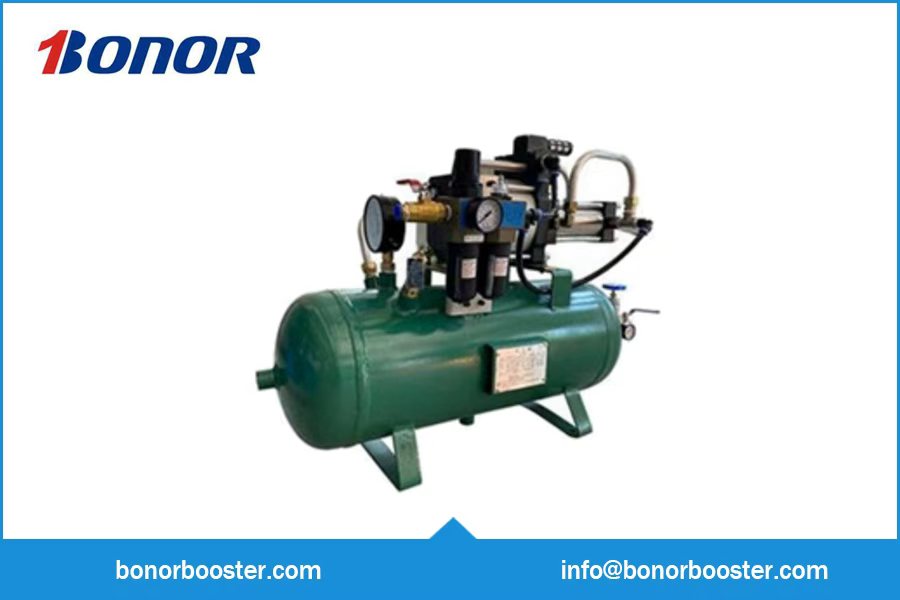
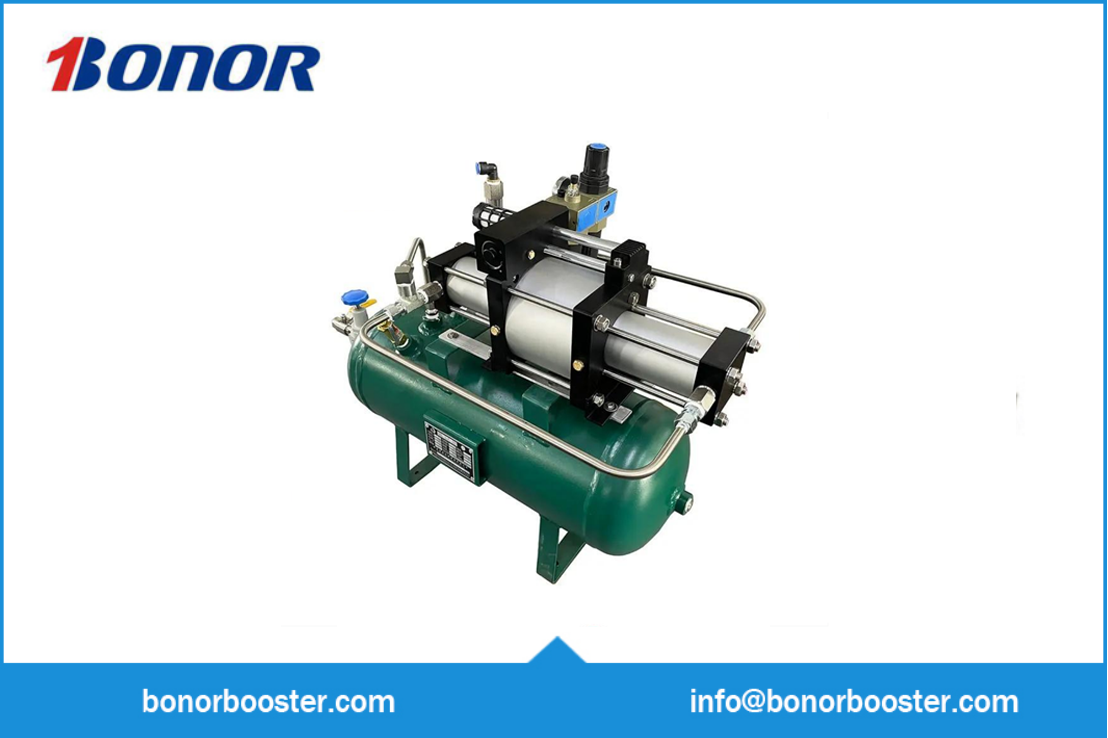
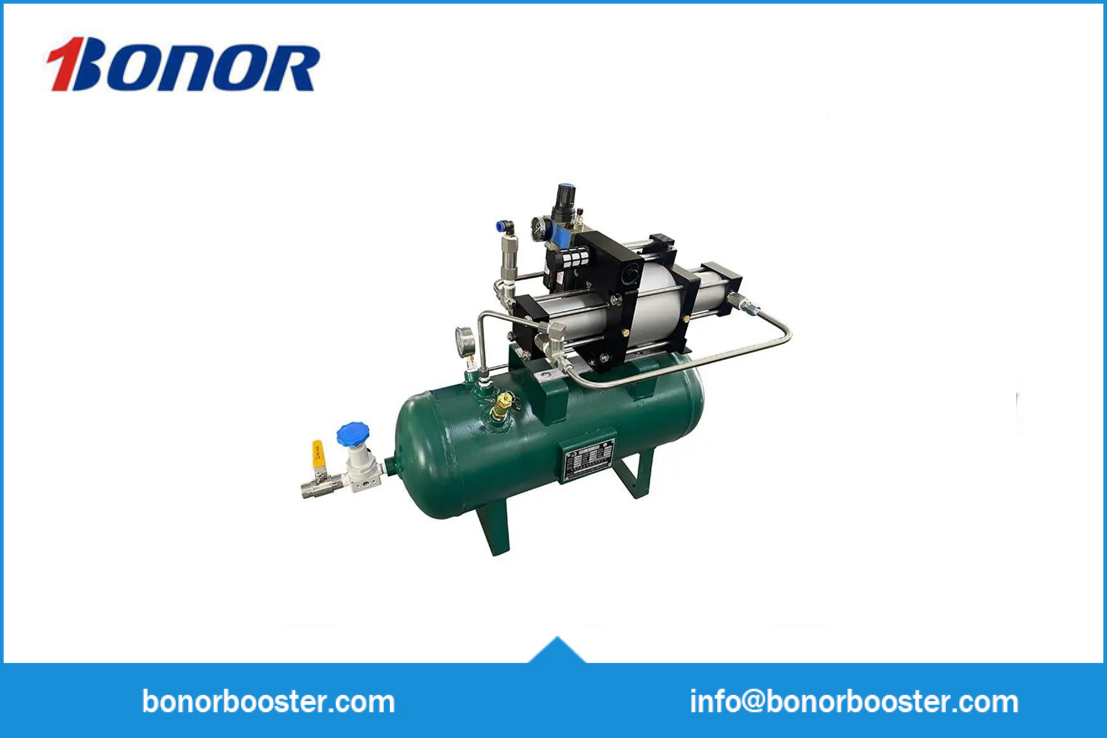
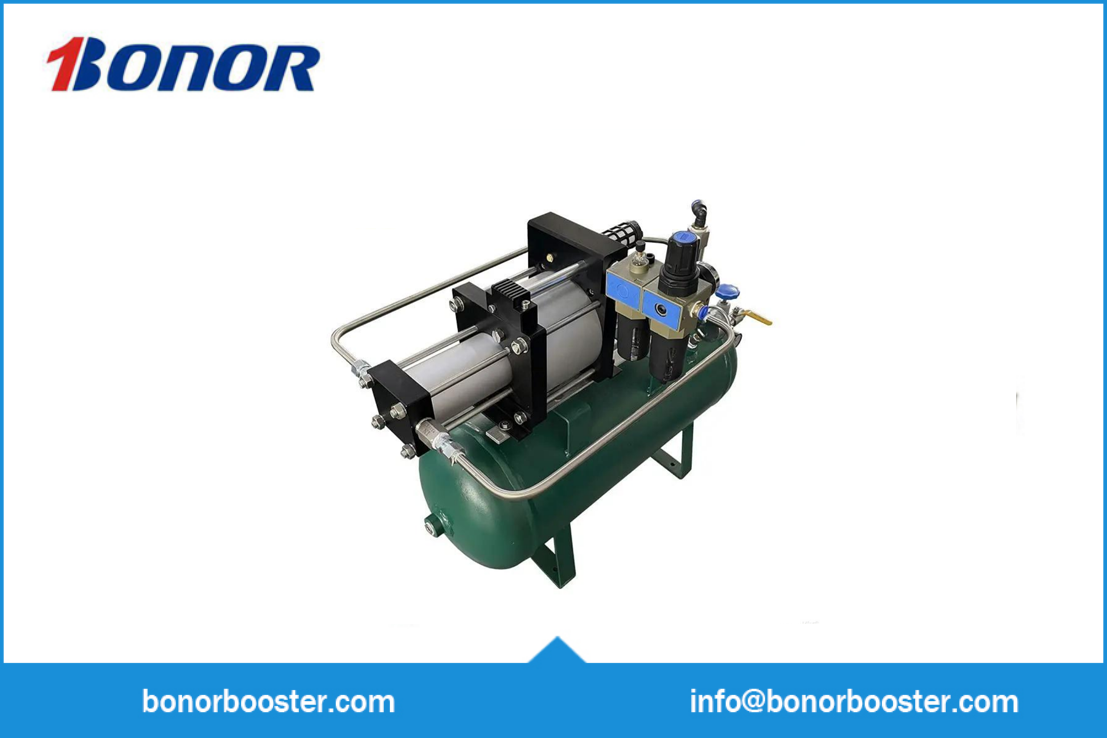
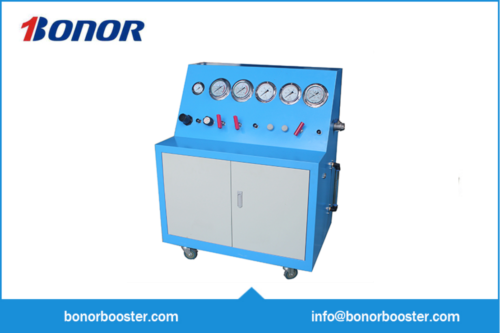
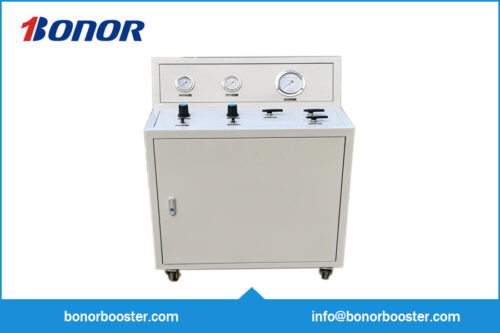
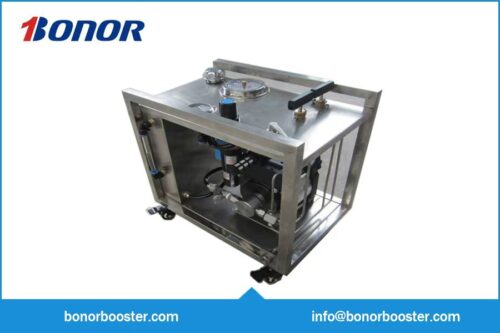
BONOR supplies air and gas booster systems designed to increase gas pressure for industrial applications. Depending on the selected configuration, the system can include a booster pump, an air storage tank with a capacity of 10–300 L, valves, pressure gauges, and pressure regulators.
The system uses compressed air as the driving power source and is suitable for gas pressurization, gas recovery, pressure testing, and leak detection. System configuration depends on the gas type, inlet pressure, required outlet pressure, flow rate, and operating conditions.
Key Features of the Air Booster System
- Wide Pressure Range: Configurations are available for pressure requirements from atmospheric pressure to 140 MPa, depending on the selected model.
- Compressed Air Drive: Drive air pressure ranges from 0.2 to 0.8 MPa, with a drive air consumption of approximately 0.3–1 m³/min, subject to operating conditions.
- Flexible Pressure Control: Manual control, instrument-based control, and computer software control are available, depending on the system configuration.
- Optional Air Storage Tank: Tank capacities from 10 L to 300 L can be selected according to application requirements.
- Application-Based Configuration: Booster pumps, valves, gauges, and other components can be selected to suit the gas and operating requirements.
Working Principle of the Air Booster System
1. Compressed Air Drive
The system uses compressed air at 0.2–0.8 MPa to drive the booster pump.
2. Gas Pressure Boosting
The pump uses a differential piston mechanism to increase the pressure of the supplied gas. A built-in directional valve controls the reciprocating movement of the piston, enabling continuous pressure boosting.
3. Pressure Monitoring and Control
Pressure gauges and suitable control components monitor and regulate system pressure. Depending on the configuration, the system can use manual controls, instrument-based controls, or computer software for pressure management.
4. Gas Storage and Output
When included in the system, a storage tank provides a gas reserve and helps buffer pressure fluctuations. The boosted gas is then supplied to the connected equipment or testing station.
Pressure Control Options
BONOR gas booster systems can be configured with different pressure control methods according to the application:
- Manual Control: For applications requiring operator adjustment.
- Instrument-Based Control: Uses pressure gauges and suitable control instruments to monitor and manage operating pressure.
- Computer Software Control: Available for systems requiring software-based pressure control and monitoring.
The suitable control method depends on the required pressure accuracy, automation level, testing procedure, and production process.
Technical Specifications
Drive Air Pressure: 0.2–0.8 MPa
Drive Air Consumption: 0.3–1 m³/min
Air Storage Tank Capacity: 10–300 L (optional)
System Pressure Range: Atmospheric pressure to 140 MPa, depending on the model
Pressure Control: Manual, instrument-based, or computer software control
Applicable Gases: Air, hydrogen, nitrogen, helium, and carbon dioxide, subject to model compatibility
How to Select a Suitable Booster System
When selecting a gas booster system, consider the gas type, inlet pressure, required outlet pressure, gas consumption, duty cycle, pressure control method, and installation requirements.
Contact BONOR with your gas specifications and operating parameters to discuss a suitable booster system configuration.
Applications of the booster system
A booster system packages the pump, the receiver, the controls and the safety devices into one skid so the unit can be installed, connected and commissioned as a single item. The Air Booster System is that package, configured around the gas, the pressures and the control interface of the plant it serves.
- Gas pressure boosting — raising cylinder or pipeline pressure to the level a process or test rig requires.
- Test benches and test cells — a self-contained high-pressure supply that can be moved between projects.
- Research and aerospace — high-pressure gas supply with recorded and repeatable set points.
What to specify before we build yours
- Gas, pressure and flow — the three inputs that define the pump selection inside the skid.
- Control philosophy — local panel, PLC with remote I/O, or integration into the plant DCS.
- Safety devices — relief valves, burst discs, pressure switches, gas detection and vent routing.
- Footprint and utilities — frame size, drive-air consumption, power supply and drainage.
How to choose a booster system
A skid is bought as a system, so the questions are about interfaces rather than components:
- Write down every interface before the order. Drive air, power, gas inlet, gas outlet, vent, drain and signal to the plant. Missing one of these is the most common cause of a delay at commissioning.
- Decide who controls the set point. A local regulator, a PLC analogue output or a signal from the plant — the choice changes the panel and the software.
- Ask for the FAT record. A skid should be pressure-tested and functionally tested before shipment, with the record supplied. That is the difference between a package and a pile of parts.
Frequently asked questions
Can the skid be integrated with our existing plant control?
Yes. The control panel can provide digital I/O or a Modbus/Ethernet interface so the plant can start, stop and read the set pressure and alarms. The signal list is agreed at the quotation stage.
What maintenance does the system need?
Routine checks are the air filter-regulator, the seal condition in the pump and the calibration of the pressure instruments. A yearly service kit and a calibration certificate keep the skid within its specification.
How is pressure stability guaranteed?
The pump stalls at the set pressure and restarts on a small drop, and a receiver downstream buffers the pulses. For tighter stability a regulator and an accumulator are added at the outlet.
Related equipment and further reading
Need a pressure range, fixture or test standard that is not listed here? Send the specimen list and the standard you test to and we will come back with a configuration and a price within one working day.