Description
What is a gas-liquid booster system?
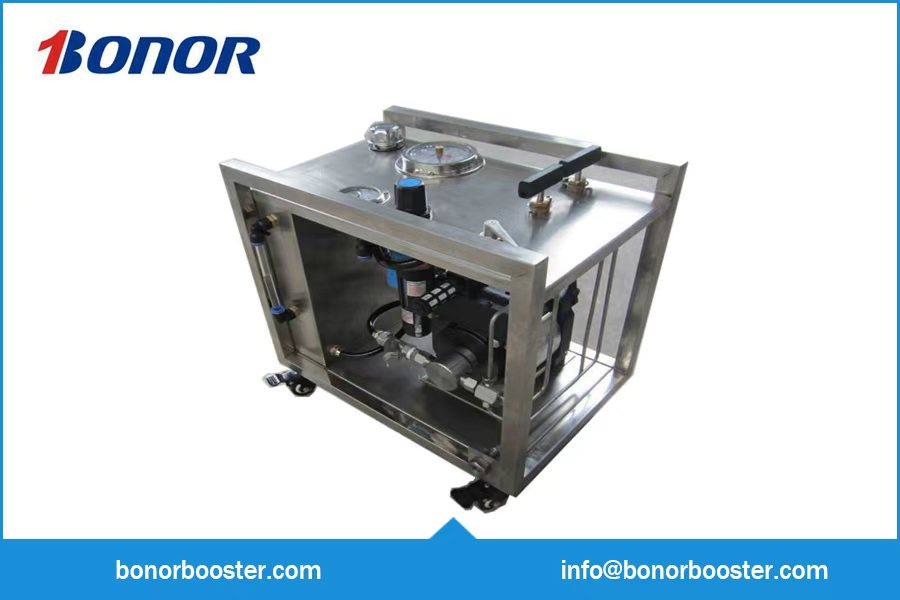
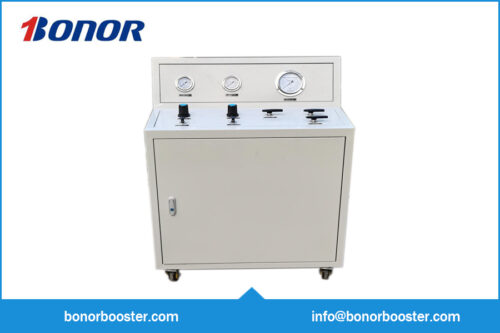
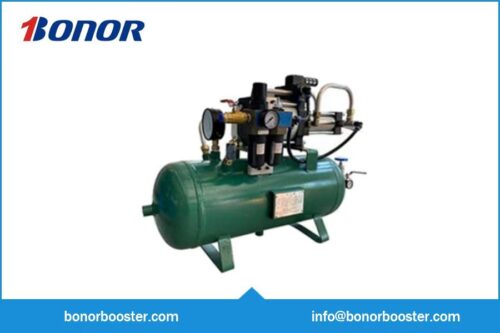
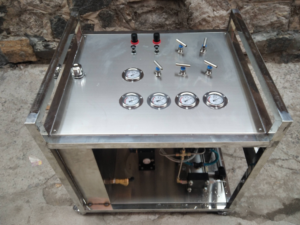
A gas-liquid booster system is a compact and easy-to-use system that integrates a gas-liquid booster pump, oil tank (or water tank), and other components within a tubular frame or enclosed casing, based on the actual needs of industrial production. The pressure regulating valve, pressure gauge, and other valves are all panel-mounted. The output pressure can be adjusted by setting the drive air pressure regulator. The pump automatically stops when the set pressure is reached and resumes operation when the pressure drops.
This series of booster systems typically uses water or oil as the working medium. Special designs are available for other media (including corrosive media) according to customer requirements.
Core Technical Parameters of Pneumatic-Hydraulic Booster System
Structure Type: Box type, Portable type, Skid-mounted type, etc.
Pressure Range: 0-640MPa
Medium: Water, emulsion, hydraulic oil, etc.
Output Flow: Selectable on demand
Tank Capacity: 10L (Customizable on demand)
Driving Method: Compressed air (0.2—0.7MPa)
Structural Features of the Gas-Liquid Booster System:
- Integrated Core: The gas-liquid booster cylinder is the core component, featuring a dual-chamber pneumatic/hydraulic linkage, self-lubricating design, and no need for an additional hydraulic pump.
- Modular Layout: The cylinder body, valve group, pressure gauge, etc., are integrated into a frame, resulting in a compact size and easy installation. Optional functional modules are also supported.
- Intrinsically Safe: Pneumatic drive eliminates electrical sparks, and built-in overload pressure relief protection makes it suitable for explosion-proof and non-electrical environments.
- Easy Maintenance and High Adaptability: Standardized seals simplify troubleshooting; adjustable pressure and compatibility with various hydraulic fluids.
Working Principle of the Gas-Liquid Intensification System:
- Gas Source Preparation: Connect a 3-8 bar compressed air supply, confirm the hydraulic oil level, and set the target pressure.
- Pneumatic Intensification: Compressed air drives the pneumatic piston of the intensifier cylinder, which in turn compresses the hydraulic oil, converting it into high pressure through the difference in area.
- Operation Execution: The high-pressure oil is delivered to the actuator to complete operations such as pressing and testing, and maintains pressure as needed.
- Pressure Release and Reset: The air circuit is switched, the piston retracts, the hydraulic chamber is depressurized, and the oil flows back to its original position, ready for the next cycle.
Typical applications of gas-liquid booster systems:
◎ Providing static and burst testing for valves, fittings, etc.
◎ Testing of automotive braking systems and fuel injectors.
◎ Injecting chemical reagents into pipelines or reactors.
◎ Filling of refrigerants.
◎ Powering clamping, drilling, shearing, and stamping equipment.
◎ Overload protection, mold cushioning, and lifting power for large presses.
◎ Static and dynamic testing of aerospace components.
◎ Performance testing and calibration of instruments and meters.
◎ Water jetting for high-pressure cleaning and water cutting equipment.
◎ Lubricating oil injection for mechanical equipment lubrication systems.
◎ Clamping power during valve testing.
◎ Pressing in and pressing out power for bushings and cylinder liners.
◎ Controlling surface and downhole safety valves.