
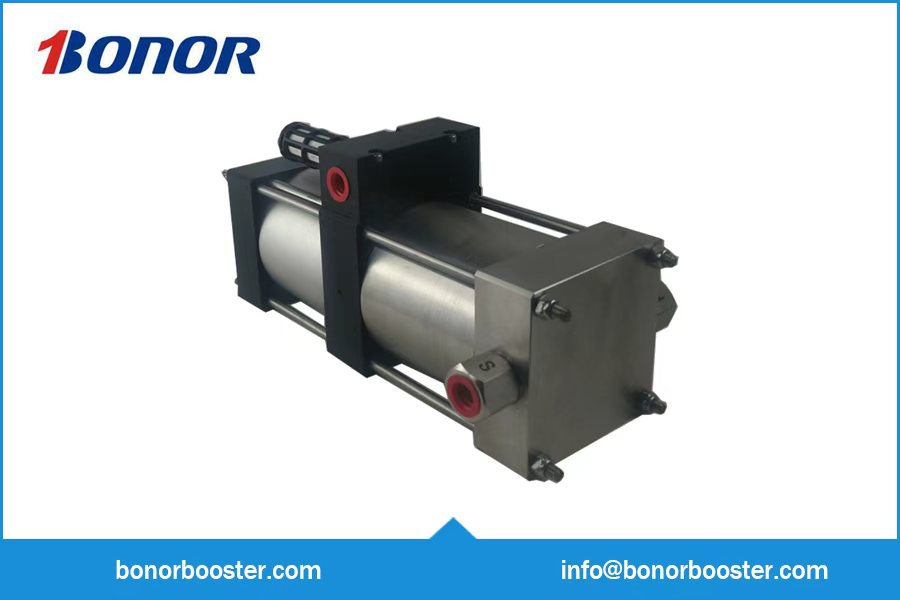
When choosing the right gas booster pump for your needs, several key features play a significant role in performance, efficiency, and longevity. Let’s break down the critical factors that ensure your pump operates at its best.
| Feature | What to Look For | Why It Matters |
| Pressure Range (PSI) | Common ranges from 1,500 PSI to 3,000 PSI or higher | Ensures pump is suitable for high-pressure applications |
| Flow Capacity (CFM or L/min) | Ranges from 20 CFM to 500 CFM depending on the model | Determines how much gas can be moved for different systems |
| Material Construction | Stainless steel, aluminum, or corrosion-resistant alloys | Affects durability and lifespan, especially in harsh environments |
| Noise and Efficiency | Low noise and energy-efficient models are preferred | Reduces operational costs and improves workplace conditions |
一、 Pressure Range: How High Can Gas Booster Pumps Go?
The pressure range of a gas booster pump is one of the most crucial factors in selecting the right model. Gas booster pumps are designed to handle a wide array of pressures depending on the application, from low-pressure systems to high-pressure operations.
Typical Pressure Ranges:
1,500 PSI for medium-pressure systems, such as gas compression in small industrial applications.
3,000 PSI and above for high-pressure systems, used in oil & gas and natural gas compression.
Why It Matters: The pressure rating directly impacts the pump’s ability to deliver the required gas flow, ensuring optimal performance in applications that require specific pressurization levels.
二、 Flow Capacity: How Much Gas Can They Handle?
Flow capacity is a critical feature when selecting the right gas booster pump. It determines the volume of gas the pump can move within a given time frame, typically measured in CFM (Cubic Feet per Minute) or L/min (Liters per Minute).
Typical Flow Rates:
Low-flow models: 20-50 CFM, ideal for small-scale operations.
High-flow models: 100-500 CFM, designed for large-scale operations like gas transport or high-capacity compression.
Why It Matters: The flow capacity dictates the pump’s efficiency in moving gas and powering systems such as pneumatic equipment, chemical dosing systems, or gas distribution lines. Choosing a pump with the wrong flow rate can lead to inefficiency, increased wear, or downtime.
三、 Material Construction: What Materials are Gas Booster Pumps Made From?
The material construction of a gas booster pump is crucial for ensuring long-term durability and resistance to corrosion and wear. Stainless steel and aluminum are the most common materials used in gas booster pumps.
Common Materials:
Stainless Steel: Highly resistant to corrosion, ideal for harsh environments, especially in the chemical, oil & gas, and natural gas industries.
Aluminum: Lightweight and corrosion-resistant, suitable for less demanding applications.
Why It Matters: The material used in the construction of the pump determines how well it can withstand aggressive gases and extreme environmental conditions. Choosing the right material can significantly extend the service life of the pump, reducing maintenance costs.
四、 Noise and Efficiency: Key Factors to Consider
Noise levels and energy efficiency are important factors that affect both the performance and the operating cost of a gas booster pump. A quieter, more energy-efficient pump can help create a safer and more productive environment, especially in facilities where noise regulations are strict.
Noise Levels: Gas booster pumps can generate significant noise during operation. Choosing a pump with low decibel output can improve the working conditions.
Energy Efficiency: Efficient pumps consume less energy while providing the same output, which reduces operational costs over time. Look for energy-efficient models with variable speed motors or advanced control systems.
Why It Matters: Reducing noise improves safety and worker comfort, while energy efficiency lowers operational expenses. With energy prices constantly rising, investing in an efficient pump can result in substantial long-term savings.
Selecting the right gas booster pump is essential for ensuring the efficiency, durability, and safety of your operations. Focus on the pressure range, flow capacity, material construction, and noise levels to make the best choice for your specific application. Understanding these key features will help you select a gas booster pump that meets both your technical and financial needs.
