
BONOR is a professional manufacturer of Pulse Fatigue Testing Machine in china. Pulse Fatigue Testing Machine is a professional testing system designed to evaluate the fatigue performance of materials and components under long-term cyclic loading conditions. By applying controlled pulse pressure, tensile, compressive, or bending loads through hydraulic, electromagnetic, or servo-driven systems, the machine simulates repeated stress conditions that products may experience during actual service. With an advanced data acquisition system, it continuously records key parameters such as load, displacement, strain, and cycle number to assess fatigue life, structural reliability, and failure mechanisms.
The Pulse Fatigue Testing Machine is widely used in aerospace, automotive, pressure vessel, railway transportation, metal materials, new energy, and medical device industries. It is commonly applied for durability testing of aircraft structural components, automotive parts, hydraulic pipelines, valves, pressure vessels, and medical implants. Through accelerated fatigue cycle testing, the equipment helps engineers identify potential structural weaknesses, optimize product designs, improve safety performance, and extend service life, making it an essential tool for material research, quality control, and engineering validation.
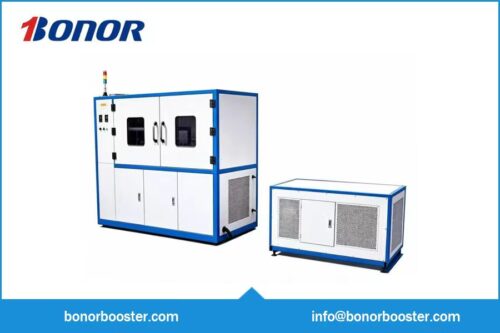
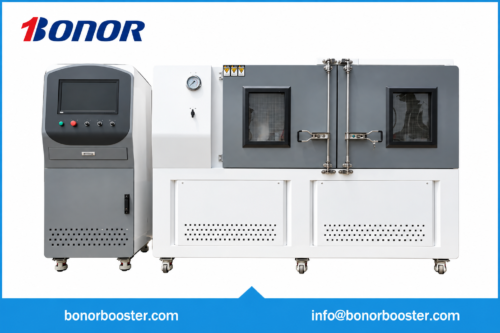
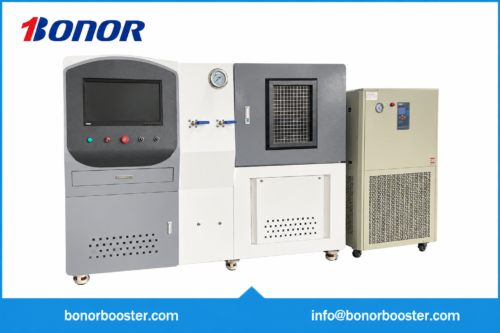
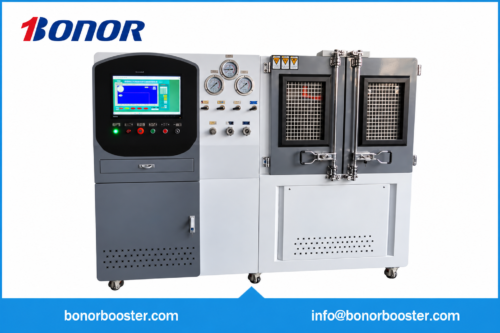
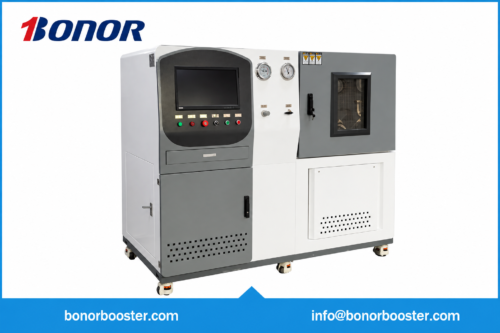
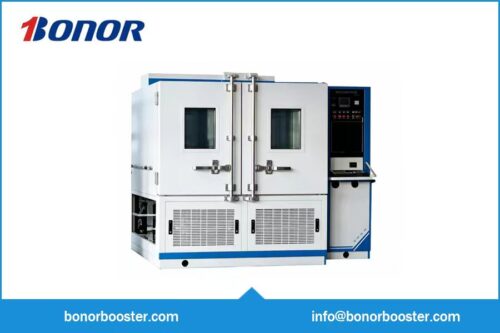
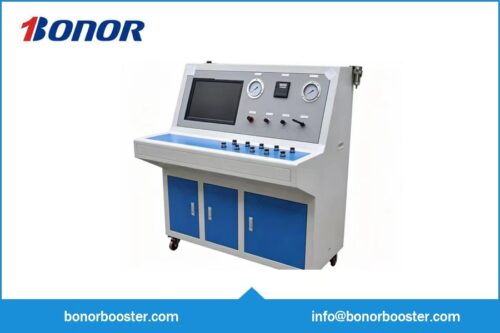
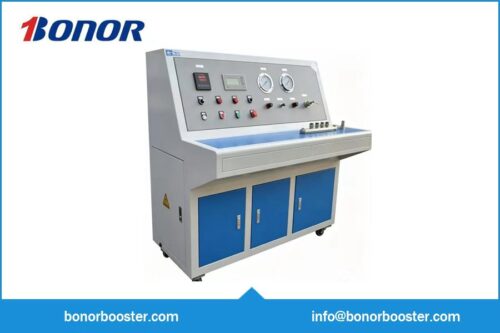
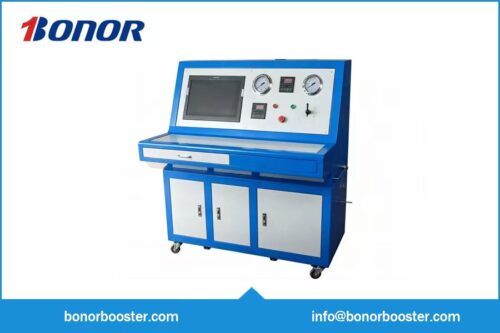
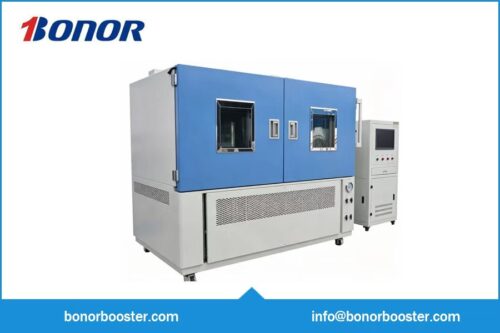
Pulse Fatigue Testing Machines: Proving Service Life Under Cyclic Pressure
Most pressure failures in service are not burst failures — they are fatigue failures. A hose, pipe, radiator, cylinder or solar absorber that holds a steady pressure perfectly well can still crack after thousands of pressure cycles. A pulse fatigue test reproduces those cycles, at a controlled rate and waveform, and counts how many the part survives.
The result is expressed as cycles to failure at a stated pressure range and waveform. That makes the test parameters part of the specification: change the waveform, the rate or the temperature and the number becomes meaningless for comparison. A test bench that cannot control and record those parameters produces numbers that cannot be defended.
Specification points
- Pressure range and cycle count The upper and lower pressure of each cycle and the number of cycles required. Both come from the product standard or from the customer's validation plan.
- Waveform and rate Sine, trapezoid or square, and cycles per minute. A trapezoidal waveform with a hold at peak is closer to some service conditions; a fast sine gives more cycles per day.
- Test medium and temperature Water, oil or gas, and whether the medium is heated or chilled. Temperature is often the variable that actually causes the failure, so a bench without temperature control may test the wrong thing.
- Number of simultaneous specimens Multiple stations reduce calendar time but complicate leak detection, because one failed specimen must not stop the others.
- Automatic failure detection The bench should detect leakage or pressure loss and stop or isolate that station automatically, so the cycle count at failure is exact rather than approximate.
Hydraulic and gas pulse testing
| Type | Medium | Typical use |
|---|---|---|
| Hydraulic pulse | Water, oil or glycol | Hose, pipe, radiator, cylinder, solar absorber |
| Gas pulse | Air, nitrogen | Components where gas service is the design condition |
| Pulse with environmental chamber | Liquid or gas plus temperature | Validation where thermal cycling is part of the duty |
Making the cycle count comparable
A fatigue result is only useful if the next test uses the same conditions. Record pressure range, waveform, rate, medium, temperature and the failure criterion alongside the cycle count, and keep the record with the specimen. When a customer asks why a part failed at 40,000 cycles in one lab and 90,000 in another, those six parameters are the explanation.
Frequently asked questions
How many cycles does a pulse test need?
Why is the waveform important?
Can the bench run unattended overnight?
Does temperature matter as much as pressure?
Pulse and fatigue test benches
Need help specifying? Send us your test pressure, specimen range and the standard you work to — talk to our engineers or use the inquiry form on any product page.