An LPG cylinder spends its whole life under pressure, in sunlight, on bumpy roads and in the hands of users who never read the label. Regulators answer that with one rule: no cylinder returns to service until it has been requalified. What most buyers underestimate is that requalification is not a single machine – it is a sequence of stations, and the line is only as fast as its slowest one.
This guide walks through a complete LPG cylinder testing line the way an inspector walks through it: station by station, with the equipment each one needs and the throughput you can realistically plan around.
Why Cylinders Are Requalified on a Schedule
Steel and aluminium cylinders corrode from the inside, dent on the outside and lose wall thickness a fraction of a millimetre at a time. The requalification interval – typically five years for most LPG service, shorter for harsh duty – exists because that thinning is invisible from outside. A cylinder that looks perfect can fail a hydrostatic test at 3.2 MPa; one that looks battered can pass comfortably. You only know by testing.
For a plant or a distributor running thousands of cylinders, the test line is a production system, not a lab. That distinction drives every equipment decision below.
Station 1 – Receipt, Degassing and Visual Inspection
Cylinders arrive with residual product inside, so the first station degasses and purges them safely. Inspectors then check the outside: dents deeper than a set fraction of the diameter, corrosion pitting, fire damage, and illegal repairs such as welded patches. A large share of cylinders – often 10 to 20 percent – exit the process right here, which is why the inspection bench deserves as much planning as the test machines.
Station 2 – Weighing and Volume Verification
Tare weight catches cylinders that have lost wall material or carry water inside. Cylinders outside the stamped tolerance are rejected before they consume test-bench time. It is a cheap station that protects an expensive one.
Station 3 – Hydrostatic Proof Test
The core of the line. The cylinder is filled with water and pressurised to the code test pressure – commonly around 3.2 MPa for typical LPG cylinders – and held while inspectors watch for expansion anomalies, leaks or visible deformation. Two methods dominate:
- Water jacket method – the cylinder is submerged in a calibrated jacket; the water displaced by its expansion is measured, giving a precise volumetric expansion reading that detects wall thinning before failure.
- External verification – the cylinder stays dry while pressure is applied and its exterior is observed directly, which suits smaller workshops and lower throughputs.
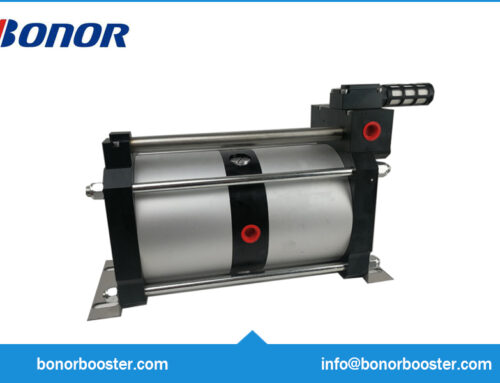
For high-throughput plants, an automated LPG cylinder hydrostatic testing machine runs the pressurise-hold-drain cycle hands-free and logs every result, which matters when the next audit asks for five years of records. The same family of equipment covers other pressure vessels: a fire extinguisher cylinder hydrostatic pressure testing machine shares most of its architecture with the LPG version, and a external hydrostatic testing machine for cylinders serves shops that prefer the dry method. For mixed production, a general-purpose gas cylinder hydrostatic test machine with the water jacket method covers several cylinder types on one bench. An overview of all these options is on the gas cylinder test machine category page.
Station 4 – Leak (Tightness) Test
After the water test, the dried cylinder is charged with air or nitrogen to service pressure and checked for leaks – typically by immersion or by pressure-decay measurement. A cylinder can pass hydrostatics and still fail here because of a damaged valve seat or a fatigued weld seam that only leaks at working pressure.
Station 5 – Drying, Valving and Labelling
Water inside a cylinder destined for LPG service causes corrosion and contaminated product, so drying – hot air circulation or vacuum – is a real station with real time, often the hidden bottleneck. Valving machines then torque the new valve to spec, and the cylinder receives its requalification marking: date, test station identity and inspector code.
What a Realistic Line Throughput Looks Like
A manual small-shop line might handle 30-60 cylinders per shift. A semi-automatic line with automated clamping and result logging typically reaches 80-120 per shift, and a fully automated line with conveyor transfer and parallel stations exceeds 200. The numbers depend less on the hydrostatic machine than on inspection staffing and drying time – two items buyers routinely forget to plan.
Frequently Asked Questions
How long does a full requalification take per cylinder?
In a flowing line, 10-15 minutes of station time per cylinder, but stations run in parallel, so per-cylinder elapsed time is much shorter. The drying stage is usually the longest single step.
Can one machine test both LPG and fire extinguisher cylinders?
Often yes – pressure ranges overlap and fixtures are changeable. The practical limits are cylinder diameter and weight handling, so it is worth sending both specimen lists to the equipment supplier before ordering.
What records must the line produce?
At minimum: cylinder identity, test pressure, hold time, result and operator. Automated benches store this per cylinder, which turns a day-long audit preparation into a database query.
BONOR builds complete cylinder test lines – from single hydrostatic benches to conveyor-connected automated lines. Send us your cylinder types and daily volume for a layout proposal and quotation.