Description
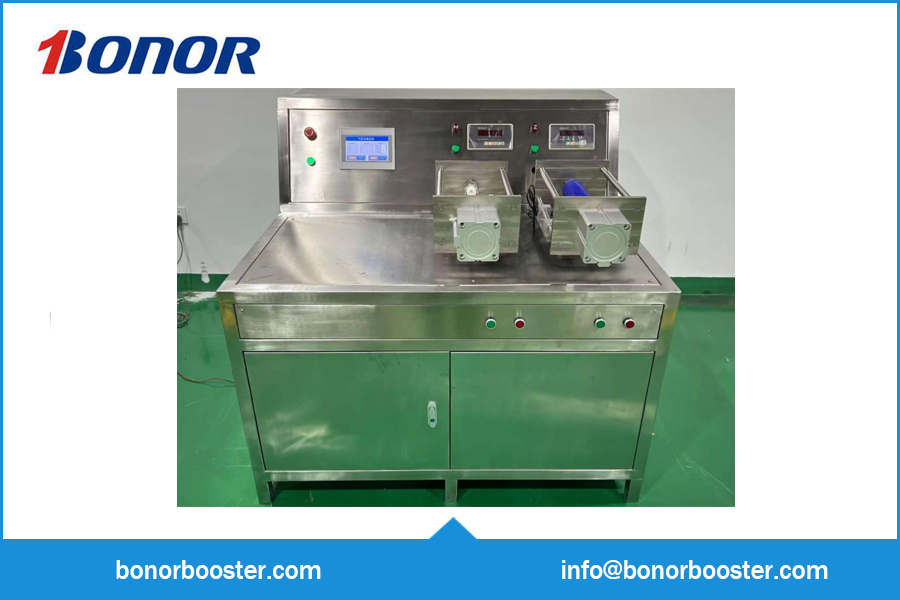
Based on industrial working conditions and centered on the design concept of safety, high efficiency and intelligence, our company independently develops carbon dioxide automatic filling equipment, which is widely applicable to semi-automatic and fully automatic filling operations.
Carbon dioxide cylinders are high-pressure vessels with a critical temperature of 31.1℃. When the internal temperature exceeds this value, the medium cannot be liquefied, resulting in a sharp rise in cylinder pressure and potential explosion risks. Therefore, qualified high-pressure cylinders shall be adopted for storage, transportation and operation. Relevant provisions of the Safety Supervision Regulations for Gas Cylinders shall be strictly observed. Cylinders are strictly prohibited from exposure to sunlight, impact, collision and baking, and shall be kept away from heat sources.
Carbon dioxide absorbs massive heat during pressure reduction, which easily causes frost on cylinders and freezing of valves. In case of valve freezing, knocking and open-flame heating are forbidden. Only normal temperature running water shall be used for thawing.
The nominal working pressure of gas cylinders is 15 MPa, and the pressure after filling is 7–8 MPa. Overfilling is strictly prohibited, and the filling standard of 0.6 kg/L shall be strictly implemented.
Full liquid temperature corresponding to different filling coefficients:
| Full Liquid Temperature (℃) |
18.1 |
21.8 |
26.3 |
28.4 |
| Filling Coefficient (kg/L) |
0.79 |
0.75 |
0.688 |
0.664 |
The CO2 filling machine offers the following advantages:
1.Compatible with Various Cylinder Specifications: Suitable for CO2 cylinders of different sizes.
2.Safe Filling of Multiple Gases: Capable of safely filling CO2, N2O, LPG, butane, and propane.
3.Three-in-One Functionality: Combines vacuuming, CO2 filling, and automatic weighing for easy operation.
4.High-Pressure Filling: Maximum filling pressure of up to 800 bar, with adjustable pressure settings.
5.Automatic Stop: Automatically stops when the preset filling weight is reached, ensuring accuracy.
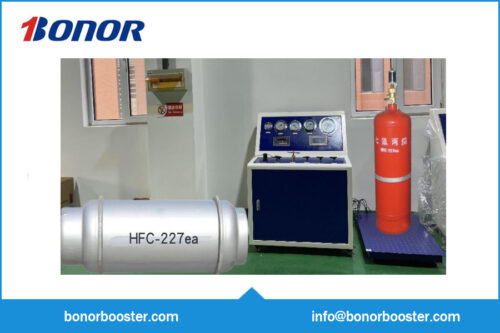
6.Fire Extinguisher Refilling: Designed to refill CO2 into fire extinguishers safely, ensuring proper functionality.
This equipment significantly improves filling efficiency and safety, meeting the needs of various industries.
For users with a limited budget, we offer an affordable manual CO2 filling solution. This equipment is built with a carbon dioxide booster pump and a manual control kit. While it requires manual operation,but it provides a cost-effective option.
As CO2 is a high-pressure liquid gas, it must be filled into cylinders according to the approved weight. To prevent overfilling, an electronic scale is used to monitor the CO2 filling weight. Once the approved filling weight is reached, the user must manually stop the filling process to avoid excess CO2 in the cylinder.
Please leave your contact information, and we will contact you as soon as possible to provide a perfect solution and quotation.
Applications of the gas filling machine
Filling accuracy and fill safety are the two things a filling station is judged on, and both come from the machine rather than from the operator. The Carbon Dioxide Filling Machine controls the fill by weight or pressure, stops at the set point and records the result against the cylinder.
- Fire extinguisher refilling — CO2 and clean-agent cylinders filled by weight to the specified charge.
- LPG and refrigerant — filling of small cylinders and recovery of refrigerant from service equipment.
- Cylinder service centres — filling as part of a combined test, dry and refill workflow.
What to specify before we build yours
- Gas and phase — liquid or vapour, and whether the fill is by weight or by pressure.
- Fill accuracy and tolerance — the charge tolerance your standard allows decides the scale resolution and the valve type.
- Cylinder sizes and valve connections — the filling head and the adapter follow the valve, not the cylinder.
- Automation and records — manual, semi-automatic or inline; and whether a fill record per cylinder is required.
How to choose a gas filling machine
Filling is a trade-off between speed and accuracy, and the machine has to be specified for the side of that trade-off you need:
- Choose weight or pressure deliberately. Weight filling is accurate regardless of temperature; pressure filling is faster but drifts with temperature and cylinder volume. For small charges with a tight tolerance, weight is the safer choice.
- Check the filling head, not just the machine. The head has to seal on the valve, vent safely and release without spitting. A poor head defeats a good scale.
- Decide how the fill is proven. If each cylinder needs a recorded charge, the machine needs a scale interface, a serial-number field and an export. Retrofitting that is usually a software project.
Frequently asked questions
Which gases and cylinder valves does it support?
CO2, nitrogen, clean agents and refrigerant are the common ones; the filling head and adapters are matched to the valve type (pin-index, CGA, DIN or the local standard). Non-standard valves are quoted as an adapter rather than a new machine.
How is filling accuracy controlled?
By weight the machine fills to a target mass with a fast-fill and a slow-trim stage, then closes the valve at the tolerance band. By pressure it fills to a set pressure compensated for temperature. Both are recorded against the cylinder.
Is it suitable for fire extinguisher refilling?
Yes — this is one of the main applications. The machine fills CO2 and clean-agent extinguisher bodies by weight, with a vent and a recovery connection so that overfill can be corrected without releasing gas to atmosphere.
Related equipment and further reading
Need a pressure range, fixture or test standard that is not listed here? Send the specimen list and the standard you test to and we will come back with a configuration and a price within one working day.