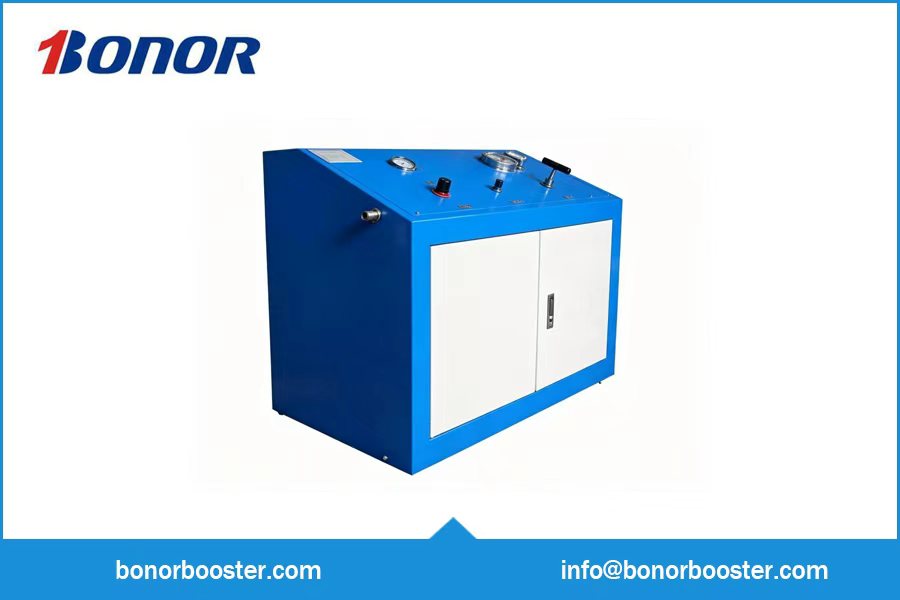
- Driving air pressure: 0.1–0.69 MPa; output pressure is proportional to driving air pressure
- Air consumption: 1.6 Nm³/min
- Test pressure range: 0–280 MPa, customized pressure range is available according to customer requirements
- Working medium: Water / Hydraulic oil
- Portable automatic recorder can be configured on demand
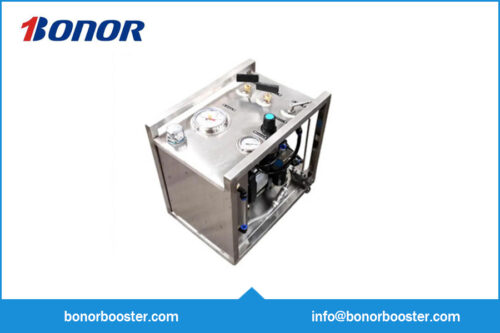
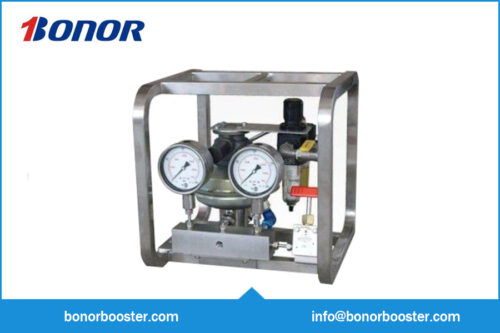
Portable hydrostatic testing machine
Description
一、Application Scope
Bonor portable pressure system features compact size, high working pressure and favorable price. It is easy to transport and suitable for field operation. Manual pressurization is available when power supply is unavailable, with water or hydraulic oil as test medium. This unit is widely applied in pressure calibration, liquid filling, offshore drilling platforms and aircraft component calibration. With easy portability, intuitive operation and adjustable pressure, it is a simplified lightweight version of standard pressure systems.
二、 Equipment Features
- Equipped with air-driven automatic booster pump with adjustable output pressure.
- Adopts advanced technology and reasonable structural design, featuring small size, light weight and elegant appearance.
- All pressure-bearing components are standard parts from world-famous brands without welded joints. The structure is easy to disassemble, with high safety factor, long service life and convenient maintenance.
三、Technical Parameters
- Driving air pressure: 0.1–0.69 MPa; output pressure is proportional to driving air pressure
- Air consumption: 1.6 Nm³/min
- Test pressure range: 0–280 MPa, customized pressure range is available according to customer requirements
- Working medium: Water / Hydraulic oil
- Portable automatic recorder can be configured on demand
四、 Application Scope
- Static and dynamic testing for aerospace accessories after maintenance
- Calibration and verification of safety valves
- Underwater bubble leak test for valves and wellhead assemblies
- Performance test for automobile braking systems
- Gas charging equipment for communication cables
- Nitrogen filling for aircraft tires and hydraulic accumulators
- Pressure testing of high-pressure gas systems and precision instruments
- Demineralization treatment including reverse osmosis and desalination process
- Pressure supply for testing and calibration of natural gas components
- Power supply for downhole fluid depth acoustic logging equipment
- Pressure boosting systems for coal mines (explosion-proof industry)
- Research on flow characteristics of high-pressure gas
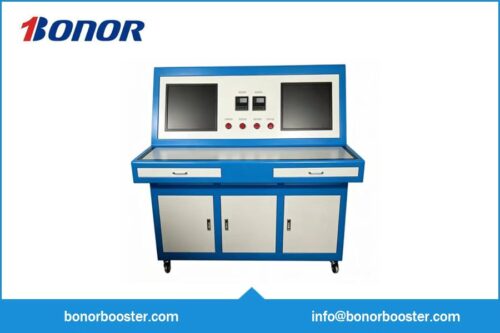
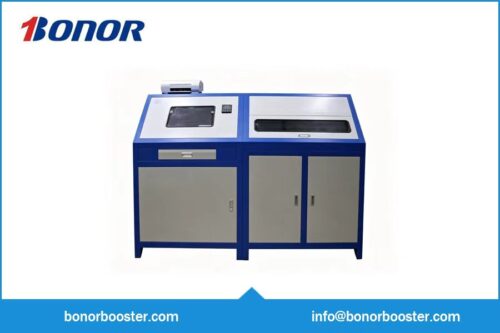
Bonor Hydrostatic Test Bench
This test bench is mainly applied to factory inspection of the following components:
Automobile Hoses
Steering hoses, brake hoses, air conditioning hoses, fuel hoses, cooling water hoses, heat dissipation hoses, heater hoses, air filter hoses, turbocharger system hoses & engineering hydraulic hoses
Other tested products
Aerospace hoses and pipe assemblies, rigid pipes & pipe joints; automotive brake pumps, radiators, oil coolers and cylinder blocks.
Application of Engineering Hydraulic Hoses
Implement burst pressure tests for hydraulic pipes used in hydraulic equipment, construction machinery and mining machinery; Complete pressure resistance test and burst test for pressure-bearing equipment such as valve bodies and cylinder barrels.
Applications of the hydrostatic pressure test bench
Requalification work lives and dies by traceability: which cylinder, which pressure, which operator, which result. The Portable hydrostatic testing machine stores every test against the part identity, so the audit trail is already in the machine when the inspector asks for it.
- Gas cylinders and pressure vessels — requalification and factory acceptance testing, with or without a water jacket for permanent-deformation measurement.
- Steel pipe, plastic pipe and pipe spools — mill and fabrication shop proof testing before coating, shipping or site installation.
- Field-service teams — compact benches that travel to the cylinders instead of the other way round.
In daily use the Portable hydrostatic testing machine sees mostly part testing. That decides the fixture style, the approach rate and what the operator actually does between tests.
What to specify before we build yours
- Test pressure and hold time — often 1.5 times the design rating, with the hold period set by the applicable standard. It is set up here for the part.
- Output needed — a gauge reading, a printed certificate per part, or a data file with the full pressure curve. The setting here follows the part you run most.
- Air consumption — 1.6 Nm³/min (confirmed for this unit).
Configuration on the current build: This unit works with air consumption at 1.6 nm³/min.
Currently configured as: Air consumption: 1.6 Nm³/min. Any other range or fixture is a custom build.
Selecting a hydrostatic pressure test bench for your line
Before comparing suppliers, settle the four questions below — they determine most of the price and all of the usability:
- Look at the frame for the heaviest part, not the average one. Rotating a heavy vessel onto the bench, aligning it and clamping it is where time and injuries concentrate. Roller beds, alignment aids and good access matter more than another 50 bar of range.
- Size the pump for fill time, not just pressure. A large vessel at low pressure can take longer to fill than a small one at high pressure. Ask for the flow rate at your working pressure and calculate the cycle time before you commit.
- Fixture fit for the part. The clamping set is drawn around your part drawings first, so the part sits square without shimming — and the same fixture family extends to other sizes later.
Frequently asked questions
What utilities does the bench need on site?
Mains power for the pump and controller, a water supply with reasonable pressure, drainage for the dump, and compressed air if you want pneumatic clamping. We list the exact connections in the quotation so your services contractor can prepare the bay before the bench arrives. On this build the part is the reference case, and the setting is proven with your samples at commissioning.
How long should the pressure be held during a hydrostatic test?
The hold time comes from the product standard rather than from the machine — commonly 30 seconds to a few minutes for pipe and valves, longer for large vessels where the material needs time to stabilise. The bench simply holds the set pressure for the programmed time and logs whether it drifted. For the Portable hydrostatic testing machine this is part of the standard scope, confirmed in the quotation.
Related equipment and further reading
- Plastic Pipe Hydrostatic Pressure Testing Machine
- lpg cylinder hydro testing machine
- Well Control Equipment Hydrostatic Test System
- Browse the full Hydrostatic Pressure Testing Equipment range
- Water vs oil as test medium
- From spec to sign-off
Unsure which recording level fits your certification process? Describe your current paperwork and we will match the bench to it — answer within one working day.