Description
1. Application Scope
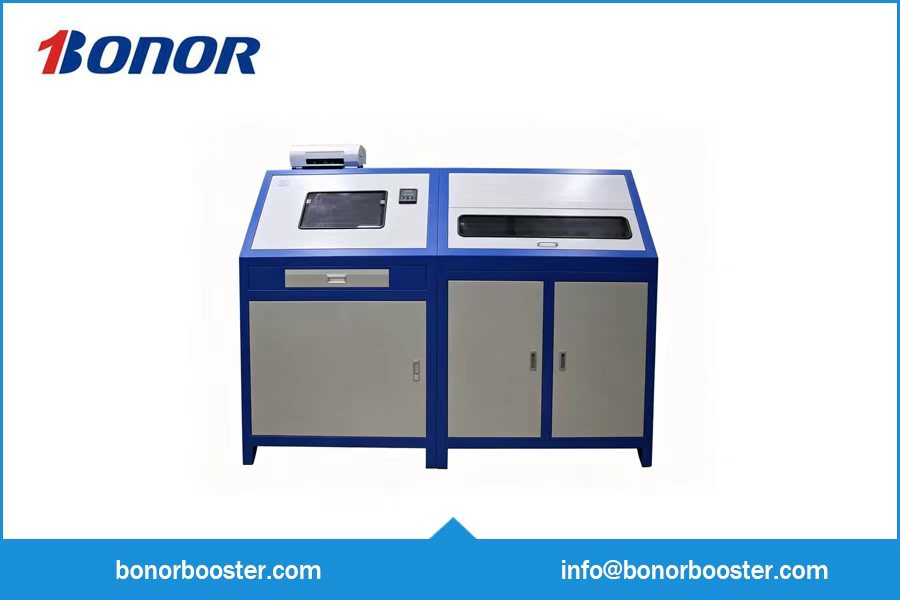
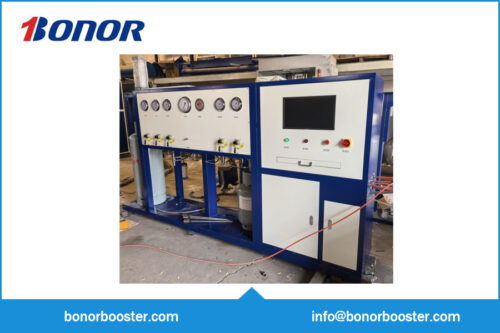
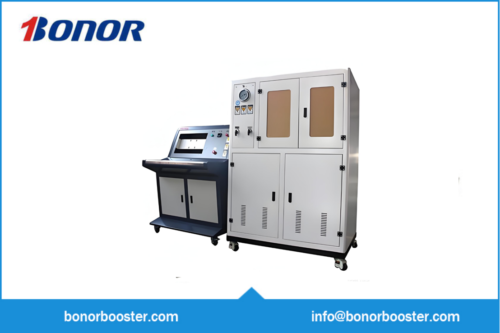
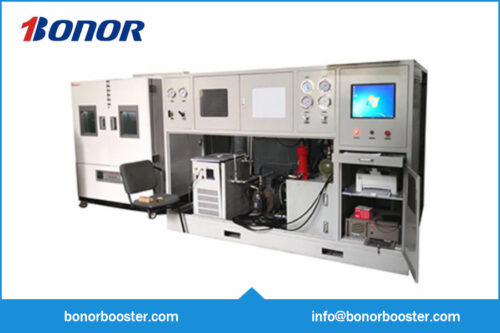
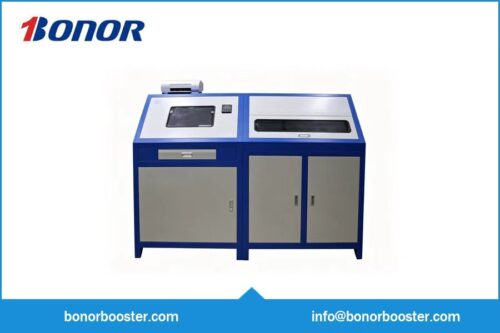
Bonor plastic pipe hydrostatic test machine is designed for pressure resistance and burst performance testing of plastic pipes, PVC pipes, PPR pipes and other tubular products. The machine consists of pressure test system, pressurization system as well as control & display system, supporting both manual control and computer automatic control modes. Equipped with Bonor liquid booster unit, the pressurization system completes pressure build-up and pressure holding for long-term static hydraulic fatigue tests with stable pressure retention performance. The control & display system manages driving air pressure, pressure relief and pressurization processes while displaying real-time pressure values. It is applied to measure burst pressure and pressure-resistant duration of various pipes, widely used in quality inspection institutions, auto parts manufacturers, product testing stations, scientific research institutes, as well as the production, development and research of all types of flexible hoses.
2. Test Standards
This machine is developed and manufactured in compliance with the following specifications:
- EN ISO1402-1996 / NF T47202-1996: Rubber and plastic hose assemblies — Static hydraulic test
- GB/T6111: Thermoplastics pipes for conveying fluids — Test method for resistance to internal pressure
- GB/T10002.1: Unplasticized poly(vinyl chloride) (PVC-U) pipes for water supply
- GB/T4219: Rigid poly(vinyl chloride) pipes for chemical industry
- GB/T6674: Low-density polyethylene pipes for irrigation
3. Equipment Features
- Fitted with Bonor air-driven automatic booster pump to realize stepless adjustable and controllable output pressure.
- Adopts advanced technology and reasonable structural layout, featuring small footprint, light weight and elegant appearance.
- All pressure-bearing components adopt standard parts from world-renowned brands with fully weld-free structure. The equipment is easy to disassemble and assemble with high safety factor, long service life and convenient maintenance.
4. Technical Parameters
- Driving air pressure: 0.1 ~ 0.69 MPa; the output pressure is directly proportional to driving air pressure
- Air consumption: 1 Nm³/min
- Test pressure range: 0 ~ 300 MPa, customized pressure range available upon customers’ practical requirements
- Working medium: Water, hydraulic oil, emulsion
- Portable automatic recorder is optional according to customer demands
Where a hydrostatic pressure test bench is used
Whether you test ten parts a week or two hundred a day, the physics is the same — the part must reach the target pressure gently, hold it steadily, and release it safely. The Plastic Pipe Hydrostatic Pressure Testing Machine packages that cycle into a repeatable routine your operators do not have to think about. The bench is sized for plastic pipe as the main duty; other families are handled by adding fixtures rather than redesigning the machine.
- Hydraulic press and power-pack reservoirs — internal volumes proof-tested after fabrication and after repairs.
- Filter housings and separators — shell integrity checked after welding or after element replacement.
- Pipe and spool fabricators — hydro proof after welding and before coating or dispatch.
What makes this Plastic Pipe Hydrostatic Pressure Testing Machine practical is the way it handles the pipe section: one clamping routine, one pressurisation recipe and one result file, test after test.
What to specify before we build yours
- Test pressure and hold time — often 1.5 times the design rating, with the hold period set by the applicable standard. The setting here follows the pipe section you run most.
- Media and water quality — fresh water, inhibited water, oil or glycol; stainless and galvanised parts need inhibition or a different medium. It is set up here for the pipe section.
- Air consumption — 1 Nm³/min (confirmed for this unit).
The way this particular bench is set up: For this build, air consumption is 1 nm³/min.
Currently configured as: Air consumption: 1 Nm³/min. Any other range or fixture is a custom build.
Selecting a hydrostatic pressure test bench for your line
The right bench is the one that matches your parts, your throughput and your paperwork, in that order. These are the decisions that matter:
- Look at the frame for the heaviest part, not the average one. Rotating a heavy vessel onto the bench, aligning it and clamping it is where time and injuries concentrate. Roller beds, alignment aids and good access matter more than another 50 bar of range.
- Confirm how the certificate is produced. If your customers ask for a test certificate per unit, the bench needs a serial-number field, a stored curve and an export that your QA system accepts — retrofitting that later usually means new software.
- Records for the pipe section. The report is laid out with the fields your pipe section standard asks for, so a result leaves the shop as a certificate rather than a rewrite job.
Frequently asked questions
Do we need to treat the test water?
For carbon steel parts, yes at least minimally — inhibited fresh water prevents flash rust that customers complain about. Stainless and most alloys are more forgiving. If parts go straight from test to coating or shipping, a simple inhibitor dosing tank solves the problem cheaply. With plastic pipe as the main duty, we verify this point on your parts before the machine ships.
How is a pressure drop during hold interpreted?
A drop has three usual causes: continuing thermal contraction, trapped air escaping, or a real leak. Stabilisation before the ramp removes the thermal part, venting removes the air, and what remains is a leak — the rate of drop tells you whether it is a weep at a thread or a crack. The record shows the curve, so the judgement is documented. Acceptance of the Plastic Pipe Hydrostatic Pressure Testing Machine includes a signed check of exactly this item.
Related equipment and further reading
Every bench we quote starts from a real part list. Send yours and you get a costed configuration, not a generic price list, within one working day.