- Reliable Valve Leak Detection
- Clear Visual Leak Inspection
- Safe Hydraulic Clamping
- Efficient Pressure Testing
- Customized to Your Testing Needs
Looking for a Reliable Valve Testing Solution? Contact Us for a Quote.

Looking for a Reliable Valve Testing Solution? Contact Us for a Quote.
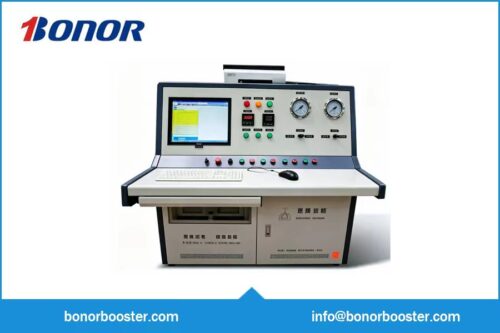
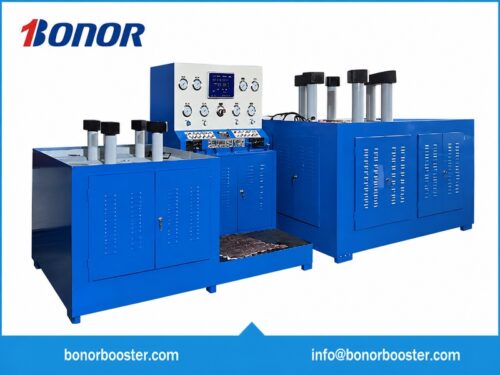
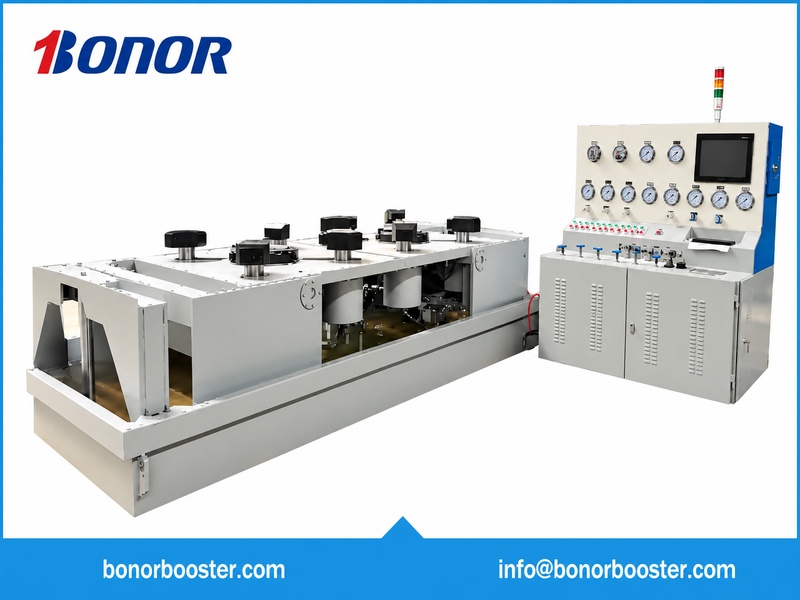
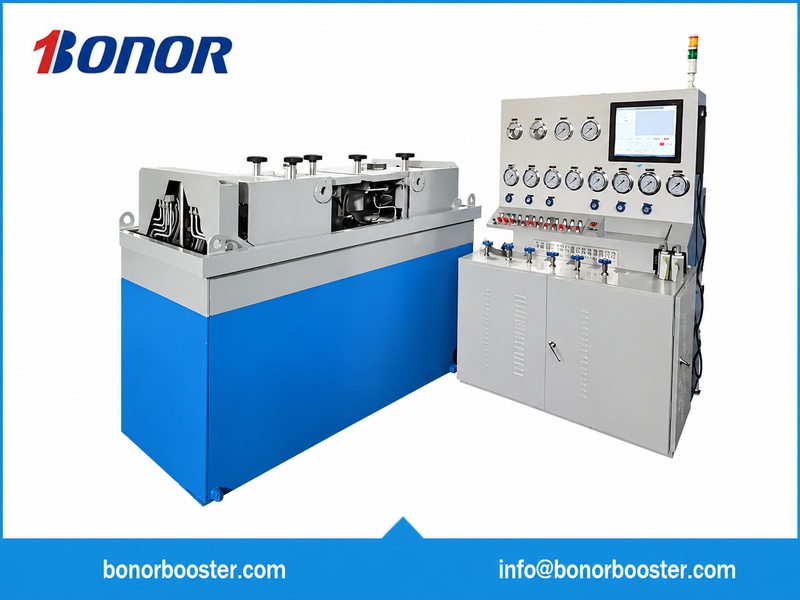
The Submerged Hydraulic Valve Test Bench is designed for pressure and leakage testing of flange-connected valves, including ball, gate, globe, check, and control valves. By submerging the valve in a water tank during pneumatic testing, operators can observe escaping air bubbles to identify leaks.
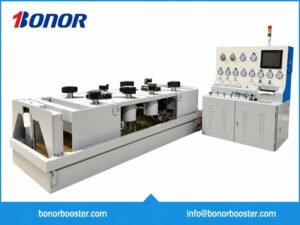
Submerged Hydraulic Valve Test machine |
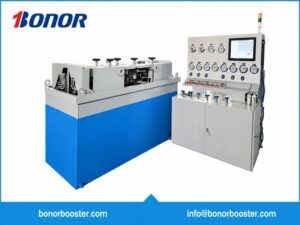
Submerged Valve Testing Equipment |
1. Submerged Leak Testing
The valve and workbench can be lowered into a water tank for pneumatic leakage testing, making leaks easier to identify through visible air bubbles.
2. Hydraulic Clamping System
Hydraulic claws clamp the back of the valve flanges to seal the valve ends while minimizing external forces on the valve body.
3. 90° Rotation
The rotation mechanism allows the valve to be turned for testing both ends, improving testing flexibility.
4. Water and Gas Testing
Supports water pressure testing and pneumatic testing. Test water can be recycled to reduce water consumption and operating costs.
5. Dual-Pump Pressure Control
A low-pressure, high-flow pump enables rapid pressurization, while a high-pressure pump gradually increases pressure. The system automatically enters the pressure-holding stage when the preset pressure is reached.
6. Zero-Pressure Safety Interlock
The hydraulic clamps can only be released when the pressure inside the valve cavity has returned to zero, helping prevent accidental release under pressure.
7. Optional Safety and Automation Features
Safety doors, PLC-based data acquisition, and automated testing systems are available to meet different operating requirements.
8. Customized Solutions
Custom configurations are available for different valve sizes, testing pressures, and specific application requirements.
Every industrial valve leaves the factory with two questions attached: does the body hold pressure, and does the closure seal. The Submerged Hydraulic Valve Test Bench answers both on one fixture, with the clamping, the pressure circuits and the record that a valve test procedure expects.
The fixture, not the pump, is what makes a valve bench usable day after day:
A shell test pressurises the whole valve body with the closure open or removed, to prove the pressure boundary. A seat test pressurises one side of the closed closure and measures leakage past the seat. Both are required by API 598 and equivalent standards, and they use different circuits.
Yes. The acceptance criteria differ — metal seats allow a small leakage rate, soft seats are usually required to be bubble-tight — but the fixture and the pressure circuit are the same. The criteria are stored per valve type in the test recipe.
A typical bench covers DN15 to DN300 with interchangeable adapters; larger valves are usually tested with a dedicated end-loading frame. The practical limit is the clamping force and the handling weight, not the pressure rating.
Need a pressure range, fixture or test standard that is not listed here? Send the specimen list and the standard you test to and we will come back with a configuration and a price within one working day.