Description
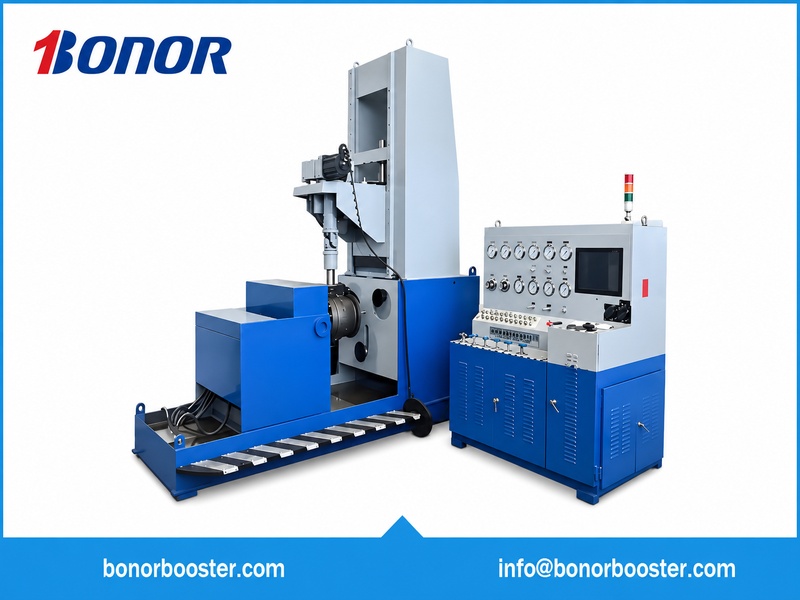
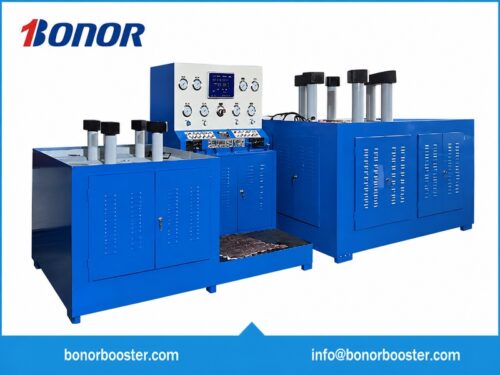
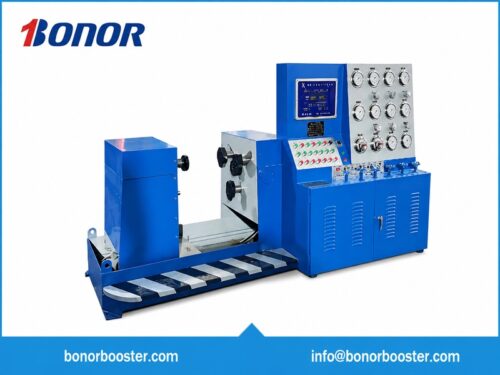
Valve Life and Torque Test Bench
Product Introduction
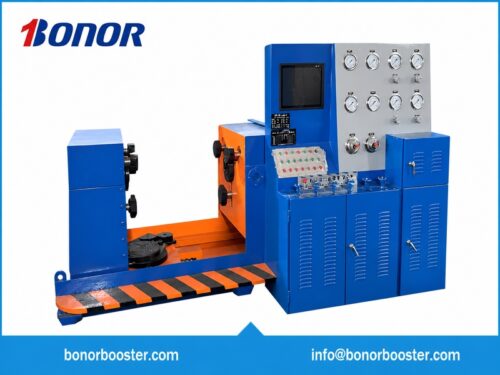
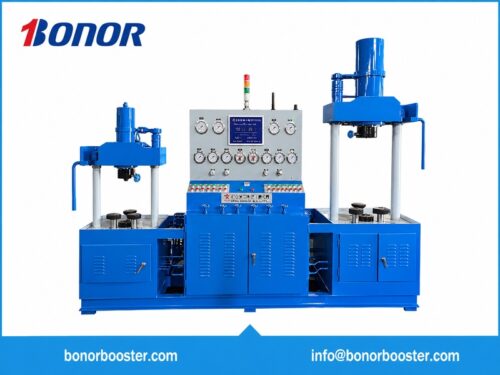
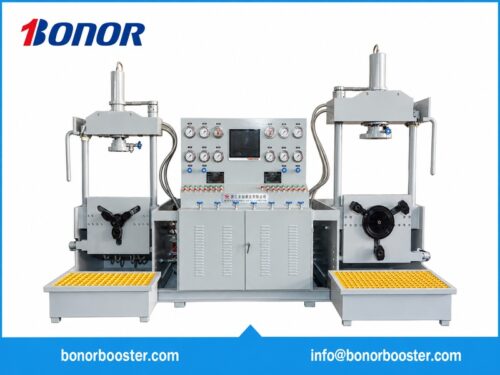
The Valve Life and Torque Test Bench is designed to evaluate valve durability, operating torque, and sealing performance. It is suitable for flange-connected ball valves, gate valves, globe valves, and other compatible valve types.
Valve Life Torque Test Bench
Key Features
- Valve Life and Torque Testing: Evaluates valve operating torque and durability over repeated operating cycles.
- Hydraulic Clamping: Secures the valve flanges while minimizing external forces on the valve body.
- 90° Rotation: Allows flexible valve positioning for sealing tests. Dual-end rotation is optional.
- Water and Gas Testing: Supports both testing media, with recyclable test water.
- Automatic Pressure Control: Dual-pump system with automatic pressure holding.
- Zero-Pressure Safety Protection: Prevents clamp release until the pressure inside the valve cavity has been relieved.
- Integrated Testing System: PLC-based data acquisition, automated testing, and torque measurement.
- Customized Configurations: Tailored solutions for different valve sizes and testing requirements.
Applications of the valve test bench
Every industrial valve leaves the factory with two questions attached: does the body hold pressure, and does the closure seal. The Valve Torque Test Bench answers both on one fixture, with the clamping, the pressure circuits and the record that a valve test procedure expects.
- Valve manufacturers — routine shell and seat testing at the end of the assembly line.
- Pipeline and EPC contractors — incoming inspection of valves before installation, against API 598 or the project specification.
- Water and HVAC contractors — pressure testing of butterfly, gate and ball valves before commissioning.
What to specify before we build yours
- Valve type and size range — ball, gate, globe, butterfly, check or control; each needs a different clamping and sealing arrangement.
- Pressure class — the bench must exceed the highest class in scope, usually with a margin for the shell test multiplier.
- Test medium — water, air or gas; the seat-leak measurement method changes with the medium.
- Test sequence automation — manual valve switching, or a programme that runs shell, seat A and seat B in order and logs each result.
How to choose a valve test bench
The fixture, not the pump, is what makes a valve bench usable day after day:
- Look at how the valve is clamped. End-loading rams seal against the flange faces; a clamping table holds the body from outside. End-loading is faster for flanged valves, a table is more flexible for threaded and welded-end bodies.
- Confirm both seat directions are testable. A seat test has to be repeated on the upstream and downstream side of the closure; if the fixture cannot isolate each side, the operator will improvise with blind flanges and lose the cycle time.
- Decide how leakage is measured. Water gives a visible drip count, air gives a bubble count or a pressure decay, gas gives a flow reading. The bench should report the unit your standard specifies.
Frequently asked questions
What is the difference between a shell test and a seat test?
A shell test pressurises the whole valve body with the closure open or removed, to prove the pressure boundary. A seat test pressurises one side of the closed closure and measures leakage past the seat. Both are required by API 598 and equivalent standards, and they use different circuits.
Can the bench test both metal-seated and soft-seated valves?
Yes. The acceptance criteria differ — metal seats allow a small leakage rate, soft seats are usually required to be bubble-tight — but the fixture and the pressure circuit are the same. The criteria are stored per valve type in the test recipe.
What sizes can one bench cover?
A typical bench covers DN15 to DN300 with interchangeable adapters; larger valves are usually tested with a dedicated end-loading frame. The practical limit is the clamping force and the handling weight, not the pressure rating.
Related equipment and further reading
Need a pressure range, fixture or test standard that is not listed here? Send the specimen list and the standard you test to and we will come back with a configuration and a price within one working day.