Description
What Is an Impulse Pressure Test Machine?
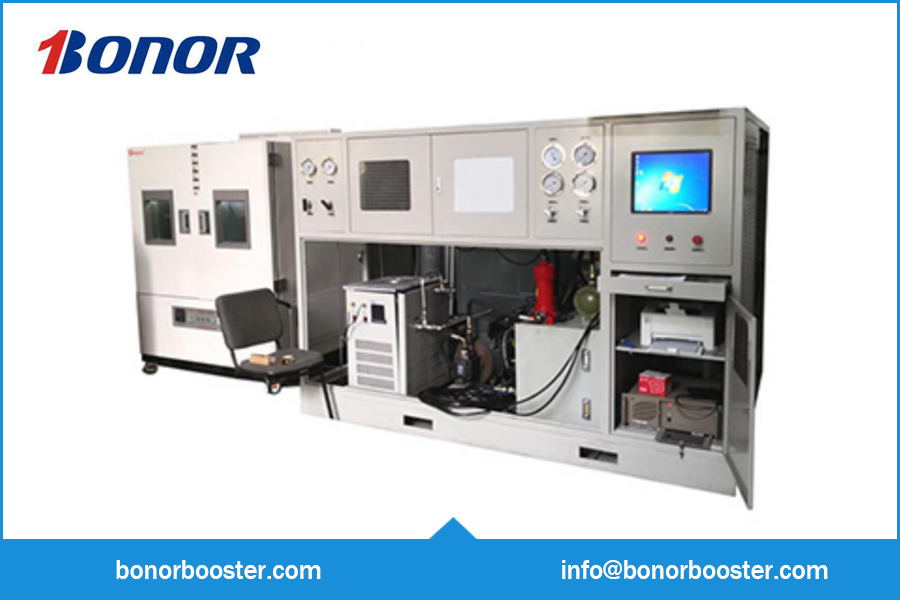
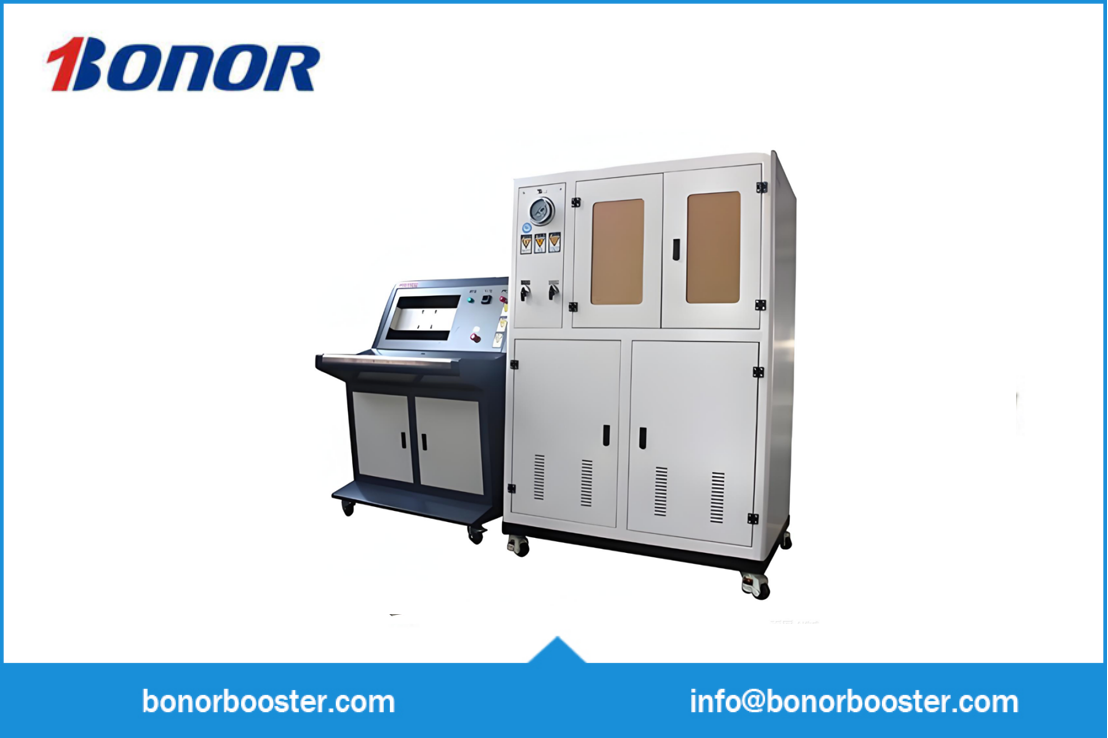
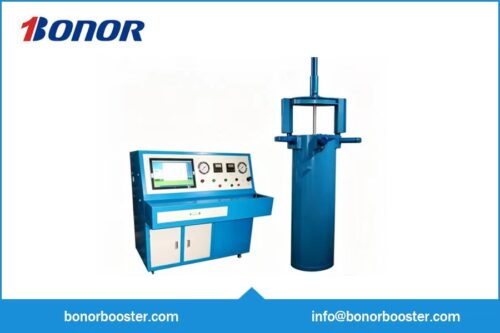
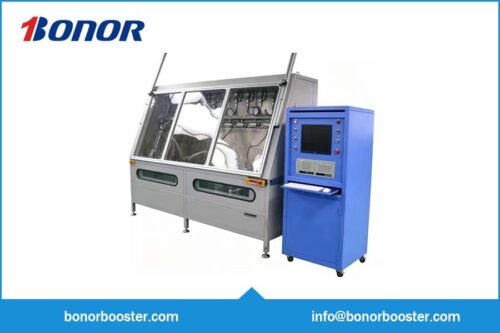
The pulse pressure testing machine uses liquid or gas as the test medium to evaluate the fatigue life of components such as pipes, pressure vessels, condensers, and valves under pulse pressure.
The entire control system adopts a computer + onboard simulation control system + sensor switch control mode, and rigorously monitors all switches and servo logic to ensure system safety and reliability. It features fault recording functions and an automatic locking logic system to guarantee unattended operation during testing.
Impulse Pressure Test Machine Main components
The Impulse Pressure Test Machine is primarily composed of the following systems:
1.Power System:
Main Oil Pump: Drives the pulse generator and provides the primary 22KW power to the hydraulic power station (power requirements depend on the size of the components being tested).
Liquid Injection Pump: Fills the test part with fluid to provide pre-pressure before pulse generation.
2.Circulation System:
Pressure Regulating Loop: Includes a pressure regulating valve that adjusts the working pressure of the hydraulic system.
Speed Control Circuit: A hydraulic servo valve adjusts the flow rate based on output pressure and the expansion coefficient of the test part, regulating the hydraulic fluid flow.
Direction Control Loop: A hydraulic servo valve controls the high-pressure oil output from the pump, regulating the pulse generator’s reciprocating motion and frequency.
3.Pulse Generator:
Controlled by a high-precision hydraulic servo valve, the pulse generator delivers a stable and consistent fluctuation of pressure output.
4.Data Acquisition and Testing System:
Temperature Monitoring: Measures the temperature of the fluid medium and the main oil pump.
Pressure Monitoring: Collects pressure data from the main oil pump, pre-pressure, and pulse pressure.
5.Electrical Control and Output System:
A data acquisition card transmits pressure, temperature, and pulse frequency data to the computer. The computer displays, amplifies, records, and stores all data. It also allows data to be printed via a connected printer for easy record-keeping.
Technical parameters:
| Test medium |
Water, water-glycol mixture, oil |
| Pressure range |
0-80MPa |
| Pressure holding range |
Adjustable between 0 and 80 MPa |
| Pressure control accuracy |
±0.25%FS; |
| Measurement accuracy |
±0.25%FS; |
| pulse frequency |
Adjustable from 0.5 to 4 Hz; |
| Pulse pressure waveform |
Sine waves, square waves, trapezoidal waves, etc. |
Impulse Pressure Test Machine Application:
Automobile steering pipe, brake pipe, air conditioning pipe, fuel pipe, cooling water pipe, radiator hose, heating hose, air filter hose, PE pipes, UPVC pipes, worm gear, booster system hose, engineering hydraulic hose, aviation hose and manifold, hard pipe or connector, heat exchanger, air conditioner, filter, etc.
Where a hydrostatic pressure test bench is used
Between the workshop and the certificate there is always the same sequence — fill, vent, stabilise, pressurise, hold, drain — and the cost is in doing it the same way every time. The Impulse Pressure Test Machine automates that sequence and logs it, so the paperwork writes itself. The bench is sized for impulse testing as the main duty; other families are handled by adding fixtures rather than redesigning the machine.
- Brazed and soldered assemblies — small-batch proof testing where the joint, not the base material, is the risk.
- Gas cylinders and pressure vessels — requalification and factory acceptance testing, with or without a water jacket for permanent-deformation measurement.
Every Impulse Pressure Test Machine is laid out around its duty cycle, and here that means impulse testing. The controls, the guards and the record format follow from that.
What to specify before we build yours
- Test pressure and hold time — often 1.5 times the design rating, with the hold period set by the applicable standard. The setting here follows the part you run most.
- Connection and sealing method — flanges, threaded plugs, quick couplings or a clamping table, matched to the parts you test most often. On this unit it is arranged for the part.
- Pressure range — 0-80MPa (confirmed for this unit).
The way this particular bench is set up: This unit works with test medium at water, water-glycol mixture, oil. On this machine pressure range is 0-80mpa.
Currently configured as: Pressure range: 0-80MPa. Different ranges or fixtures — built to order.
Selecting a hydrostatic pressure test bench for your line
Before comparing suppliers, settle the four questions below — they determine most of the price and all of the usability:
- Ask about fixture changeover time. If your mix includes several diameters, the minutes per changeover decide the real daily throughput. Quick-change plugs and adjustable rests pay back quickly.
- Size the pump for fill time, not just pressure. A large vessel at low pressure can take longer to fill than a small one at high pressure. Ask for the flow rate at your working pressure and calculate the cycle time before you commit.
- Records for the part. The report is laid out with the fields your part standard asks for, so a result leaves the shop as a certificate rather than a rewrite job.
Frequently asked questions
Water or oil as the test medium?
Water is the default: cheap, safe and easy to dispose of, but it corrodes carbon steel and needs drying afterwards. Oil is used where corrosion is unacceptable or where the part must stay lubricated. The pump and seals are specified for the medium, so this decision should be made before the order. In practice, the part dictates the answer here — and that is what the quotation is built around.
Can the same bench do shell test and seat test?
Yes, if the fixture is designed for it. Shell testing pressurises the whole body with the closure sealed off; seat testing pressurises one side of the closure and measures leakage at the other. A valve test bench usually has both circuits and a selector valve between them. Acceptance of the Impulse Pressure Test Machine includes a signed check of exactly this item.
Related equipment and further reading
Every bench we quote starts from a real part list. Send yours and you get a costed configuration, not a generic price list, within one working day.