Description
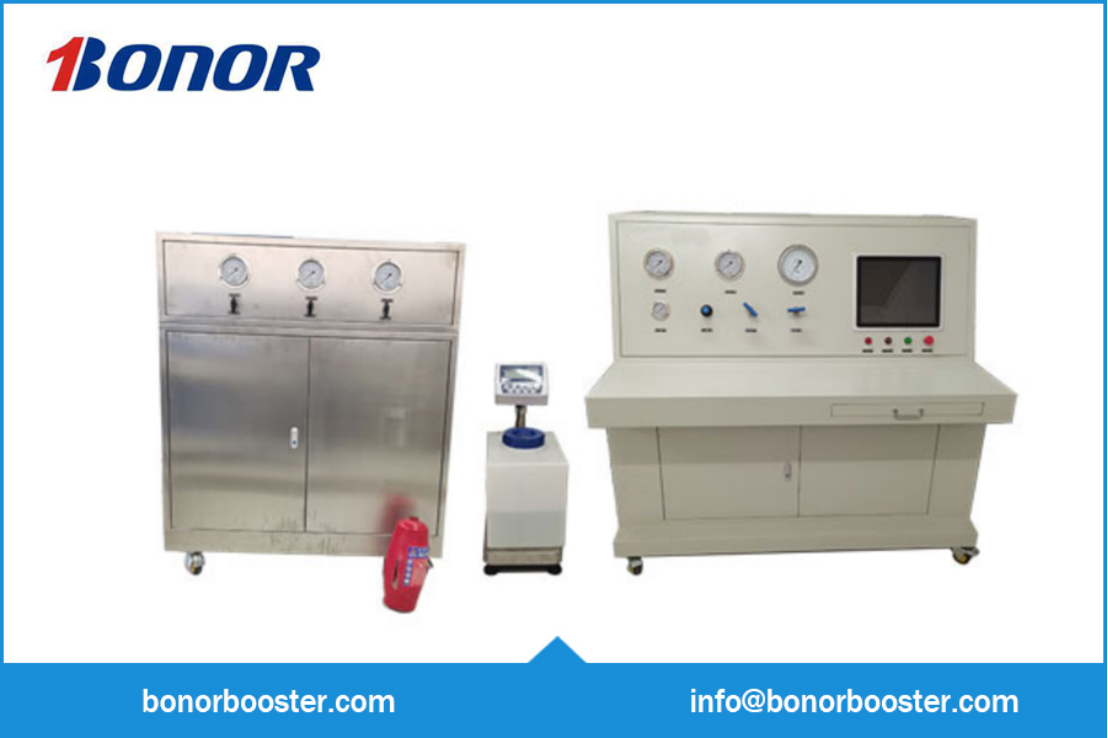
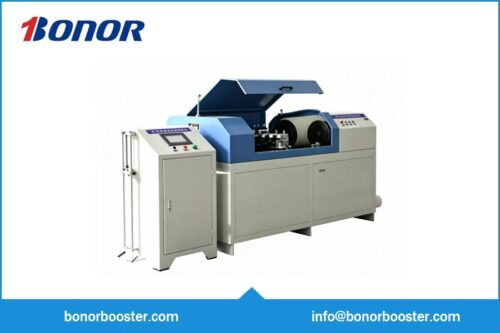
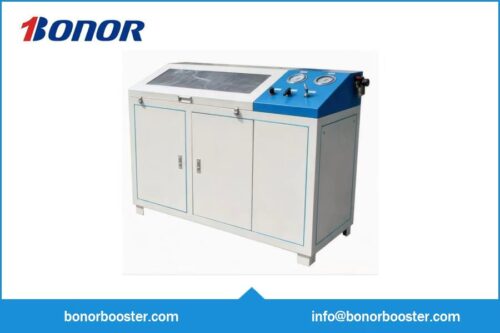
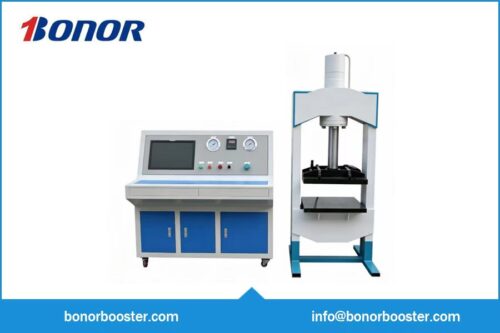
The fire extinguisher cylinder hydrostatic pressure comprehensive testing machine is developed in accordance with GB 4351.1-2021 and GB/T 9251-2011 standards. Designed specifically for fire extinguisher cylinders and gas cylinder containers, it can integrally complete hydrostatic pressure resistance, burst strength, and residual deformation testing. The equipment accurately performs full-process hydrostatic performance testing and is widely used in fire extinguisher manufacturers, quality inspection institutions, and research institutes. It is suitable for factory inspection, type testing, in-service verification, and R&D validation, ensuring the safety and structural integrity of cylinders under high-pressure conditions from the source.
Core Functions
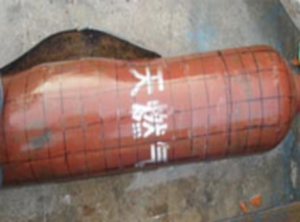
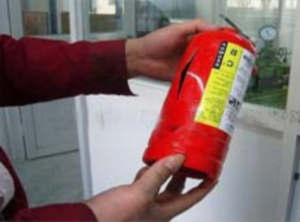
Water Pressure Resistance and Burst Testing: Provides adjustable water pressure from 0-40MPa, supporting 1.5 times working pressure holding (0-999s adjustable) and 3 times pressure burst testing. It simultaneously monitors sealing performance and structural stability, accurately determining pressure resistance and burst limits.
Residual Deformation Measurement: Integrates high-precision displacement sensors to automatically collect deformation data and calculate the residual deformation rate according to national standards, accurately determining compliance and mitigating safety hazards.
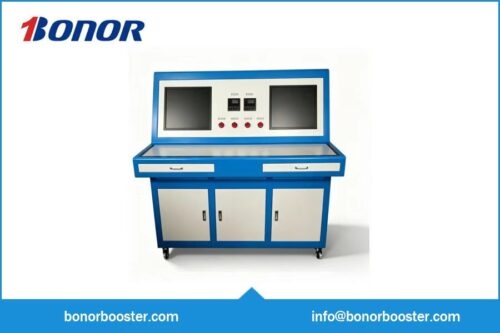
Automated Data Management: PLC + touchscreen/computer dual control automatically completes the entire process of clamping, loading, and data acquisition. It records test curves in real time, supports data storage and export, and automatically generates reports according to national standards, requiring no manual intervention.
Multiple safety features: Dual-channel overpressure warning and relief system, double protection for high-pressure pipelines, combined with explosion-proof observation windows, leakage protection, and emergency shutdown, and physical isolation of electrical and hydraulic systems, ensuring the safety of both personnel and equipment.
Technical Parameters
Parameter Item | Specifications
Compatible Cylinder Specifications | Φ50-Φ200mm, Length 300-1200mm (customizable)
Compatible Cylinder Volume | 0.5-10L (covers common fire extinguisher cylinders)
Test Water Pressure Range | 0-40MPa (Accuracy ±0.5%FS)
Pressure Holding Time Range | 0-999s (Error ±1s)
Residual Deformation Measurement Accuracy | ±0.01mm
Loading Speed | 0.1-1MPa/s (stepless adjustment)
Clamping Method | Pneumatic automatic clamping, good sealing, adaptable to multiple diameters
Control Method | Touch screen + PLC, supports computer remote control
Dimensions (approx.) | 1600mm × 800mm × 1500mm
Equipment Weight (approx.) | 220kg
Power Supply Specifications | AC 380V 50Hz 3kW
System Structure
High-Pressure Water System: Composed of a high-pressure plunger pump, pressure stabilizing tank, and filter, providing pulsation-free water pressure with a filtration accuracy of 5μm to ensure testing accuracy.
Specimen Fixing Mechanism: Pneumatic clamping + special sealing gasket for quick clamping of various cylinder sizes, with a sealing pressure ≥ 1.2 times the test pressure to prevent water leakage and pressure loss.
Deformation Detection Mechanism: Axial/radial dual sensors for non-contact measurement, avoiding damage to the cylinder and ensuring data reliability.
Data Acquisition System: High-precision module (sampling rate ≥ 100Hz), supporting parameter presetting and fault alarms, and compatible with LIMS systems.
Application Value
Manufacturing enterprises: Achieve comprehensive factory inspection, optimize processes, reduce after-sales and recall risks, and support compliant production.
Quality inspection institutions: Provide standardized solutions based on national standards, ensure data traceability, and guarantee compliant product circulation.
Research institutions: Simulate extreme working conditions, provide accurate data, shorten research and development cycles, and accelerate the commercialization of research findings.
Applications of the firefighting equipment test bench
The fire protection market is inspected closely, so the test bench has to do two jobs at once: prove the hardware, and produce a certificate that survives an audit. The Fire Extinguisher Cylinder Hydrostatic Pressure Testing Machine is specified around both.
- Extinguisher refilling and service stations — periodic requalification of cylinders before recharge, with the test date recorded on the unit.
- Valve and coupling production — body strength and seat tightness on extinguisher valves and hose couplings.
- Municipal and industrial fire brigades — in-house periodic testing of the equipment they carry.
What to specify before we build yours
- Standard and test sequence — EN 3, GB 4351, GB/T 9251 or the local code, including the hold times and the deformation limit.
- Cylinder sizes and volumes — from 1 kg portable bodies to wheeled and fixed units; the jacket and the clamp follow the size range.
- Medium and drying — water is standard, but the bodies must be dried afterwards, so a drying stage is often part of the same cell.
- Certificate format — the fields your inspector expects: serial number, test pressure, hold time, deformation, operator and date.
How to choose a firefighting equipment test bench
Firefighting testing is a volume business, so cycle time and record quality matter as much as pressure accuracy:
- Count the steps around the test. Filling, venting, drying and marking often take longer than the pressure hold itself. A bench that integrates them changes the throughput of the whole line, not just the test station.
- Confirm the deformation measurement method. Water-jacket and weighing methods are both accepted by different codes; the one your certificate has to show determines the fixture.
- Plan for different cylinder sizes. Interchangeable clamps and jacket inserts are much cheaper than a second bench, but only if they are designed in from the start.
Frequently asked questions
Which standards can the test sequence follow?
The common ones are EN 3 for portable extinguishers, GB 4351 for Chinese-made bodies and GB/T 9251 for hydrostatic test methods, and the bench program is written to whichever of these your market requires. If you export to several markets, the sequence is stored as a recipe and selected per batch.
Does the machine test burst strength as well as proof pressure?
Yes — proof pressure and burst are the same pressure circuit with different set points and different acceptance criteria. A burst test is destructive, so it is normally run on samples rather than on every unit.
How long does one complete test cycle take?
A single-body proof test including fill, hold, drain and record typically takes a few minutes; the exact figure depends on body volume, fill rate and the hold time your standard requires. We quote cycle time for your specific body size rather than an average.
Related equipment and further reading
Need a pressure range, fixture or test standard that is not listed here? Send the specimen list and the standard you test to and we will come back with a configuration and a price within one working day.