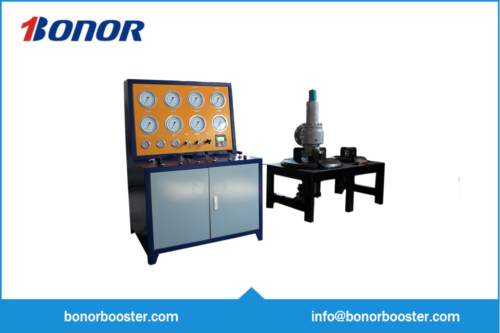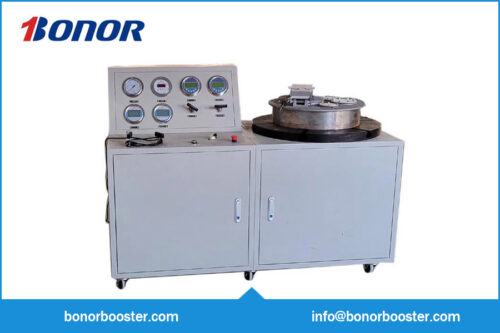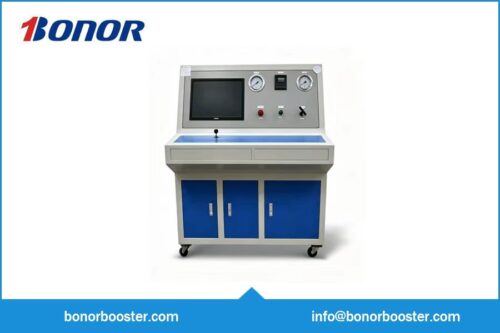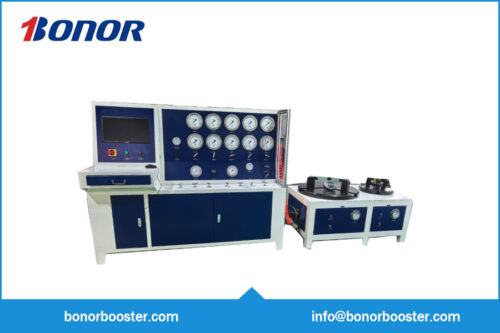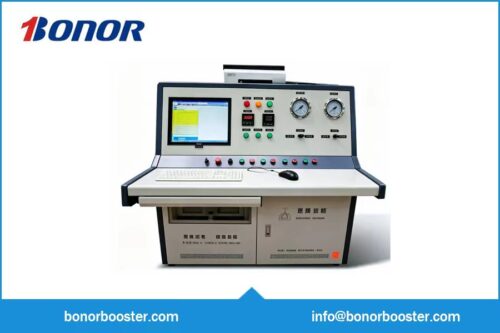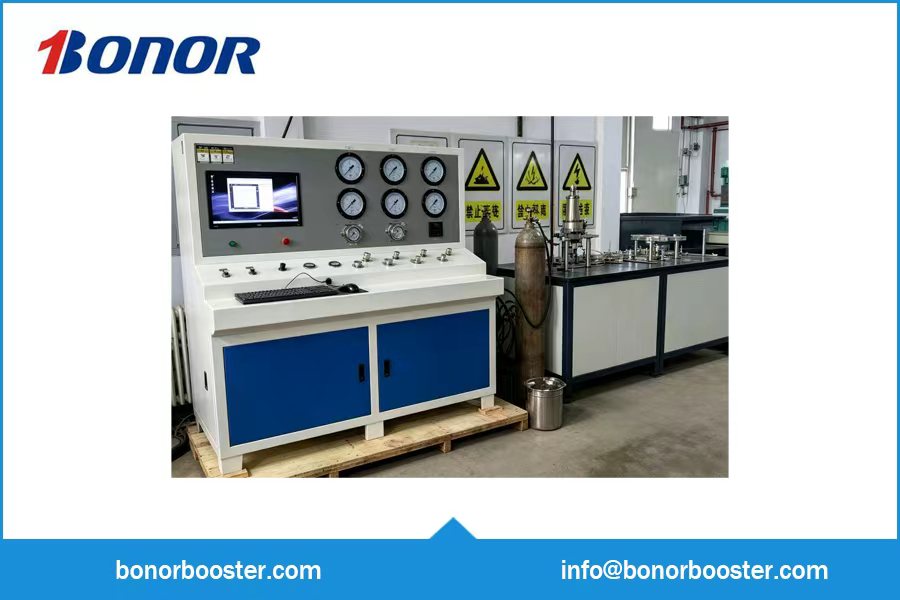
The Large-diameter safety valve test bench is built for set-pressure and seat-tightness verification. The clamping table and the pressure ramp are configured for the valve sizes and flange standard you test.
Description
一、 Basic Technical Parameters
| Item | Specification |
| Max. Test Pressure | 32 MPa |
| Max. Clamping Force | 300 KN |
| Pressure Test Accuracy | 0.4% |
| Operating Temperature | -20℃ ~ 60℃ |
| Medium Size Seat Range | DN15 ~ DN200 |
| Large Size Seat Range | DN250 ~ DN400 |
| Test Medium | Nitrogen, Compressed Air |
| Clamping Method | Down-pull Hydraulic Clamping |
| Hydraulic Working Pressure | 30 MPa |
| Pressure Gauge Ranges | 1.6MPa, 4MPa, 16MPa, 60MPa |
| Pressure Gauge Accuracy Class | 0.4 |
二、 Caliber & Max Test Pressure Matching Table
| Valve Nominal Diameter DN | ≤32 | 32 | 50 | 65 | 80 | 100 | 150 | 200 |
| Max. Calibration Pressure (MPa) | 32 | 32 | 32 | 32 | 28 | 18 | 10 | 5.2 |
| Valve Nominal Diameter DN | 250 | 300 | 350 | 400 | ||||
| Max. Calibration Pressure (MPa) | 3.5 | 2.5 | 2 | 1.6 |
三、Applicable Safety Valves
- Flanged safety valves, nominal diameter DN15 ~ DN400
- Low-pressure large-bore safety valves, PN ≤ 32MPa
- Full-lift & low-lift safety valves
- 1/2″ ~ 2 1/2″ British thread type A27W-10T safety valves
- Flanged safety valves with various thickness and outline dimensions
- Metric & imperial threaded safety valves
- Domestic and imported safety valves
- Safety valves for gas medium and liquid medium
四、Technical Parameters of Safety Valve Test Bench
1.Pressure calibration accuracy: 0.4%;
2.Operating temperature range: -20℃ ~ 60℃;
3.Power supply: 220V AC;
4.Clamping force: 300KN. The system automatically adjusts pre-clamping force along with test pressure.
5. Maximum calibration pressure: 32 MPa.
6.Medium-bore seat: DN15~ Equipped with hydraulic lifting control buttons, hydraulic pressure gauges and station valves, suitable for high & low pressure safety valves. Check valves are installed in gas circuit to prevent high-pressure medium from entering low-pressure system.
7.Large-bore seat: DN250~ Equipped with hydraulic lifting control buttons, hydraulic pressure gauges and station valves, designed for low-pressure large-bore safety valves.
8.The stainless steel control panel is fitted with eight analog pressure gauges for dual pressure display. Four gauge ranges available: 1.6MPa, 4MPa, 16MPa, 60MPa, accuracy class 0.4. High and low pressure source pressure gauges are separately mounted on the panel.
9.The clamping station adopts hydraulic system (bi-directional double-station hydraulic power unit & hydraulic cylinder with 30MPa working pressure) for fixing and clamping. Clamping force: 7 ~ 30 tons.
Equipment Requirements
- Double-seat structure with hydraulic clamping, equipped with electric bi-directional double-station hydraulic power unit.
- Down-pull clamping structure. No secondary movement of safety valve after clamping.
- The clamping device supports electric stepless lifting adjustment according to flange thickness, compatible with flanges of different thicknesses, suitable for both large and small valve seats with easy & precise operation.
- Smooth clamping adjustment without jamming.
- Down-pull force structure: clamping force will not act on the tabletop; the tabletop only bears load weight.
- Standard center positioning block for fast and accurate safety valve installation, improving working efficiency.
- The clamping mechanism shall be free of shaking when calibrating safety valves.
What a safety valve test bench does in production
Repair shops live by turnaround time: a valve on the bench is a valve not protecting a plant. The Large-diameter safety valve test bench is arranged so clamping, pressurisation and reading happen without fumbling — the valve goes on, the test runs, the certificate prints. Because the daily job is large-diameter testing, the instrument ranges were selected to keep your normal set points in the best measuring band — commissioning verifies this with your own valves.
- Refineries, chemical plants and power stations — workshop and in-situ verification during turnaround, with the valve tag number recorded against the result.
- Third-party inspection bodies — independent verification with a traceable certificate for each valve.
- PSV manufacturers and repair shops — set, reseat and seat-tightness verification with a certificate per valve.
In daily use the Large-diameter safety valve test bench sees mostly large-diameter testing. That decides the fixture style, the approach rate and what the operator actually does between tests.
What to specify before we build yours
- Maximum set pressure — sized above the highest spring rating in your scope, with enough resolution at the low end for small valves. The setting here follows the valve you run most.
- Record and traceability — valve tag, set pressure, reseating pressure, leakage rate and operator, stored per test. It is set up here for the valve.
The way this particular bench is set up: On this machine medium size seat range is dn15 ~ dn200. For this build, test medium is nitrogen, compressed air.
How to choose a safety valve test bench
Safety-valve benches differ less in the pump than in everything around it — clamping, sensing and records. Compare candidates on these points:
- Ask for the certificate format before ordering. Insurers and operators each have their own idea of a valid record. Confirm the bench software prints or exports exactly what your customers accept.
- Clamping force has to be adjustable. Too little and the valve lifts out of the seal; too much and the body distorts, which changes the set pressure you are trying to measure. Look for a table with controlled, repeatable clamping rather than a hand pump and a guess.
- Fixture fit for the valve. The clamping set is drawn around your valve drawings first, so the part sits square without shimming — and the same fixture family extends to other sizes later.
Frequently asked questions
How is seat tightness judged?
Your standard defines the acceptance: a bubble count under water, a pressure-decay rate over a timed hold, or a drop check on a gauge. The bench supports the common methods and records the measurement, so pass or fail is read from data rather than estimated by ear. In practice, the valve dictates the answer here — and that is what the quotation is built around.
Can the bench measure both set pressure and reseating pressure?
Yes. Set pressure is read at the point the valve lifts; reseating pressure is read on the way down when the valve closes again and the outlet flow stops. Both values, and the difference between them, are recorded for each test. This is standard on the Large-diameter safety valve test bench, not an optional extra.
Related equipment and further reading
- Clamping-type valve test bench
- Emergency Shut-off Valve Test Bench
- Computer-Controlled Safety Valve Testing Bench
- The complete Safety Valve Test Machine line-up
- Accuracy verification, no lab needed
- How safety valve benches work
Bench capacity is quoted against a real valve list. Send yours and receive a costed configuration within one working day.