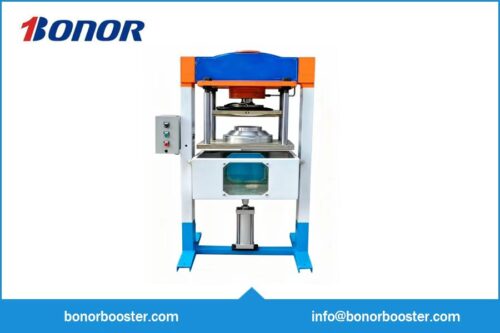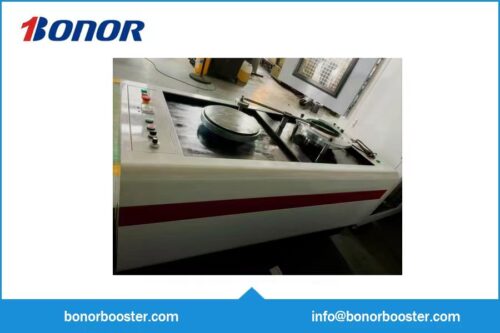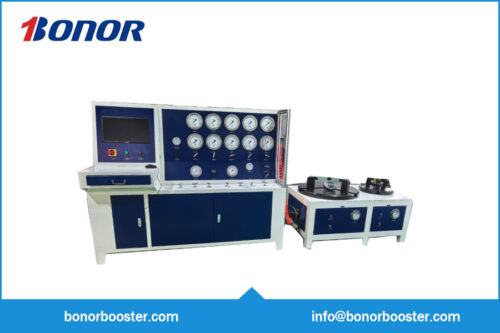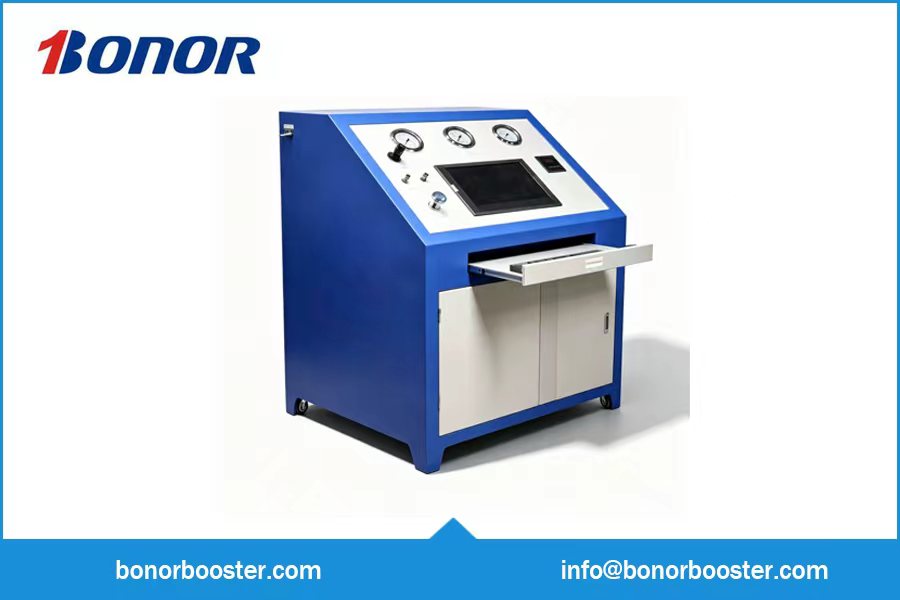
The Aviation Valve Test Bench is built for set-pressure and seat-tightness verification. Configured here as air consumption: 1 Nm³/min. The clamping table and the pressure ramp are configured for the valve sizes and flange standard you test.
Description
一. Application Scope
Aviation Valve Test Bench manufactured by Jinan Bonor Machinery Co., Ltd. is mainly used for pressure resistance and burst tests of various valves. It complies with JB/T 9092 Valve Inspection and Test. It is widely applied in production inspection and R&D for valve manufacturers, quality inspection institutions, scientific research institutes and universities. Integrating electromechanics, hydraulic system, pressure testing and circulating storage of liquid medium, this test bench features complete functions, stable performance and high automation.
二. Control System
Adopts computer control system. The whole test procedure can be operated via computer. Real-time display of testing duration, deformation curve, test pressure and other parameters. Test data can be automatically saved after power failure, analyzed, stored and printed. Optional control modes: Manual control, PLC control and computer control.
三. Equipment Features
- Equipped with air-driven automatic booster pump to realize adjustable and controllable output pressure.
- Advanced technology and reasonable structural design; compact size, light weight and attractive appearance.
- All pressure-bearing components adopt standard parts of world-famous brands without welded connections. Easy to disassemble, high safety factor, long service life and convenient maintenance.
四. Technical Parameters
- Driving air pressure: 0.1–0.69 MPa; output pressure is proportional to driving air pressure.
- Air consumption: 1 Nm³/min
- Test pressure range: 0 ~ 280 MPa. Pressure range can be customized according to customer requirements.
- Working medium: Water, hydraulic oil, emulsion, etc.
- Portable automatic recorder can be equipped on request.
Typical uses of a safety valve test bench
Seat leakage that looks trivial on the shop floor becomes a running loss in service — product, energy and sometimes emissions. The Aviation Valve Test Bench measures tightness at the relevant differential so the acceptance decision is based on a number, not on a hiss. This bench is configured around aviation testing: the clamping set, the measurement chain and the certificate format follow that duty first.
- Valve stockists and distributors — incoming set-point confirmation before valves reach customers.
- Compressor and gas processing stations — recirculation and relief valves checked between overhauls.
- Aviation and aerospace valve testing — small-bore, high-accuracy set points with full data logging.
In daily use the Aviation Valve Test Bench sees mostly aviation testing. That decides the fixture style, the approach rate and what the operator actually does between tests.
What to specify before we build yours
- Test medium — air, nitrogen, steam or water; steam testing requires a steam generator and different safety measures. It is set up here for the valve.
- Maximum set pressure — sized above the highest spring rating in your scope, with enough resolution at the low end for small valves. The setting here follows the valve you run most.
- Air consumption — 1 Nm³/min (confirmed for this unit).
The way this particular bench is set up: Here air consumption is set to 1 nm³/min.
Currently configured as: Air consumption: 1 Nm³/min. Any other range or fixture is a custom build.
How to choose a safety valve test bench
A test bench for relief devices must reproduce service conditions closely enough that the set point means the same thing on the bench as in the pipe. These checks keep that true:
- Ask how the bench handles high set points on small inlets. A DN20 valve set at 25 MPa behaves differently from a DN150 at 4 MPa, and the fixture plus the sensing range need to cover both ends honestly. Check the accuracy statement at your actual set points, not at mid-scale.
- Consider data volume before choosing the software. Ten valves a week and three hundred a week need different levels of automation in the records. The right software pays for itself in avoided typing; the wrong one becomes the bottleneck of the shop.
- Records for the valve. The report is laid out with the fields your valve standard asks for, so a result leaves the shop as a certificate rather than a rewrite job.
Frequently asked questions
How often should safety valves be verified?
The interval comes from your code, your insurer or the equipment owner — commonly once a year for steam plant and between one and five years elsewhere. The bench does not set the interval; it makes each verification cheap and documented enough that the interval is actually kept. With aviation testing as the main duty, we verify this point on your parts before the machine ships.
How often should the bench itself be calibrated?
Once a year is the common interval, against a dead-weight tester or a certified reference gauge. Between calibrations, a daily check against a known valve or a reference gauge catches drift before it reaches a certificate. The Aviation Valve Test Bench quotation states this scope explicitly, item by item.
Related equipment and further reading
- Portable safety Valve Test Bench
- Ball Valve Body Pressure Test Machine
- Nuclear Valve Hydrostatic Test Bench
- Safety Valve Test Machine — models and specifications
- Verify accuracy without a lab
- How the SV bench works
Bench capacity is quoted against a real valve list. Send yours and receive a costed configuration within one working day.