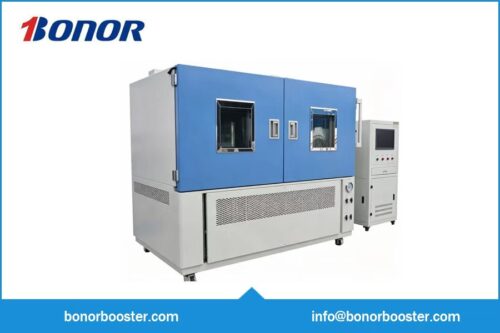
Description
WHat is Portable safety Valve Test Bench:
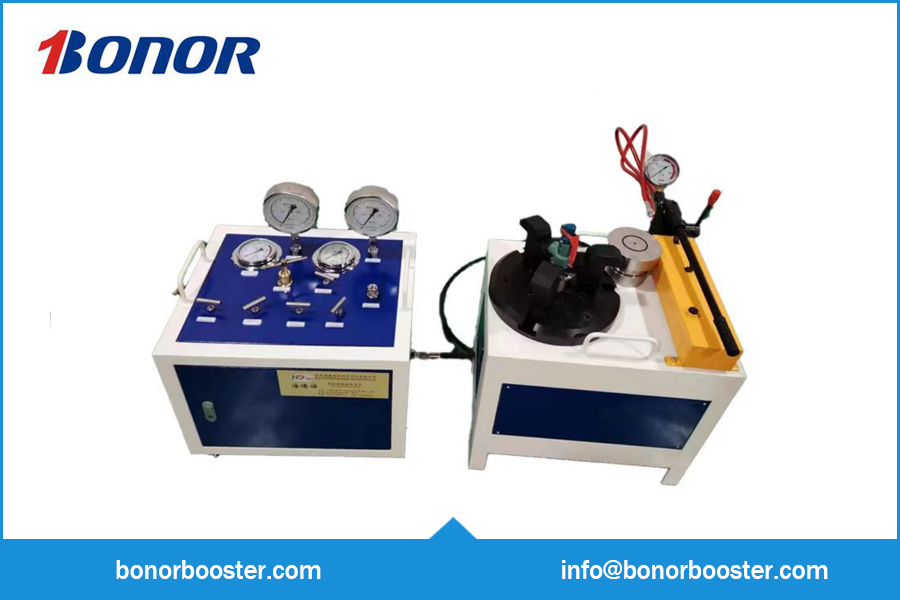
The portable safety valve test bench is a manual calibration device for safety valves, supporting air, nitrogen, and water as test media. It can perform opening pressure, reseating pressure, and leak tightness tests on threaded and flanged safety valves.
The device is compact and easy to transport, suitable for on-site and outdoor operations. It eliminates the need to remove the safety valve and transport it back to the laboratory; testing and calibration can be performed directly on-site after removing the valve.
This test bench is equipped with a hydraulic clamp, various sealing discs, and adapters, compatible with threaded and flanged safety valves from DN15 to DN300. It provides a maximum hydraulic clamping force of 20 tons, ensuring the valve remains stable and secure during testing.
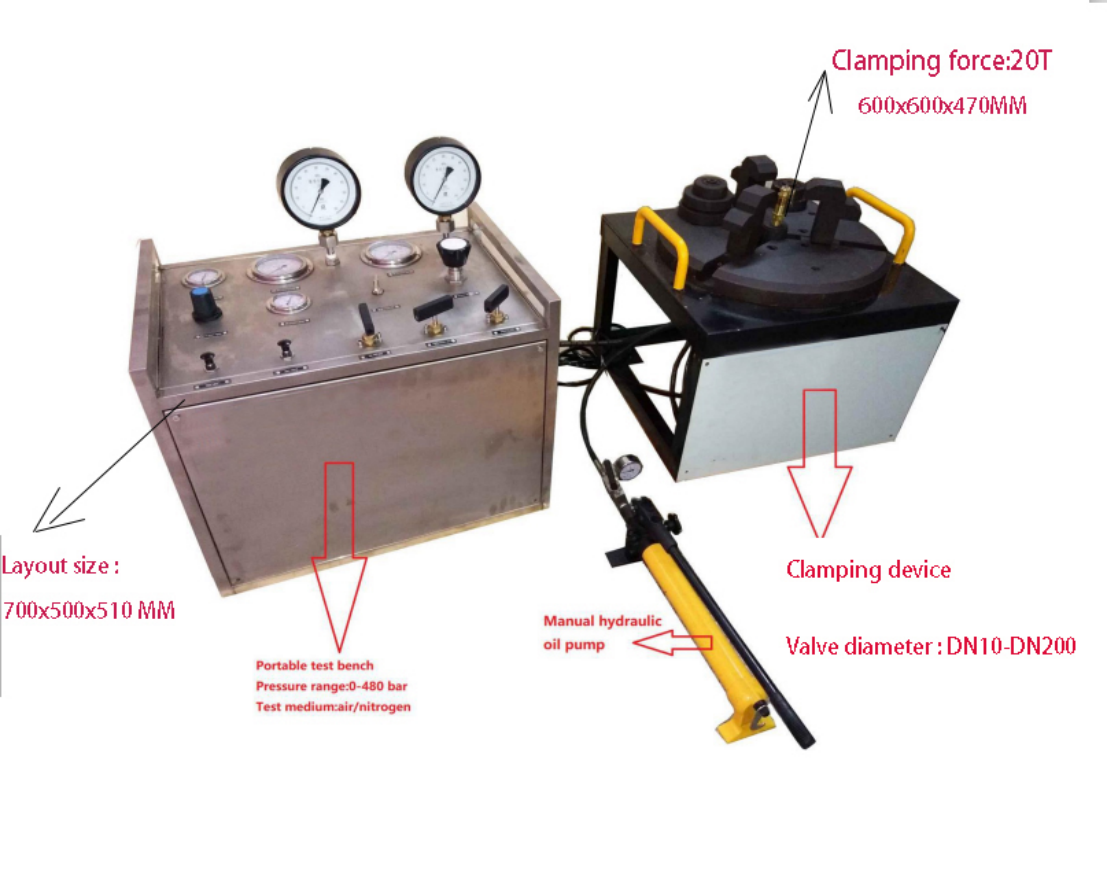
Portable Safety Valve Test Bench Functions:
The safety valve test bench can perform overall pressure testing, discharge pressure testing, back pressure testing, and pressure safety performance testing on various types of pressure relief valves.
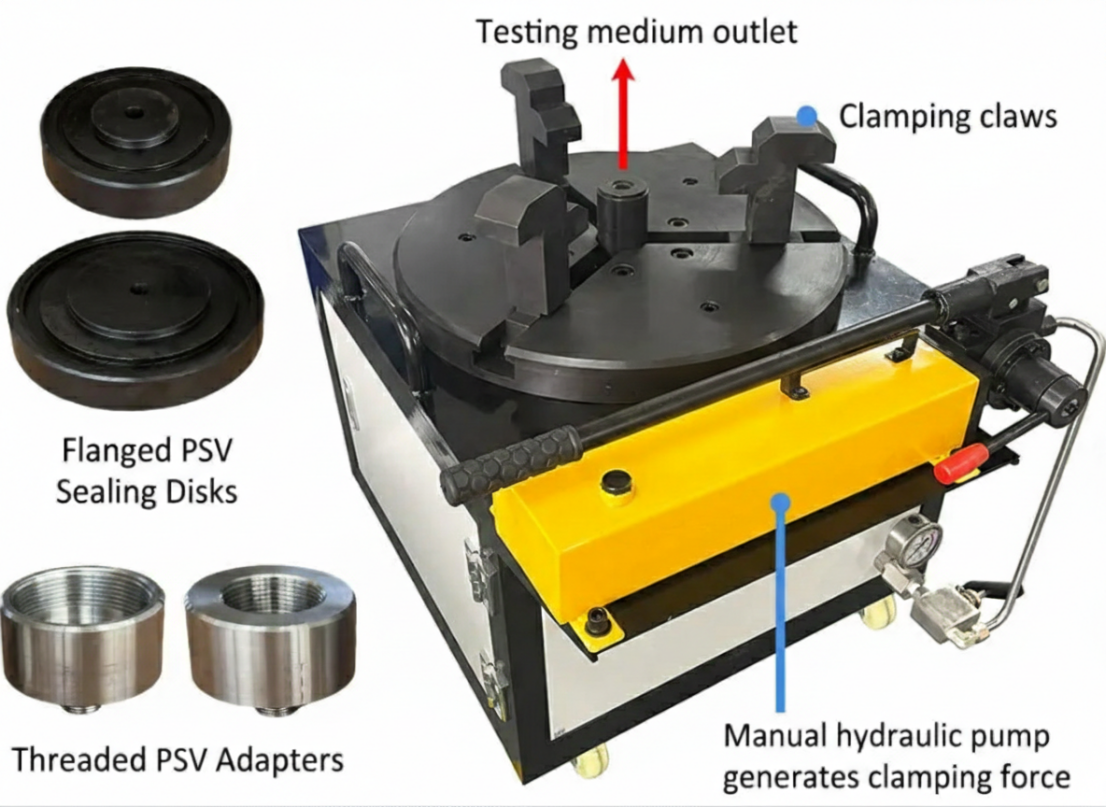
Portable safety Valve Test Bench Main components
It consists mainly of high pressure power system, clamping device system,
1.power system(High-pressure power source).
Air driven gas booster pump-DGT60 model
Driven air pressure: 3-8bar;
Output gas/air pressure 0-400bar;
Test medium: air, nitrogen
2.Clamping system:
The power of the clamping device is provided by a manual hydraulic(oil) pump to provide clamping pressure, Valve diameter range:DN15-DN250
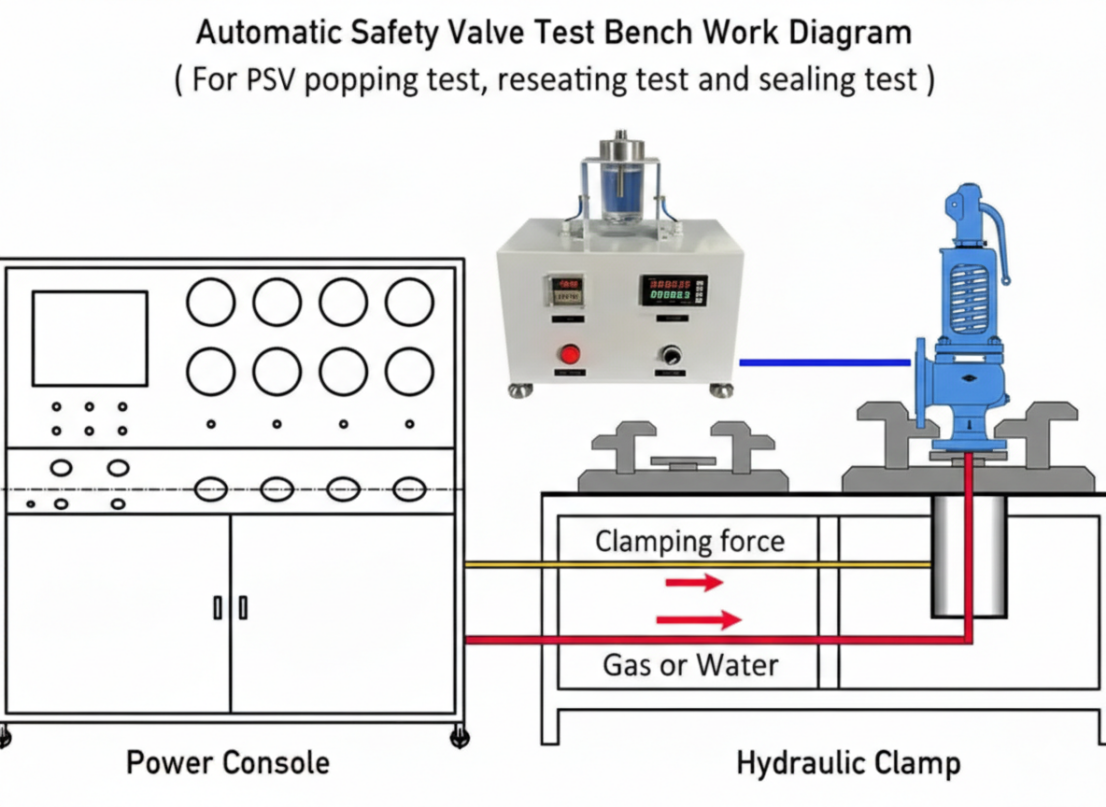
Portable safety Valve Test Bench is a portable, manually operated device designed for testing safety relief valves. It consists of a power console and a hydraulic clamp, which are connected via a hydraulic hose.
Portable safety valve test bench offers three testing methods:
Compressed Air: The test is performed using compressed air supplied by an air compressor.
Nitrogen Gas: Nitrogen from a 15MPa or 20MPa nitrogen cylinder is used as the testing medium.
Clean Water: For specific applications, clean water can be used as the testing medium.
For those with a limited budget, we also offer a Gas Booster Power Pack as a cost-effective solution for performing relief valve testing.
Where a safety valve test bench is used
Codes and insurers increasingly ask for evidence, not stamps: which valve, tested at what pressure, with what instruments, traceable to what standard. The Portable safety Valve Test Bench records each test with its full curve so the evidence exists before it is requested.
- Refineries, chemical plants and power stations — workshop and in-situ verification during turnaround, with the valve tag number recorded against the result.
- Fire-protection systems — pressure-relief and deluge valves proven before system handover.
- PSV manufacturers and repair shops — set, reseat and seat-tightness verification with a certificate per valve.
Every Portable safety Valve Test Bench is laid out around its duty cycle, and here that means valve testing. The controls, the guards and the record format follow from that.
What to specify before we build yours
- Test medium — air, nitrogen, steam or water; steam testing requires a steam generator and different safety measures. The setting here follows the valve you run most.
- Maximum set pressure — sized above the highest spring rating in your scope, with enough resolution at the low end for small valves. The setting here follows the valve you run most.
What to look for in a safety valve test bench
The valve you test decides the bench, not the other way round. Before ordering, settle these practical questions:
- Ask how the bench handles high set points on small inlets. A DN20 valve set at 16 MPa behaves differently from a DN150 at 2.5 MPa, and the fixture plus the sensing range need to cover both ends honestly. Check the accuracy statement at your actual set points, not at mid-scale.
- Clamping force has to be adjustable. Too little and the valve lifts out of the seal; too much and the body distorts, which changes the set pressure you are trying to measure. Look for a table with controlled, repeatable clamping rather than a hand pump and a guess.
- Records for the valve. The report is laid out with the fields your valve standard asks for, so a result leaves the shop as a certificate rather than a rewrite job.
Frequently asked questions
Can one bench cover DN15 to DN200?
With the right fixture sets, yes, and that is the usual configuration for repair shops. The practical limit is clamping force and table space for the largest valve, which is why we ask for your size distribution before quoting rather than assuming a middle range. For the valve work this bench is quoted for, that answer is written into the acceptance protocol.
Is a bench suitable for air-only testing of liquid-service valves?
Air testing is the normal shop method with accepted corrections for service on liquid. Where a code demands liquid, the same bench can be arranged for water with a suitable medium circuit. The choice is made per valve family when the bench is specified. This is standard on the Portable safety Valve Test Bench, not an optional extra.
Related equipment and further reading
Questions about set-point verification for a specific code? Write the code and the valve size — we answer with the test sequence we would use, within one working day.