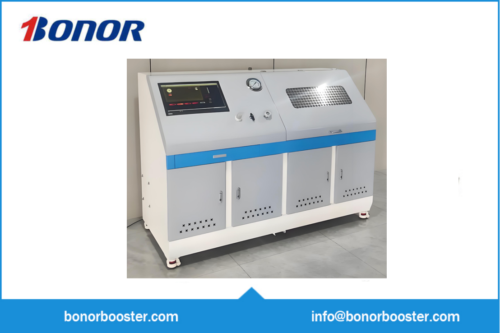
Description
I. Application Scope
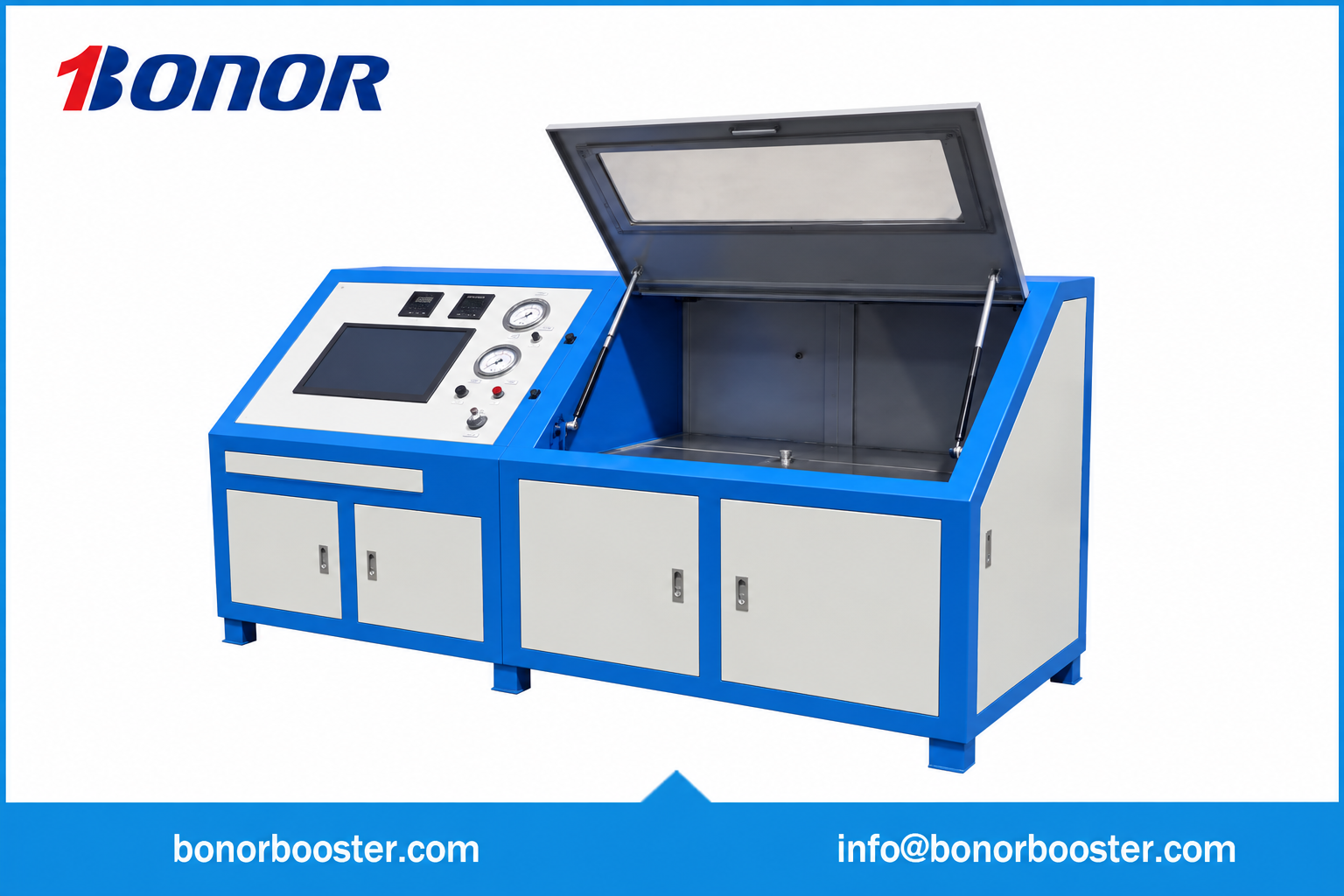
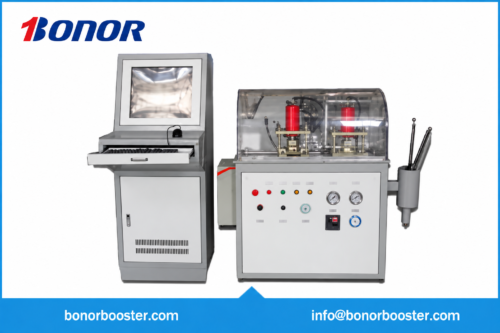
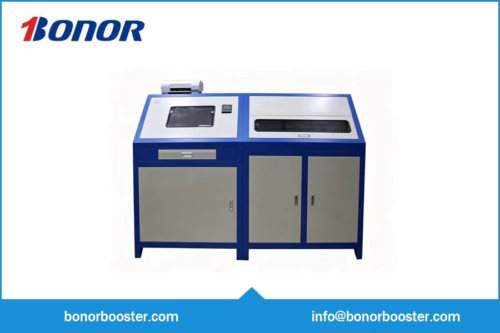
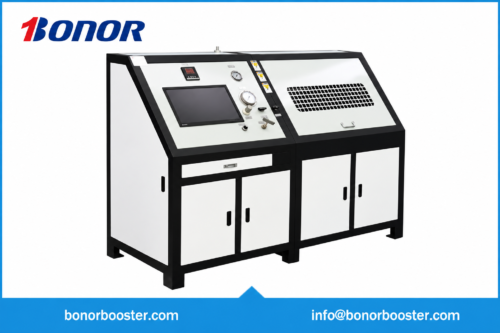
The air spring bursting tester developed by Jinan Simtete Technology Co., Ltd. is used for hydrostatic pressure resistance testing of free-type air springs, self-locking air springs, traction air springs, height-adjustable air springs, swivel chair air springs, gas struts and dampers. The test will automatically stop and trigger an alarm when test conditions are abnormal. The system is capable of collecting bursting pressure data, calculating expansion rate and generating formal test reports.
II. Basic Parameters
- Test medium: Water
- Pulse pressure: 0–5 MPa (adjustable)
- Pressure control accuracy: ±0.5%
- Water volume acquisition precision: 0.1 g
- Test channel: 1 channel (multi-channel optional)
III. Features of Air Spring Bursting Tester
- Power system: Equipped with Simtete pressure booster pump for precise pressure control.
- All spare parts adopt standard components from internationally renowned brands.
- Multiple optional control modes including semi-automatic and fully automatic control. The computer system collects test pressure waveforms, test cycles, pulse frequency and other parameters, supports report printing, and is equipped with fault alert function.
- The whole structure adopts non-welded connections for easy disassembly and maintenance, featuring safe and efficient operation.
Typical uses of a burst pressure test bench
Between a part that passed a hold test and a part that actually burst, there is a margin somebody is betting a shipment on. The Air Spring Hydrostatic Burst Test Machine turns that bet into a measurement: pressure rises under control until the specimen gives, and the exact value is logged. The typical workload here is air spring hydrostatic, so the clamping and detection settings are tuned for that from the factory; commissioning includes running your own samples to prove it.
- Composite tank and CNG vessel workshops — liner and overwrap verification at code-specified multipliers.
- Aerospace and defence small components — compact actuators, reservoirs and tubing bundles with tight burst-margin documentation.
- Air spring and bellows producers — fabric-reinforced parts burst-tested to prove the reinforcement layout.
In daily use the Air Spring Hydrostatic Burst Test Machine sees mostly air spring hydrostatic. That decides the fixture style, the approach rate and what the operator actually does between tests.
What to specify before we build yours
- Maximum test pressure and pressure-holding time — the bench is sized around your highest specimen rating plus a safety margin, not around the average. It is set up here for the part.
- Test medium — water, oil, glycol mixture or air; the choice changes the pump, the plumbing and the safety enclosure. The setting here follows the part you run most.
How the standard build is set up here: The specification calls for test medium of water.
What to look for in a burst pressure test bench
Two quotations can quote the same maximum pressure and still be built for different jobs. Before you compare prices, pin down the points below:
- Check what the software exports. If your customer wants a curve with time stamps and the raw transducer file, confirm the format before the order, not during acceptance. A PDF screenshot is not a record.
- Count the specimens per day before sizing the pump. A laboratory doing five careful tests and a production line doing two hundred need different pressurisation, different fixtures and different levels of automation. Buying headroom you never use wastes money; buying too little stops the line.
- Handling for the part. Loading height, clamping force and the drain path are arranged for the part you run most, which is where the daily minutes are won or lost.
Frequently asked questions
How is the test pressure rate standardised?
Most codes specify a rate in bar or MPa per second, or a time-to-failure window. The controller holds the commanded ramp within a tolerance band and records the actual rate, so a reviewer can see that the rate stayed inside the specification for the whole test. In practice, the part dictates the answer here — and that is what the quotation is built around.
Can one bench test hoses, pipes and cylinders?
The pressure system can be shared, but the clamping fixture cannot. A hose bench grips both ends and may allow free length change; a pipe bench closes the ends with plugs; a cylinder bench usually works inside a water jacket to measure permanent deformation. BONOR quotes the bench with the fixtures for your part family, and additional fixtures can be added later. On the Air Spring Hydrostatic Burst Test Machine, that is part of the standard delivery, not an option.
Related equipment and further reading
If the parts you need to burst-test are not covered above, send a drawing or a photo with the test pressure and our engineers will come back with a fixture proposal within one working day.