- Working Efficiency: 20 cycles per hour
- Available test channels: 10 channels or 20 channels
- Test pressure range: 0~50 MPa, customized pressure range available according to customer requirements
- Working medium: Water, hydraulic oil
- Control Mode: Full-process microcomputer control
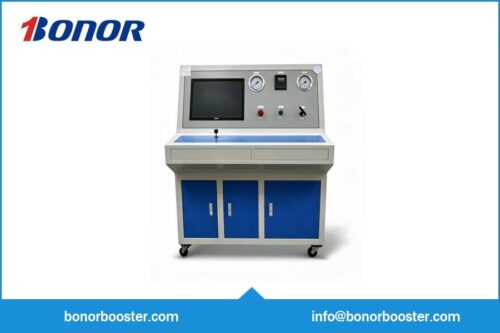
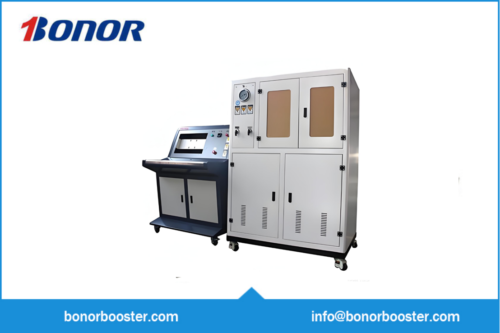
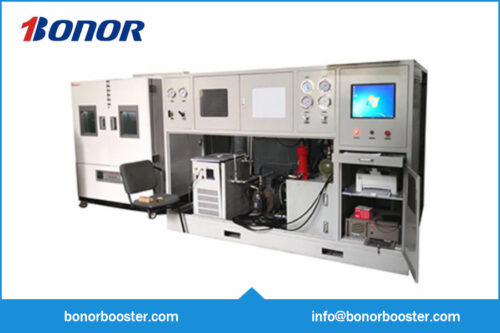
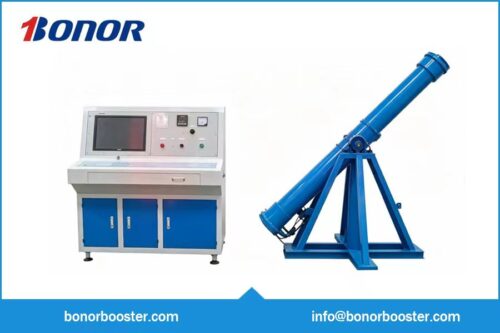
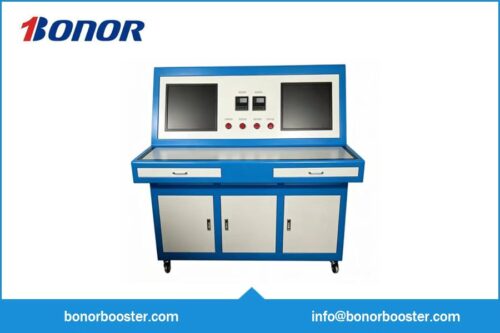
Rubber Hose Hydrostatic Test Machine
Description
1. Application Scope
Developed by Jinan Bonor, this hydrostatic test machine is used for pressure resistance and burst performance tests of various valves. It measures burst pressure and pressure holding duration of different pipe fittings, which is widely adopted by quality inspection institutions. The control & display system manages driving gas pressure, pressure relief, real-time pressure monitoring and pressurization actions. Supported by computer control system, users are allowed to set parameters including water filling & exhausting time, pressure holding time, air flushing time and test pressure. It supports single-stage or multi-stage pressure holding tests, as well as direct burst test after pressure holding. Constant and stepless adjustable pressurization speed is available. Test data and curves are displayed in real time; test records can be saved automatically and printed out as formal test reports.
2. Control System
It adopts a two-layer control system composed of microcomputer and programmable PLC controller. With advanced control logic and independent control units, modular control is realized perfectly. The system features high pressure control precision, stable pressure holding and automatic pressure compensation. Multiple test channels can run tests simultaneously without mutual interference. All test data and graphs are automatically recorded and stored in the computer. Three control modes are optional: manual control, PLC automatic control and computer control.
3. Equipment Advantages
- Fully automatic operation for the whole test procedure
- Integrated automatic functions of pressure test, water draining and drying
- Continuously adjustable test pressure
4. Technical Parameters
- Working Efficiency: 20 cycles per hour
- Available test channels: 10 channels or 20 channels
- Test pressure range: 0~50 MPa, customized pressure range available according to customer requirements
- Working medium: Water, hydraulic oil
- Control Mode: Full-process microcomputer control
Typical uses of a hydrostatic pressure test bench
Proof testing earns its keep when it catches the one weld in a hundred that weeps at 1.5 times rating. The Rubber Hose Hydrostatic Test Machine is instrumented for exactly that case: fine pressure resolution during the hold and an unambiguous record when the drop appears. The bench is sized for rubber hose as the main duty; other families are handled by adding fixtures rather than redesigning the machine.
- Transport tanks and IBC frames — periodic inspection testing with a certificate per unit.
- Valve bodies and assemblies — shell test at 1.5 times the rating, followed by a seat-tightness check on the same fixture.
- Hose assembly shops — proof and leak testing at working pressure with a hold-time record per assembly.
In daily use the Rubber Hose Hydrostatic Test Machine sees mostly rubber hose. That decides the fixture style, the approach rate and what the operator actually does between tests.
What to specify before we build yours
- Connection and sealing method — flanges, threaded plugs, quick couplings or a clamping table, matched to the parts you test most often. The setting here follows the hose assembly you run most.
- Test pressure and hold time — often 1.5 times the design rating, with the hold period set by the applicable standard. The setting here follows the hose assembly you run most.
This unit is configured as follows: This unit works with control mode at full-process microcomputer control.
Choosing the right hydrostatic pressure test bench
A hydrostatic bench is a ten-year tool, so it pays to specify it for the work you will actually do, not the work you do today:
- Plan for the wet parts afterwards. Testing leaves water inside and outside the part. Drainage racks, drip trays and drying air are afterthoughts that become daily annoyances if they are not in the original layout.
- Count the real cycle time, not the pump rating. Fill, vent, stabilise, ramp, hold, drain — the pump only dominates one of those six steps. Ask the supplier to walk through a complete cycle with your largest part before you believe any throughput figure.
- Handling for the hose assembly. Loading height, clamping force and the drain path are arranged for the hose assembly you run most, which is where the daily minutes are won or lost.
Frequently asked questions
What maintenance does the pressure section need?
Routine work is modest: water quality checks, seal inspection on the fixtures, and periodic calibration of the measuring chain. The pump and valves are standard industrial components, and the spare-parts list is arranged so a trained fitter, not a specialist, handles daily upkeep. On this build the hose assembly is the reference case, and the setting is proven with your samples at commissioning.
What utilities does the bench need on site?
Mains power for the pump and controller, a water supply with reasonable pressure, drainage for the dump, and compressed air if you want pneumatic clamping. We list the exact connections in the quotation so your services contractor can prepare the bay before the bench arrives. Acceptance of the Rubber Hose Hydrostatic Test Machine includes a signed check of exactly this item.
Related equipment and further reading
- Explosion-proof Enclosure Hydrostatic Pressure Testing Machine
- Well Control Equipment Hydrostatic Test System
- LPG Cylinder Hydrostatic Testing Machine
- Hydrostatic Pressure Testing Equipment — models and specifications
- From spec to sign-off
- The water vs oil cost trap
Tell us the part family, the test pressure and the paperwork you need — send the details and we will reply with a layout and a quotation within one working day.