Description
What is a Hydrostatic Burst Pressure Test Machine?
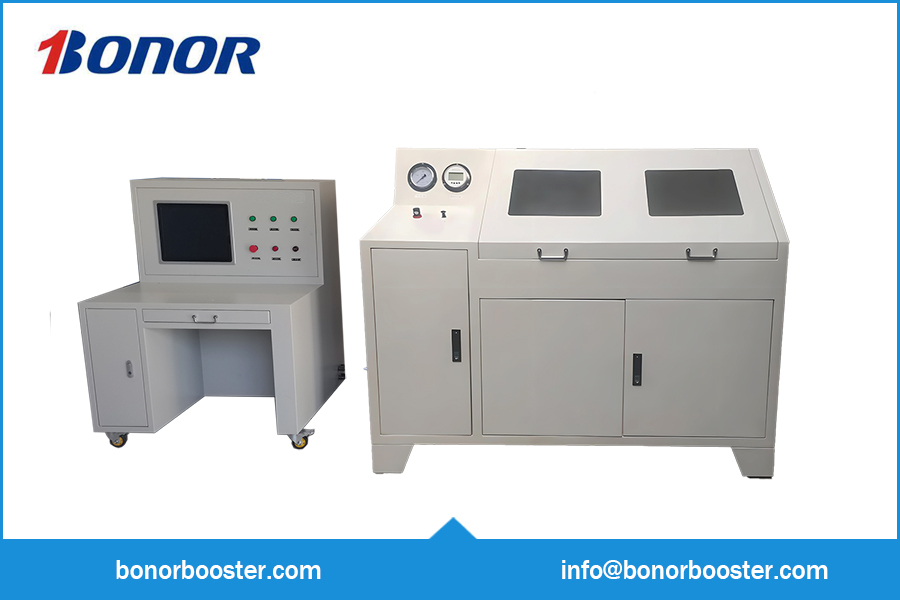
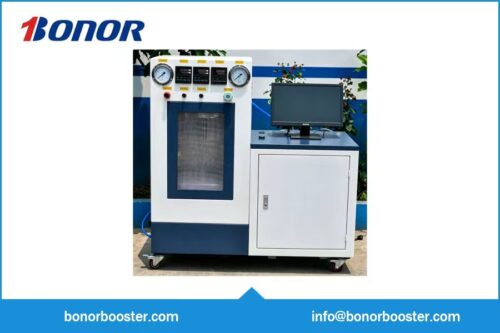
This equipment is a professional fluid pressure testing device that integrates hydrostatic pressure testing, burst pressure testing, and leak testing. It is mainly used to verify the structural strength and sealing performance of various pressure-bearing components and pressure vessels.
Based on the pneumatic boosting principle, it is equipped with a digital display control system and an enclosed protective cabinet. It combines the precision of automated control with the safety of manual emergency operation, making it a core device for product quality verification in the automotive, construction machinery, fire protection, energy, and other industries.
Core Advantages
- Precision Control & Monitoring: Digital display + dual pressure gauges for real-time pressure monitoring; test data is traceable, with pressure control accuracy ≤ ±0.5% FS.
- Safety Protection: Integrated pressure relief valve and enclosed cabinet effectively block the risk of high-pressure medium leakage, ensuring operator safety.
- Flexible Adaptability: Supports multiple test media such as water and hydraulic oil, adapting to workpieces of different materials and specifications.
- Easy Mobility: Equipped with lockable universal casters at the bottom, enabling quick transfer between workshop stations to improve testing efficiency.
Technical Parameters (Typical Industry Configuration)
| Parameter Item |
Typical Value |
| Maximum Test Pressure |
0~400MPa (customizable on request) |
| Test Medium |
Water, hydraulic oil, emulsion, etc. |
| Control Mode |
Semi-automatic (digital display + manual buttons) |
| Pressure Display Accuracy |
±0.1MPa |
| Pressure Holding Time Range |
0~9999s (freely adjustable) |
| Driving Air Pressure |
0.4~0.8MPa (industrial compressed air) |
| Equipment Dimensions (approx.) |
800×600×1200mm (L × W × H) |
| Equipment Weight (approx.) |
150~200kg |
| Protection Grade |
IP54 (dust and water resistant) |
Working Principle
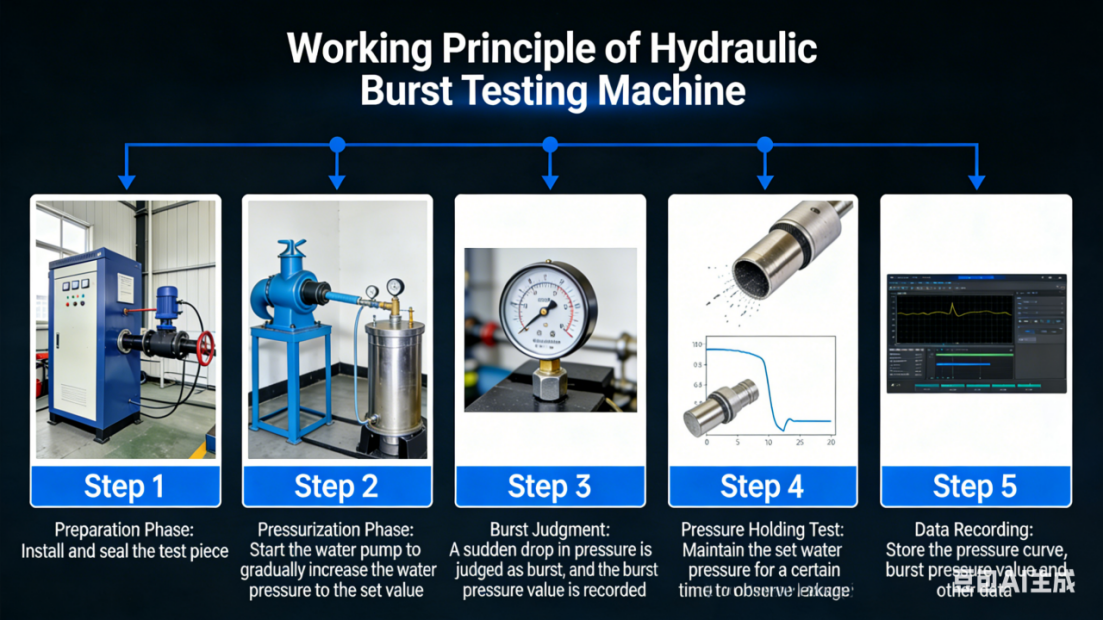
This equipment is based on the reciprocating principle of a pneumatic booster pump, achieving high-pressure output of low-pressure media through pneumatic drive. The core process is as follows:
- Power Connection: Connect 0.4~0.8MPa industrial compressed air to the equipment’s drive port, and adjust the air pressure regulator to preset the test pressure.
- Medium Boosting: The pneumatic booster pump draws in and compresses low-pressure test medium (e.g., water, hydraulic oil) to raise its pressure to the set value.
- Automatic Pressure Holding: When the pressure reaches the preset value, the equipment automatically stops boosting and enters the pressure-holding state, monitoring pressure decay in real time.
- Test Evaluation: If the pressure decay during the holding period is within the allowable range, the hydrostatic/leak test is judged as qualified; for burst testing, continue boosting until the workpiece ruptures, and the pressure gauge automatically records the burst pressure value.
- Safe Pressure Relief: After the test, slowly release residual pressure in the pipeline via the manual pressure relief valve to avoid pressure shock.
Wide Range of Applications
1. Automotive Industry
- Pressure resistance and burst performance testing of brake lines, fuel lines, air conditioning hoses, and steering oil pipes
- Sealing performance verification of automotive brake pumps, cylinder blocks, and other pressure-bearing components
2. Construction Machinery Industry
- Strength and sealing testing of hydraulic hoses, high-pressure oil pipes, and hydraulic valve groups
- Pressure resistance verification of hydraulic cylinders, accumulators, and other pressure vessels
3. Fire Protection Industry
- Pressure resistance and burst testing of fire hoses, fire extinguisher cylinders, and fire fittings
- Charging pressure verification of fire gas cylinders
4. Energy and Chemical Industry
- Pressure resistance and leak testing of oil pipelines, valves, and pipe joints
- Pressure performance testing of gas storage tanks, pressure transmitters, and other equipment
5. General Manufacturing
- Pressure calibration of various metal/non-metal pipes, joints, and pressure gauges
- Sealing performance testing of precision components such as liquid cold plates and instruments
Applications of the burst pressure test bench
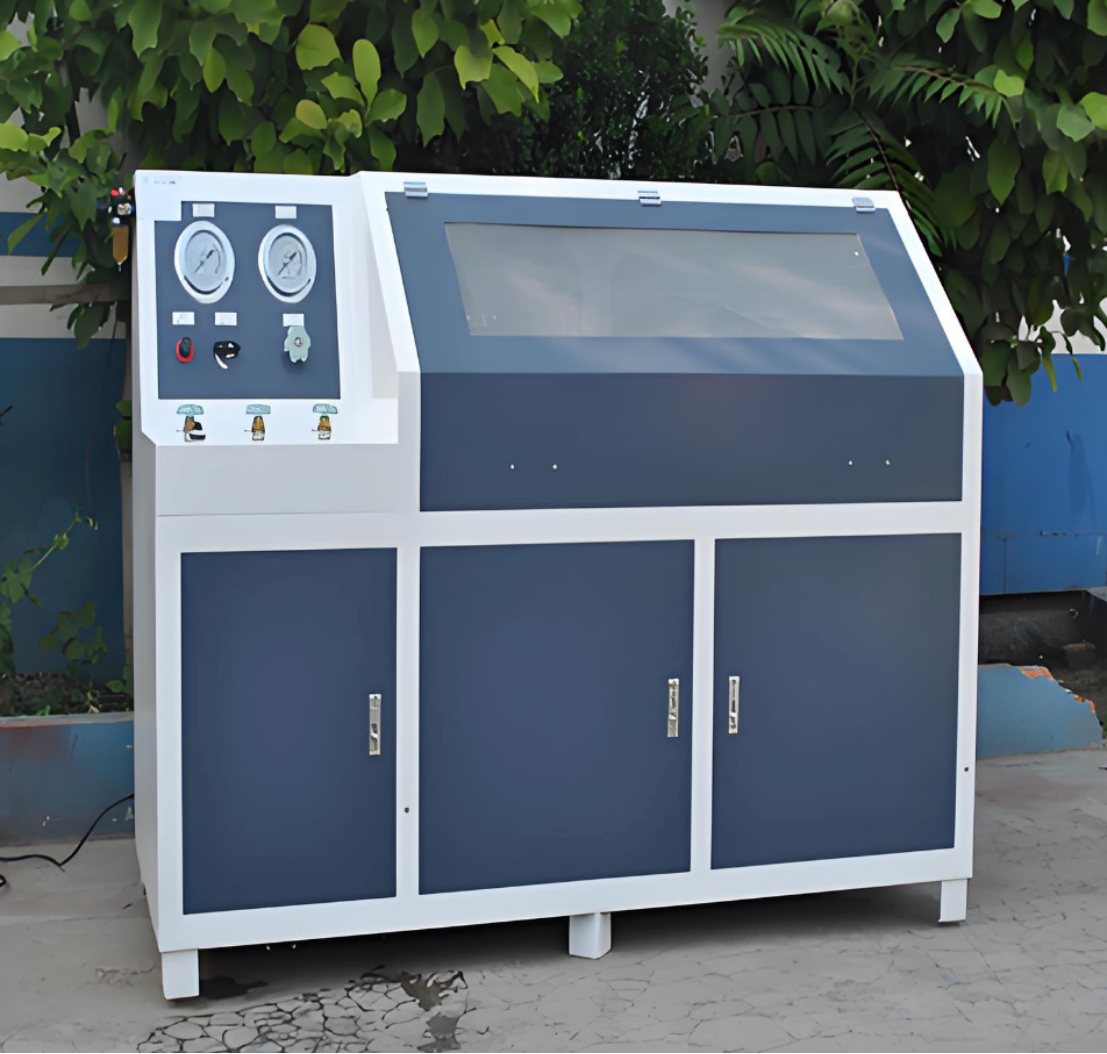
Destructive testing only pays for itself if the results are comparable between shifts, operators and weeks. The Hydraulic Pressure Burst Testing Machine removes the human variables — clamping force, pressurisation rate and detection threshold are all set by programme, not by feel.
- Aerospace and defence small components — compact actuators, reservoirs and tubing bundles with tight burst-margin documentation.
- Gas equipment manufacturers — regulators, manifolds and flexible connections verified above the maximum supply pressure.
What makes this Hydraulic Pressure Burst Testing Machine practical is the way it handles the part: one clamping routine, one pressurisation recipe and one result file, test after test.
What to specify before we build yours
- Test medium — water, oil, glycol mixture or air; the choice changes the pump, the plumbing and the safety enclosure. It is set up here for the part.
- Maximum test pressure and pressure-holding time — the bench is sized around your highest specimen rating plus a safety margin, not around the average. The setting here follows the part you run most.
This unit is configured as follows: For this build, test medium is water, hydraulic oil, emulsion, etc. This unit works with control mode at semi-automatic (digital display + manual buttons).
What to look for in a burst pressure test bench
Most dissatisfaction with burst benches traces back to a specification written from a catalogue instead of from the specimen. These checks keep the order honest:
- Decide the medium before the pump. Water is cheap and safe but needs rust protection and drying; oil avoids corrosion but costs more and needs disposal; air gives a cleaner test but requires an enclosure and interlocks because a burst stores far more energy.
- Plan the extraction route for a real burst. Water, debris and a loud release are normal on this kind of bench. Shielding, drainage and easy cleaning decide whether the machine is pleasant or miserable to run every day.
- Fixture fit for the part. The clamping set is drawn around your part drawings first, so the part sits square without shimming — and the same fixture family extends to other sizes later.
Frequently asked questions
Do you supply the fixtures for our specific part, or only the bench?
The fixtures are part of the quotation. We size the clamping table, plugs and grips around the specimen drawings you send, and the first set is delivered fitted and tested on the bench. Later part families can be added as new fixtures without touching the pressure system. For the part work this bench is quoted for, that answer is written into the acceptance protocol.
How long does a typical burst cycle take?
For most hose and pipe work, a few minutes: fill, ramp at the standard rate, failure, drain. Large vessels with big volume take longer mainly on fill and stabilisation. When you tell us the specimen volume and the target rate, we quote the realistic cycle time rather than the best case. On the Hydraulic Pressure Burst Testing Machine, that is part of the standard delivery, not an option.
Related equipment and further reading
Tell us what you burst, at what pressure, and how many per day — send the specimen list and we will reply with a layout, a cycle time and a price within one working day.