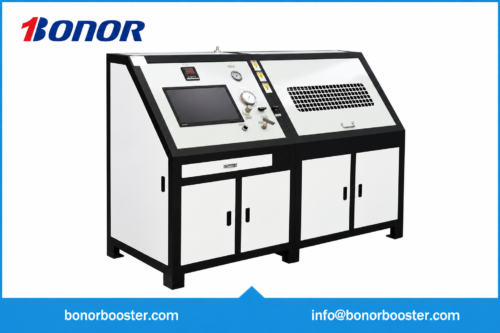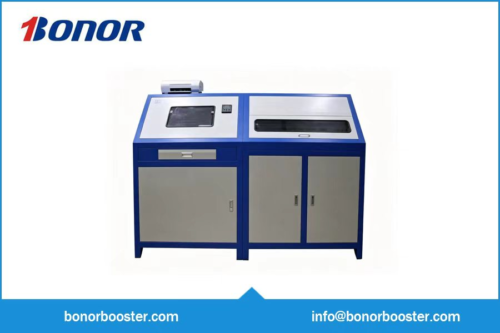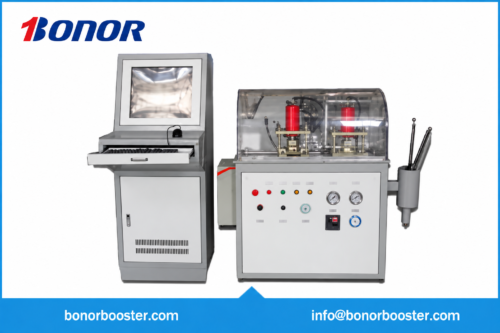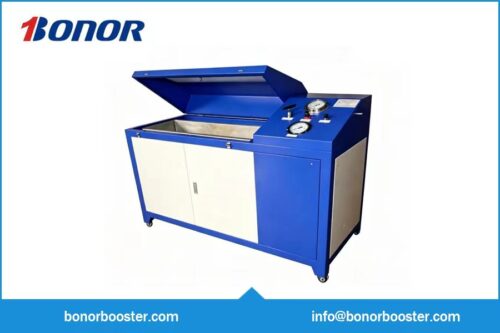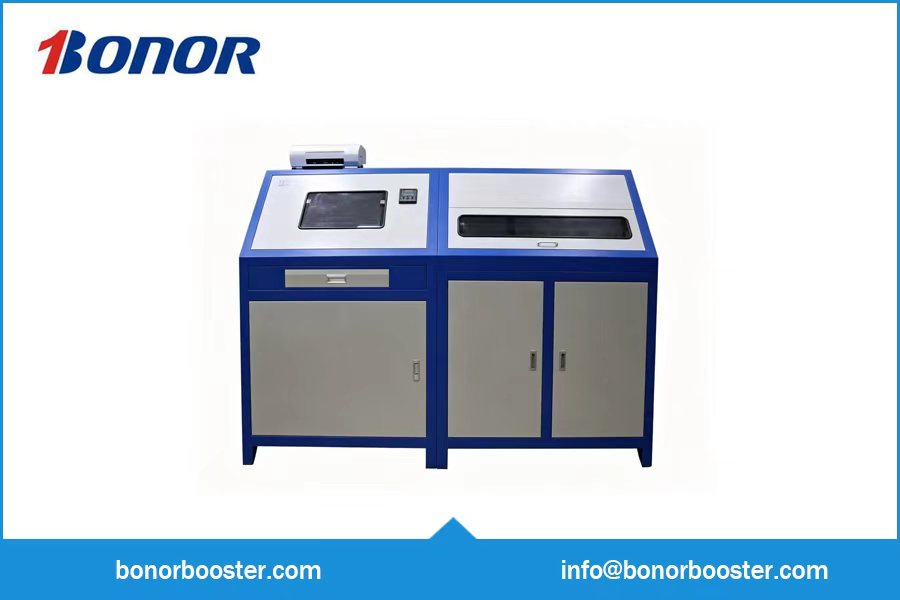
The PVC Hose Hydrostatic Pressure Burst Test Machine is built for burst and proof-pressure testing. Clamping fixtures are quoted around the specimen, and the pressure curve is stored with the test ID.
Description
I. Application Scope
The hydraulic test device and hydraulic pressure burst test machine for PU hoses & PVC plastic hoses developed are used to test the pressure resistance and sealing strength of plastic hoses.
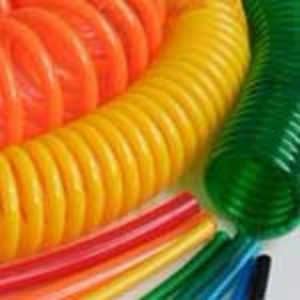
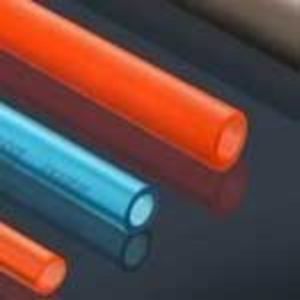
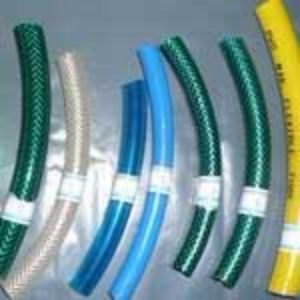
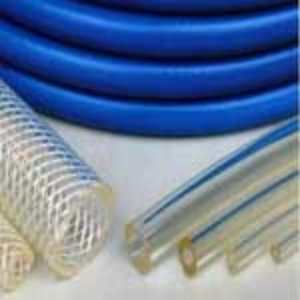
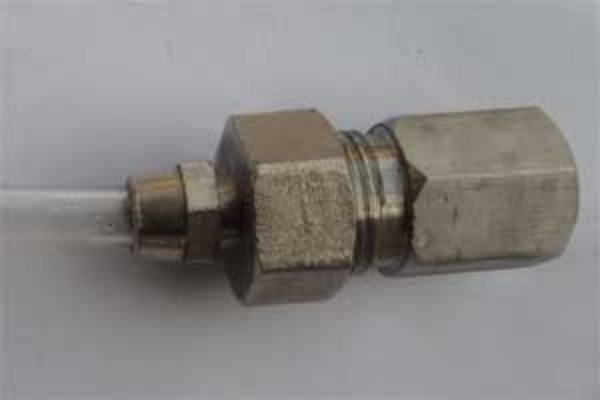
The pressurization rate can be controlled via computer, with a maximum test pressure of 10 MPa. It is applicable to PVC reinforced hoses, PVC fiber reinforced hoses, PU air hoses and other products. Special joints matched for pressure resistance tests are equipped as standard accessories.
 |
 |
 |
 |
II. Composition of Plastic Hose Hydraulic Pressure Resistance Test Equipment
- Hydraulic pressurizing unit: Equipped with Simteter booster pump for pressurization; maximum pressure 10 MPa with adjustable output pressure.
- Mounting structure & test chamber: Built-in stainless steel water tank inside the cabinet for convenient placement of test samples.
- Hydraulic test control unit: Precisely controls pressurization rate and test pressure with computer-based control function.
- Test reports can be printed and pressure curves saved automatically upon test completion.
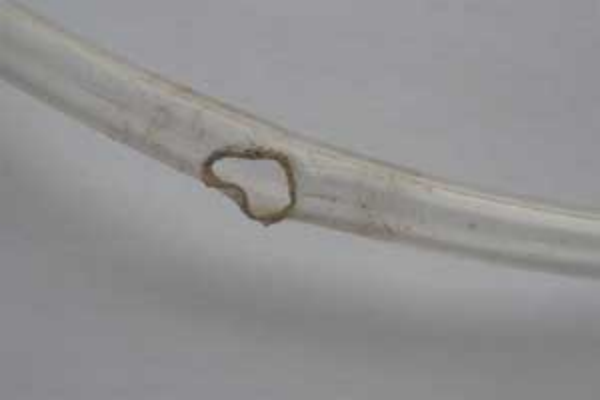
III. Special Fittings & Burst Test Pictures for PU Hose & PVC Plastic Hose Hydraulic Burst Test Bench
 |
 |
IV. Equipment Features
- Matched control unit supports adjustable and controllable output pressure and test duration. The booster pump realizes stable and convenient pressure regulation.
- Adopts advanced technology and reasonable structural layout; different pipeline components are replaceable as required.
- Optional SUPY1.0 automatic data acquisition system for real-time pressure curve viewing, report printing, and export of test data into Excel files for later inquiry and review.
V. Technical Parameters
- Data recording mode: Manual recording or computer automatic recording optional
- Rated working pressure: 10 MPa, adjustable within a certain range
- Working medium: Clean water
- Data acquisition system can be customized and configured according to customer requirements
Where a burst pressure test bench is used
When a customer or a certification body asks how much margin your part has above its working pressure, the only honest answer is a measured failure point. The PVC Hose Hydrostatic Pressure Burst Test Machine produces that number with a controlled pressurisation ramp and a curve you can hand over. This unit is laid out primarily for pvc hose hydrostatic. If your sample list also covers other families, tell us — the pressure section is shared, only the fixture changes.
- Composite tank and CNG vessel workshops — liner and overwrap verification at code-specified multipliers.
- Medical and laboratory device shells — sterile fluid pathways proof-tested well above sterilisation and operating pressures.
- Hydraulic and industrial hose plants — crimped assemblies burst-verified against the rated working pressure before each batch ships.
Day-to-day, the PVC Hose Hydrostatic Pressure Burst Test Machine works around one thing: the hose assembly. Loading, clamping and the report format are arranged so that a hose assembly goes from bench entry to signed result without re-work.
What to specify before we build yours
- Maximum test pressure and pressure-holding time — the bench is sized around your highest specimen rating plus a safety margin, not around the average. It is set up here for the hose assembly.
- Specimen envelope and clamping — hose bore and length, pipe diameter, cylinder height and the fixture that holds the part without crushing it. It is set up here for the hose assembly.
How to choose a burst pressure test bench
The bench you need is decided less by the pressure number and more by what happens around it — media, fixturing and records. Work through this list before ordering:
- Budget for the instrumentation, not just the pump. The pressure source is half the story; the transducer, sampling rate and the way the curve is stored decide whether a failure point is an engineering result or a guess. Instrumentation is cheap next to a re-test programme.
- Verify the detection logic on site. Ask the supplier to demonstrate a false-drop test — a slow leak that must not be mistaken for a burst — during commissioning, and record the threshold settings in the acceptance protocol.
- Handling for the hose assembly. Loading height, clamping force and the drain path are arranged for the hose assembly you run most, which is where the daily minutes are won or lost.
Frequently asked questions
What is the difference between radial and axial clamping for hoses?
Radial gripping squeezes the hose cover and can allow a small slip at very high pressure; axial loading pulls the fittings apart the way service does. The right choice depends on what you need to learn — fitting retention or wall strength. Many labs keep both and pick per sample. In practice, the hose assembly dictates the answer here — and that is what the quotation is built around.
Is water always the medium for burst testing?
Water is the default because it is incompressible and safe, but it is not universal. Air or nitrogen is required when the part must stay dry, and oil when corrosion matters. Each medium changes the pump, the instrumentation and the safety provisions, which is why the medium is fixed at the design stage. On the PVC Hose Hydrostatic Pressure Burst Test Machine, that is part of the standard delivery, not an option.
Related equipment and further reading
- Pipe Pressure Resistance and Burst Test Machine
- Tire Hydrostatic Burst Testing Machine
- High-pressure hose burst testing machine
- The complete Burst Pressure Test Bench line-up
- Inside a burst test bench
- Where burst benches are used
If the parts you need to burst-test are not covered above, send a drawing or a photo with the test pressure and our engineers will come back with a fixture proposal within one working day.