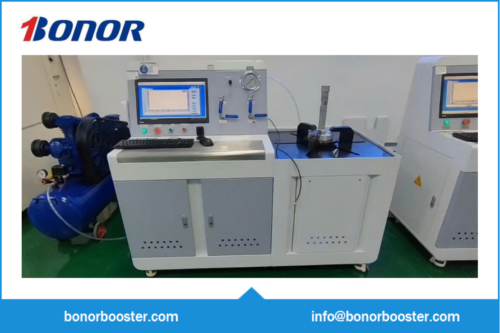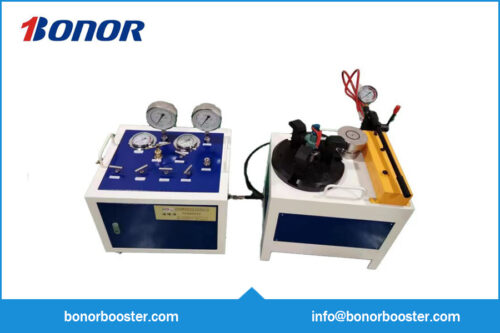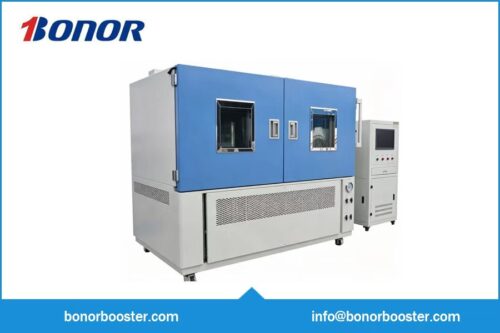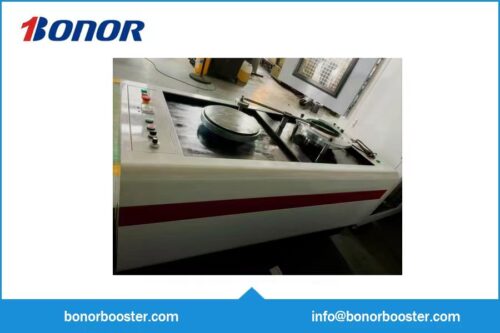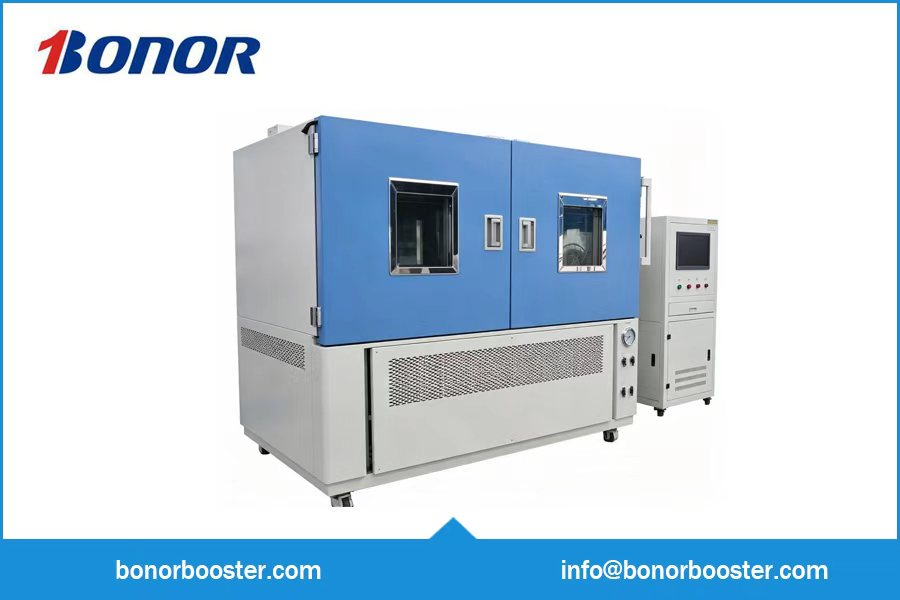
The Valve Life Testing Machine is built for set-pressure and seat-tightness verification. Configured here as test pressure: 0 – 50 MPa (adjustable); medium temperature: Ambient temperature ~ 160℃ (customizable). The clamping table and the pressure ramp are configured for the valve sizes and flange standard you test.
Description
一. Application Scope
The valve life test machine manufactured by Jinan Bonor Technology Co., Ltd. is designed to test the service life of valves and perform fatigue switching strength tests, which is essential for evaluating valve switching endurance life. It covers nominal diameter DN3 ~ DN500 and test pressure range from 0.2 MPa to 50 MPa. The machine can measure valve switching torque, switching stroke and operating rotation speed. During testing, it continuously monitors operating frequency, pressure, medium temperature and other parameters.
Equipped with advanced control system (PLC + touch screen control or computer control optional). Test parameters such as switching torque, stroke and rotation speed can be freely set. After the test, the system automatically stores test data and supports printed test reports.
二. Basic Technical Parameters
- Test medium: Clean water, hydraulic oil
- Test pressure: 0 – 50 MPa (adjustable)
- Valve torque: 0 – 2000 N·m (adjustable for different valves)
- Applicable valve nominal diameter: DN3 – DN500 (customized as required)
- Control mode: Touch screen control / Computer control
- Medium temperature: Ambient temperature ~ 160℃ (customizable)
- Test cycles: More than 100,000 continuous cycles in one run. After cycle test, tightness inspection shall be carried out; no leakage or deformation is allowed.
- Ambient temperature: Adjustable from -30℃ ~ 150℃ (optional configuration)
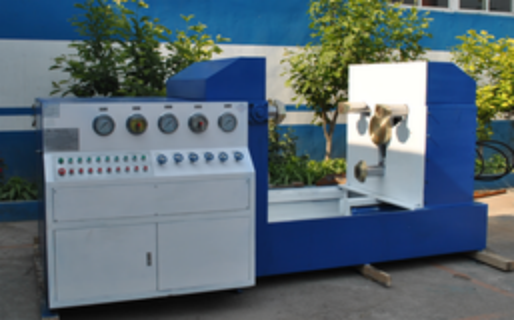
Control interface of valve life tester, clamping fixture for large-size valve fatigue test
What a safety valve test bench does in production
Codes and insurers increasingly ask for evidence, not stamps: which valve, tested at what pressure, with what instruments, traceable to what standard. The Valve Life Testing Machine records each test with its full curve so the evidence exists before it is requested. Because the daily job is life testing, the instrument ranges were selected to keep your normal set points in the best measuring band — commissioning verifies this with your own valves.
- Third-party inspection bodies — independent verification with a traceable certificate for each valve.
- Valve manufacturers and assembly lines — set-pressure adjustment and final inspection before dispatch.
- Endurance and cycle testing — repeated open/close cycles with torque and set-point drift recorded.
What makes this Valve Life Testing Machine practical is the way it handles the valve: one clamping routine, one pressurisation recipe and one result file, test after test.
What to specify before we build yours
- Record and traceability — valve tag, set pressure, reseating pressure, leakage rate and operator, stored per test. The setting here follows the valve you run most.
- Maximum set pressure — sized above the highest spring rating in your scope, with enough resolution at the low end for small valves. The setting here follows the valve you run most.
- Test pressure — 0 – 50 MPa (adjustable) (confirmed for this unit).
- Medium temperature — Ambient temperature ~ 160℃ (customizable) (confirmed for this unit).
Configuration on the current build: On this machine test medium is clean water, hydraulic oil. This unit works with test pressure at 0 – 50 mpa (adjustable). Here control mode is set to touch screen control / computer control. For this build, medium temperature is ambient temperature ~ 160℃ (customizable).
Currently configured as: Test pressure: 0 – 50 MPa (adjustable); Medium temperature: Ambient temperature ~ 160℃ (customizable). Other ranges and fixtures are built to order.
Selecting a safety valve test bench for your line
The valve you test decides the bench, not the other way round. Before ordering, settle these practical questions:
- Match the clamping to the valve, not just the flange table. A valve clamped off-axis or over-stressed gives a set point nobody can reproduce in the field. Ask how the bench handles your largest and smallest flanges, and check the alignment aids.
- Check the seat-tightness method. Bubble count, pressure decay and flow measurement are all used, but they are not interchangeable — confirm the bench reports the method your standard calls for.
- Fixture fit for the valve. The clamping set is drawn around your valve drawings first, so the part sits square without shimming — and the same fixture family extends to other sizes later.
Frequently asked questions
Can a bench reproduce low set points accurately?
Yes, provided the sensing chain is selected for the range. Below roughly 0 MPa the transducer and the clamping friction both matter, so low-set work uses a dedicated low-range circuit. Accuracy statements in our quotations are given per range, not as one flattering number. With life testing as the main duty, we verify this point on your parts before the machine ships.
What is involved in testing a valve that runs on steam?
Steam service valves are normally tested on air or water with a documented correction for the difference in gas behavior and temperature. The correction is standard practice and is stated on the certificate. What cannot be reproduced on the bench — actual steam temperature effects — is covered by the correction factors in the applicable code. This is standard on the Valve Life Testing Machine, not an optional extra.
Related equipment and further reading
- Ball Valve Body Pressure Test Machine
- Clamping Type Hydraulic Valve Test Bench
- Nuclear Valve Hydrostatic Test Bench
- Browse the full Safety Valve Test Machine range
- Accuracy verification, no lab needed
- Inside a safety valve bench
Questions about set-point verification for a specific code? Write the code and the valve size — we answer with the test sequence we would use, within one working day.